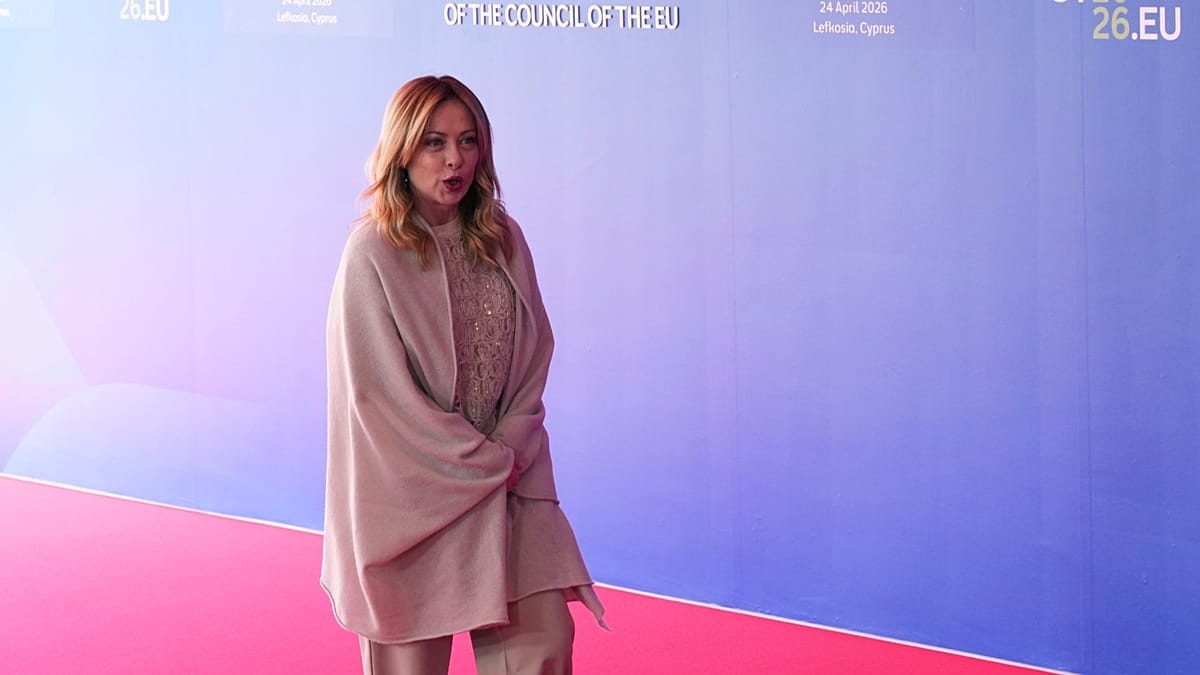
Italian Prime Minister Giorgia Meloni has publicly condemned the spread of a deepfake image that superimposes her face onto the body of a woman in underwear, calling it a dangerous example of how artificial intelligence can be weaponized in politics. The image, which has been circulating on social media, was created using AI and presented as authentic by some of her political opponents, according to Meloni.
In a post on social media, Meloni republished the image alongside a user's comment calling it 'shameful' that a prime minister would appear in such a state. She wrote that deepfakes are 'a dangerous tool, because they can deceive, manipulate and affect anyone.' The prime minister also noted that this is not the first time she has been targeted: five years ago, a fake sex video featuring her face was uploaded to a pornographic site, leading to a trial in Sassari.
Meloni responded to the latest incident with a mix of irony and seriousness, remarking that 'whoever made it has improved me a lot,' but stressing the broader threat to citizens who may lack the means to defend themselves. She advised a simple rule: 'Check before you believe, and believe before you share.'
Political Reactions and Legislative Gaps
The incident has drawn reactions from across Italy's political spectrum. Lega Nord deputy Simonetta Matone expressed solidarity, saying, 'We must be ready to counter the pitfalls of the web, protecting women who are victims of it, especially at a delicate time when online manipulation is unfortunately on the increase.'
For the 5Stelle Movement senator Alessandra Maiorino, the case underscores the urgency of implementing digital identity obligations. 'The web cannot continue to remain the jungle without rules that it is now,' she said.
However, Anna Ascani, vice-president of the Chamber of Deputies from the Democratic Party, criticized Meloni's government for what she sees as a superficial approach. 'She forgets that her government has also acted here with the usual scheme: introducing a crime. Nothing more useless,' Ascani argued, pointing to the lack of a regulation that allows authorities to demand immediate content removal from platforms.
The reference is to Law 132/2025, which amended Italy's Criminal Code to punish the non-consensual dissemination of AI-generated or altered content that 'causes unjust damage' with imprisonment from one to five years. Further legislative initiatives are reportedly under study in the Italian Parliament.
This is not the first time AI manipulation has affected Italian politics. Previous campaigns have included fake social media profiles and coordinated slogans during the referendum on justice, as well as earlier attacks on Meloni herself. The broader European context is also relevant: similar concerns have been raised in other member states, and the EU's AI Act aims to establish a regulatory framework for high-risk applications, including deepfakes.
As Meloni's government continues to navigate the balance between security and freedom online, the deepfake incident serves as a stark reminder of the challenges posed by rapidly advancing technology. The debate in Rome echoes discussions across the continent, from Berlin to Paris, about how to protect democratic discourse from digital manipulation without stifling innovation.