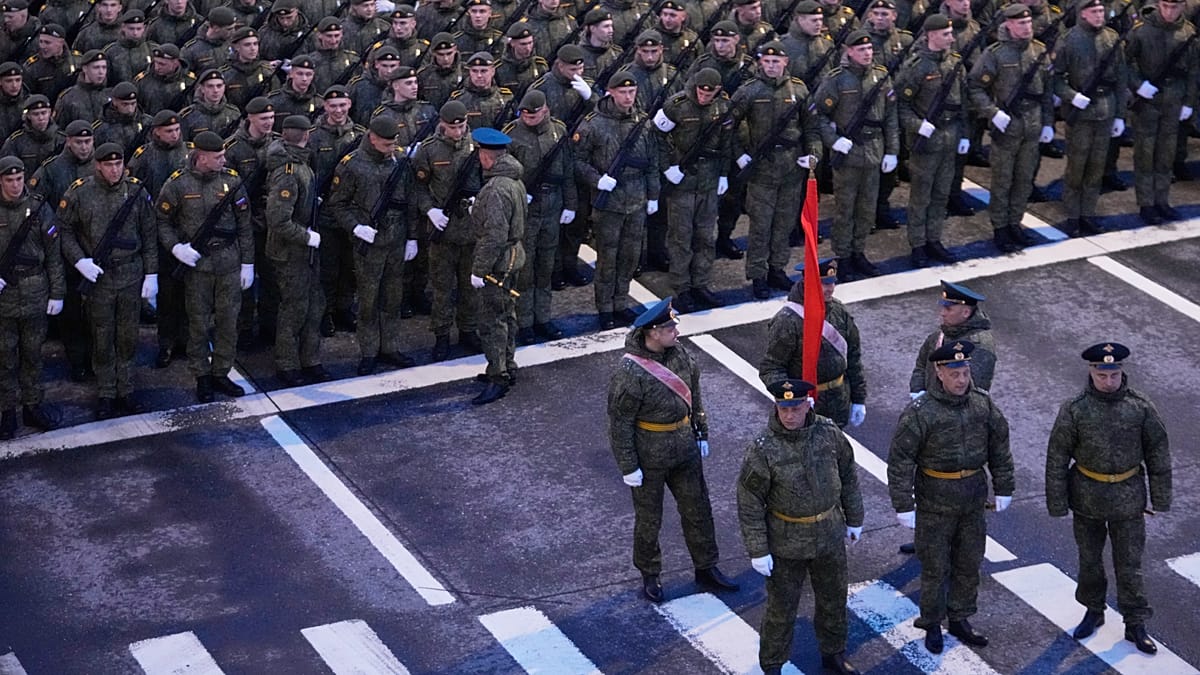
For the second consecutive year, Moscow’s Victory Day parade on 9 May will proceed without the display of heavy military equipment — a notable departure from the Kremlin’s traditional show of force. Russia’s Ministry of Defence cited the risk of Ukrainian long-range drone strikes on the capital as the reason for the scaled-back format. The parade, which marks the 80th anniversary of the end of World War II, will still feature an address by President Vladimir Putin, whom Russian state media TASS says will deliver an “important” speech.
The pared-down event comes as the EU remains divided over how to respond to leaders who choose to attend. Last year, nearly 30 world leaders — including Chinese President Xi Jinping, Brazilian President Luiz Inácio Lula da Silva, and Slovak Prime Minister Robert Fico — participated in the lavish ceremony. EU foreign policy chief Kaja Kallas had warned beforehand that “any participation in the 9 May parades or celebrations in Moscow will not be taken lightly.” Yet, a year later, questions linger over what consequences, if any, were imposed on those who defied the warning.
Fico’s Return and EU Ambivalence
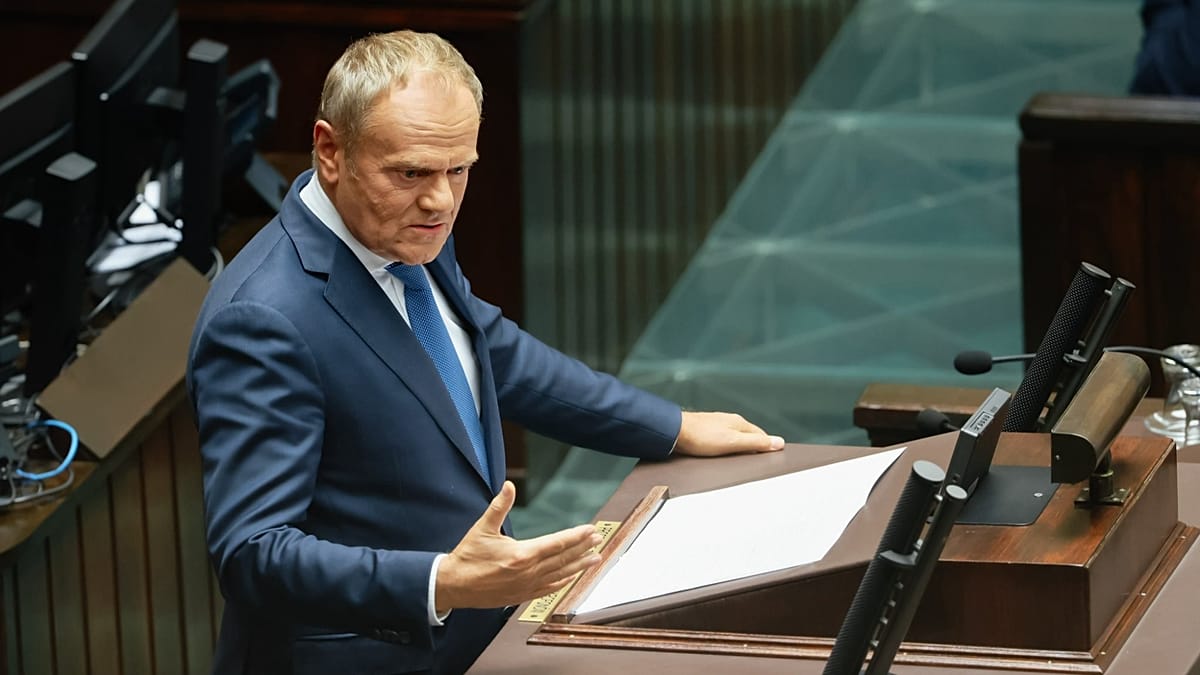
Robert Fico has confirmed he will travel to Moscow again this year, though he plans to lay flowers at the Tomb of the Unknown Soldier and meet Putin rather than attend the parade itself. Jamie Shea, a senior fellow at Friends of Europe and former NATO spokesperson, noted that Moscow is likely to “play up” Fico’s visit regardless. “Fico is trying to maintain a presence on both the EU and Russian fronts, albeit in a more discreet way,” Shea said. “It may not attract the same level of criticism from Brussels as in the past. This could be seen as a quieter breach of the rules, rather than an outright provocation.”
The EU’s foreign affairs spokesperson, Anita Hipper, declined to specify any punitive measures taken against last year’s attendees. Instead, she framed the parade as an attempt to “exploit the end of World War II celebrations for propaganda and the justification for the full-scale invasion of Ukraine.” She added that 9 May is a day for Europe to celebrate “peace, unity, prosperity and security — everything that Russia is not standing for.”
Juraj Majcin, a security and defence analyst at the European Policy Centre, argued that without unanimous backing from all 27 member states, the EU cannot enforce sanctions against attending leaders. “Even if Kallas warns of consequences, there is little she — or any EU body — can do unilaterally,” he said. In the absence of a coordinated response, individual countries have taken their own measures. Poland and the Baltic states refused to allow Fico’s aircraft to cross their airspace en route to Moscow, a move Majcin described as “a strong signal.”
Ceasefire Proposal Met with Skepticism
Alongside the parade, Russia announced a unilateral two-day ceasefire in Ukraine beginning on Victory Day. Ukrainian President Volodymyr Zelenskyy responded cautiously on social media, stating: “We believe that human life is far more valuable than any anniversary ‘celebration’.” However, Baltic leaders dismissed the proposal outright. Latvian Foreign Minister Baiba Braže and Estonian Foreign Minister Margus Tsahkna argued that Russian actions speak louder than words, condemning the truce as a “propaganda event” designed to legitimise the ongoing invasion. For deeper context on the competing ceasefire announcements, see our analysis in Russia and Ukraine Announce Competing Ceasefires Ahead of Victory Day.
The Ukrainian drone threat that forced the cancellation of heavy equipment displays is part of a broader pattern of escalating attacks. Just days before the parade, a Ukrainian drone struck a high-rise building in Moscow, underscoring the vulnerability of the Russian capital. This incident is covered in detail in Ukrainian Drone Strikes Moscow High-Rise Days Before Victory Day Parade.
Belarusian Opposition Condemns ‘Celebration of War’
Belarusian opposition leader Svetlana Tsikhanouskaya described Moscow’s 9 May event as “a celebration of war” and “a propaganda tool in the hands of Putin.” She criticised Belarusian President Aleksandr Lukashenko, a regular attendee, for serving Moscow’s interests “rather than those of the Belarusian people.” Lukashenko, often described as Europe’s last dictator, faces EU sanctions over disputed elections. Russian state media reports he is expected to attend again in 2026.
The scaled-back format of this year’s parade may reduce pressure on other European leaders to attend in the future, according to Shea. “The fact that Putin has chosen not to make a major spectacle of it this year — something that has been very important to the Kremlin in the past — is telling,” he said. “Some will interpret this as a sign that Russia is so bogged down in Ukraine that it can no longer spare the troops or equipment for such displays.”
As Europe marks the 80th anniversary of the end of World War II, the continent remains deeply divided over how to engage with a Russia that continues its full-scale war in Ukraine. The parade, once a symbol of Soviet victory, now serves as a mirror reflecting the fractures within the EU and the broader European security order.