The United States has issued a stark warning to Iran over the Strait of Hormuz, with Defense Secretary Pete Hegseth stating that any attack on commercial shipping will be met with a 'devastating' military response. Speaking at the Pentagon on Tuesday, Hegseth emphasised that Washington is 'not looking for a fight' but will not tolerate interference with international waterways.
'We're not looking for a fight. But Iran also cannot be allowed to block innocent countries and their goods from an international waterway,' Hegseth told reporters. 'If you attack American troops or innocent commercial shipping, you will face overwhelming and devastating American firepower.'
Ceasefire Holds, But Tensions Remain High
Hegseth and General Dan Caine, the top US military officer, both downplayed the current level of hostilities, describing recent exchanges as 'low harassing fire.' Caine insisted that 'the ceasefire certainly holds,' but warned that US forces are prepared to resume major combat operations if ordered. 'No adversary should mistake our current restraint with a lack of resolve,' he added.
The conflict began on 28 February when US and Israeli forces launched a war against Iran. Tehran responded by effectively closing the Strait of Hormuz, a vital chokepoint for global oil and gas shipments, while the US imposed a naval blockade on Iranian ports. President Donald Trump has indefinitely extended an initial two-week ceasefire, but the underlying dispute remains unresolved, with significant economic repercussions across Europe and beyond.
The European Union has been closely monitoring the situation, as disruptions in the Strait of Hormuz threaten energy supplies and trade routes. EU finance ministers have urged caution amid broader trade tensions with Washington, including threats of 25% auto tariffs that could further strain transatlantic relations.
Iran Warns of Escalation
Iran's chief negotiator, Mohammad Bagher Ghalibaf, who also serves as speaker of the parliament, warned the US against any further escalation in the Strait of Hormuz. In a post on X, Ghalibaf wrote: 'We know full well that the continuation of the status quo is intolerable for America; whilst we have not even started yet.' He accused the US and its allies of jeopardising shipping security and vowed that Tehran would not surrender control of the waterway.
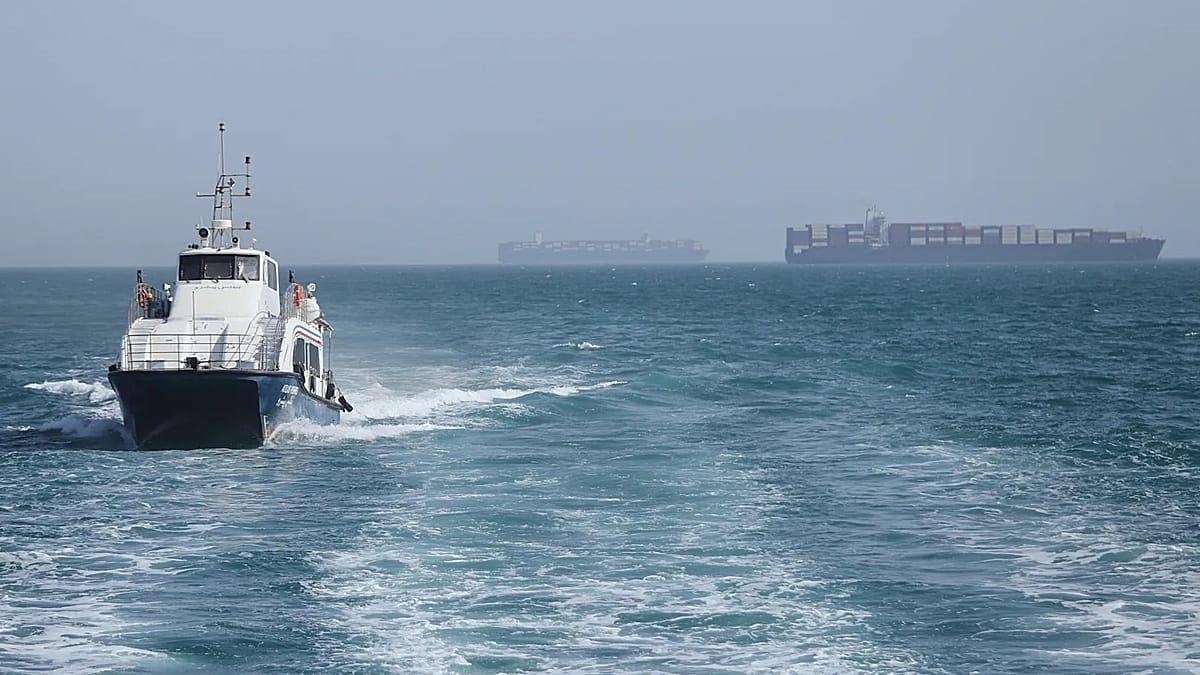
The US military reported that its Apache and Seahawk helicopters struck six Iranian boats threatening commercial shipping on Monday, and that its forces repelled missile and drone attacks. The United Arab Emirates also reported fresh Iranian attacks on its territory, further raising tensions in the region. An Emirates flight was held at Heathrow after Iranian missiles targeted the UAE, highlighting the conflict's reach into European airspace.
Iran denied that any of its combat ships were hit in US attacks but accused Washington of killing five civilian passengers on boats. The duelling maritime blockades have created a volatile standoff, with both sides trading fire while attempting to control the strategic waterway.
The crisis has also prompted broader security concerns for Europe. Iran has threatened European military bases as the Hormuz crisis deepens, raising the stakes for NATO allies. Meanwhile, the humanitarian toll continues to mount, with reports of civilian casualties and disruptions to aid shipments. The UNHCR has warned that shipping costs are rising, threatening refugee aid across Africa.
As the standoff persists, European capitals are watching closely, aware that any miscalculation in the Gulf could have far-reaching consequences for energy security, trade, and regional stability.