Iran has escalated its military campaign in the Persian Gulf, launching a fresh wave of missile and drone attacks on ships in the Strait of Hormuz and striking targets in the United Arab Emirates. The Islamic Revolutionary Guard Corps (IRGC), now widely seen as the driving force behind Tehran's strategic decisions, has also unveiled a new navigation map for the waterway, effectively expanding its monitoring zone to include the UAE's Fujairah—a key alternative route for oil exports.
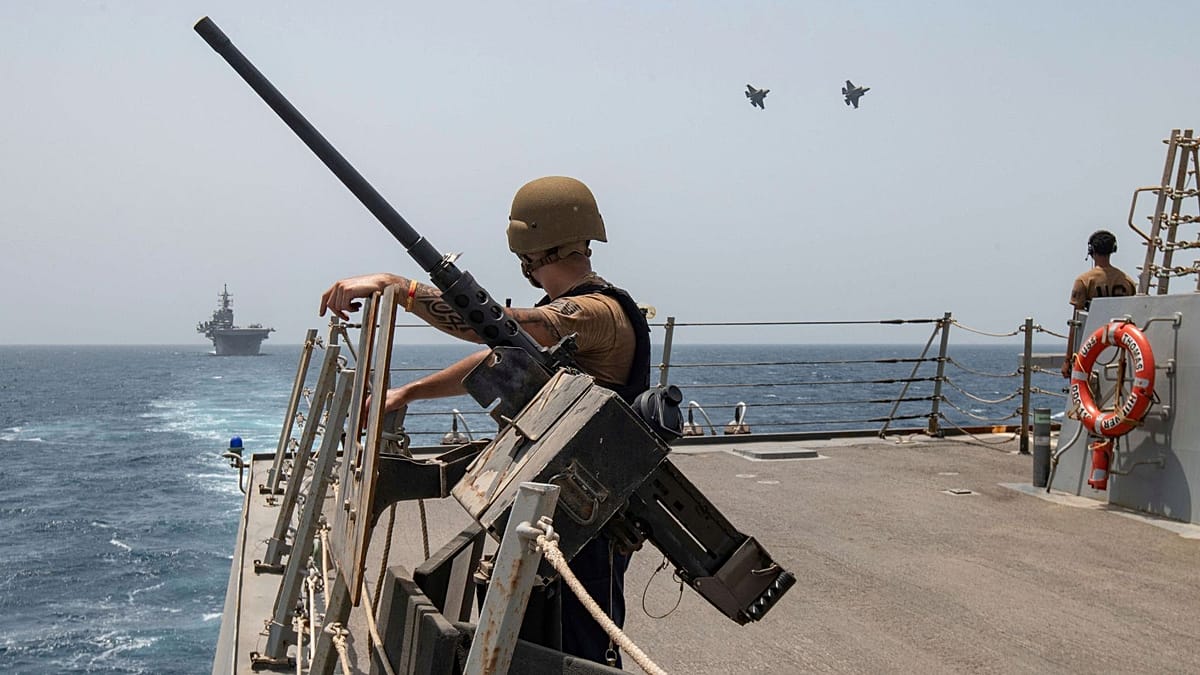
The move has brought Iranian forces to the brink of direct confrontation with US Central Command (CENTCOM). On Monday, reports emerged of warning shots fired toward the US Navy, and US President Donald Trump confirmed that IRGC fast boats had been sunk. Admiral Brad Cooper, head of CENTCOM, stated that US military helicopters destroyed six Iranian small boats targeting civilian vessels in the strait. The US Navy has since established a "defensive umbrella" of helicopters and fighter planes to protect freighters, while clearing a mine-free pathway for navigation.
Iran's attacks on Fujairah and other UAE locations have drawn widespread condemnation, particularly from Gulf Cooperation Council states. European leaders, gathered in Yerevan for the European Political Community summit, have also voiced strong disapproval and reaffirmed their support for the UAE. The UAE reported intercepting 12 ballistic missiles, three cruise missiles, and four drones launched from Iran on Monday. Separately, a residential building housing employees in Oman was targeted, though officials provided no further details.
Hardline Threats Against Europe
In a column published Tuesday in the conservative Iranian daily Kayhan, Hossein Shariatmadari—a hardline politician close to the late Ayatollah Ali Khamenei—warned that "the military bases of those European countries that will be placed at America's disposal can and must become legitimate and lawful targets for our military attacks." Shariatmadari, who has previously taken a tough stance on the nuclear deal, added that "Europe is extremely vulnerable to any potential attacks by the Islamic Republic and has virtually zero capacity to withstand them." He wrote that European countries "know we can hit them, and that when we do, we hit them hard."
Meanwhile, Iran's parliament speaker Mohammad Bagher Ghalibaf posted on X, speaking of the "consolidation of a new equation" in the Strait of Hormuz. Claiming that the continuation of the current situation is intolerable for the United States while Iran "has not even started yet," Ghalibaf stated that "the security of shipping and energy transit under the control of the United States and its allies has been jeopardised by the violation of the ceasefire and the imposition of a blockade. Their mischief will, however, soon be curtailed."
The threats come as European nations assess their military posture in the region. The EU has its own maritime mission in the Gulf, and France has described the US-led coalition as complementary to European efforts. However, the direct warning against European bases marks a significant escalation in rhetoric, raising concerns in capitals from Paris to Berlin.
Internal Tensions in Iran
Field reports from inside Iran also point to growing instability. On Tuesday morning, the Mehr news agency reported a fire at Dayyer port in Bushehr province. Majid Omrani, head of the port's fire brigade, said two fibreglass commercial dhows had caught fire, with the cause unknown until firefighting operations are complete. Meanwhile, residents in southern Iran, struggling with internet access, have posted messages on social media reporting explosions in Bandar Abbas and on Qeshm island. The Telegram channel Vahid Online also received reports of explosions in Hormozgan province.
The crisis in the Strait of Hormuz has already had ripple effects on global energy markets. Oil prices dipped after Trump's announcement of a plan to clear the strait, but the long-term stability of shipping routes remains uncertain. The MSC shipping line has launched a new Europe-Red Sea service to bypass the strait, highlighting the disruption to trade.
European leaders are now weighing their response. The European Political Community summit in Yerevan provided a platform for condemnation, but concrete measures remain under discussion. With Iran's hardliners openly threatening European bases, the continent faces a stark choice: reinforce its military presence in the Gulf or risk being drawn into a wider conflict.