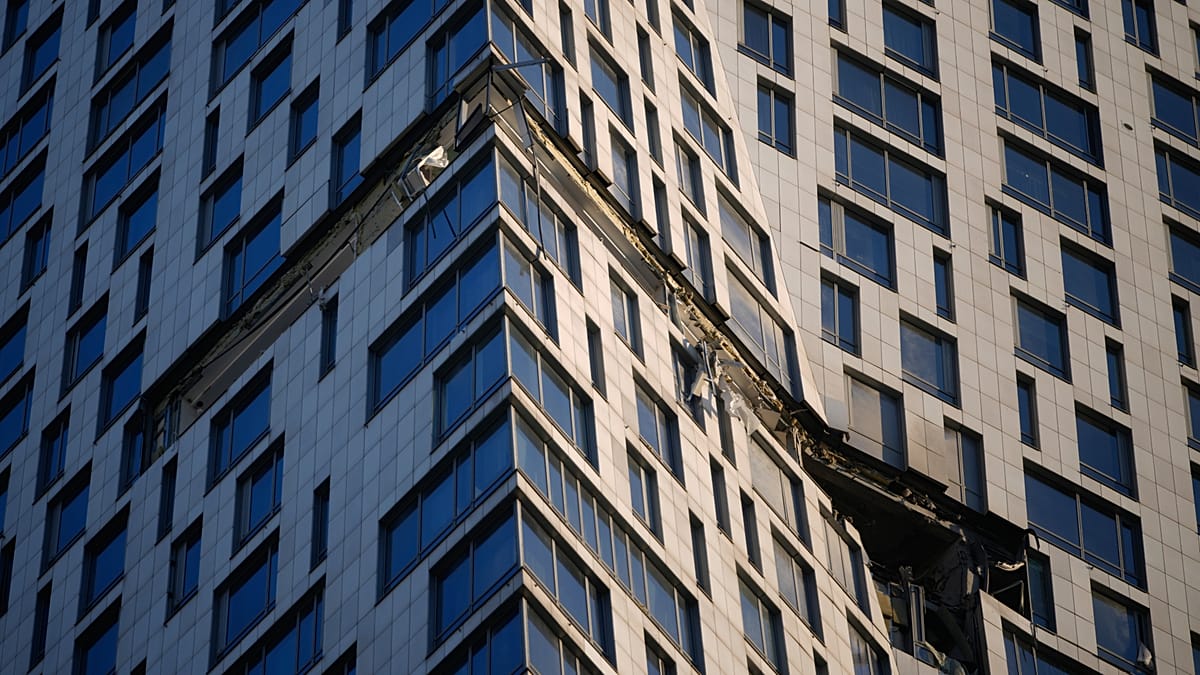
In a significant escalation, a Ukrainian drone struck a residential building in Moscow overnight on Monday, just days before Russia's annual Victory Day parade on 9 May. The attack, which hit the Mosfilm Tower—a luxury apartment complex west of the city centre—occurred approximately seven kilometres from the Kremlin and three kilometres from the Russian Defence Ministry, marking one of the deepest incursions into central Moscow since the war began.
Moscow Mayor Sergey Sobyanin confirmed the incident on a Kremlin-controlled social media platform, stating that air defence systems intercepted the drone and that no casualties were reported. However, videos circulating on social media show a drone flying at low altitude towards the capital just after midnight, followed by loud explosions. Photographs reveal visible damage to the upper floors of the building, with debris scattered on the street below as emergency crews responded.
Unprecedented Security Measures
The timing of the attack is particularly sensitive, coming just days before Russia's Victory Day parade, a key event in the Kremlin's calendar under President Vladimir Putin. Russian authorities have significantly tightened security in Moscow, with hundreds of air defence systems reportedly transferred to the capital, according to Russian Telegram channels. Ukraine's Foreign Intelligence Service noted that preparations for the parade are taking place "in a mode more similar to a military lockdown than a celebration," with communication blackouts across Moscow this week.
In a related development, the Kremlin proposed a Victory Day parade ceasefire, but only communicated this to the US administration, as Russian officials continue to refuse direct contact with Kyiv. Ukraine has rejected the proposal, demanding a lasting ceasefire instead. This follows a short Easter ceasefire in April, which was also short-lived. For Moscow, Victory Day holds immense symbolic weight, serving as a public demonstration of military power, though this year's parade is expected to be significantly scaled back.
The attack underscores the ongoing volatility of the conflict, with both sides continuing to strike deep into each other's territory. Russian strikes have killed 10 across Ukraine as Kyiv also targeted Black Sea oil tankers, while Russian drone and missile strikes have killed two and injured dozens in recent days. The European Union, through its foreign policy chief Kaja Kallas, has warned against seeking direct talks with Russia, arguing that the EU must not "humiliate" itself by doing so.
As the conflict enters its third year, the targeting of Moscow itself—a city that has largely remained insulated from the war's direct effects—signals a new phase in Ukraine's military strategy. The incident also raises questions about the effectiveness of Russia's air defence systems, which have been heavily reinforced in the capital. For European observers, the attack serves as a reminder of the war's proximity to the continent's borders and the potential for further escalation.