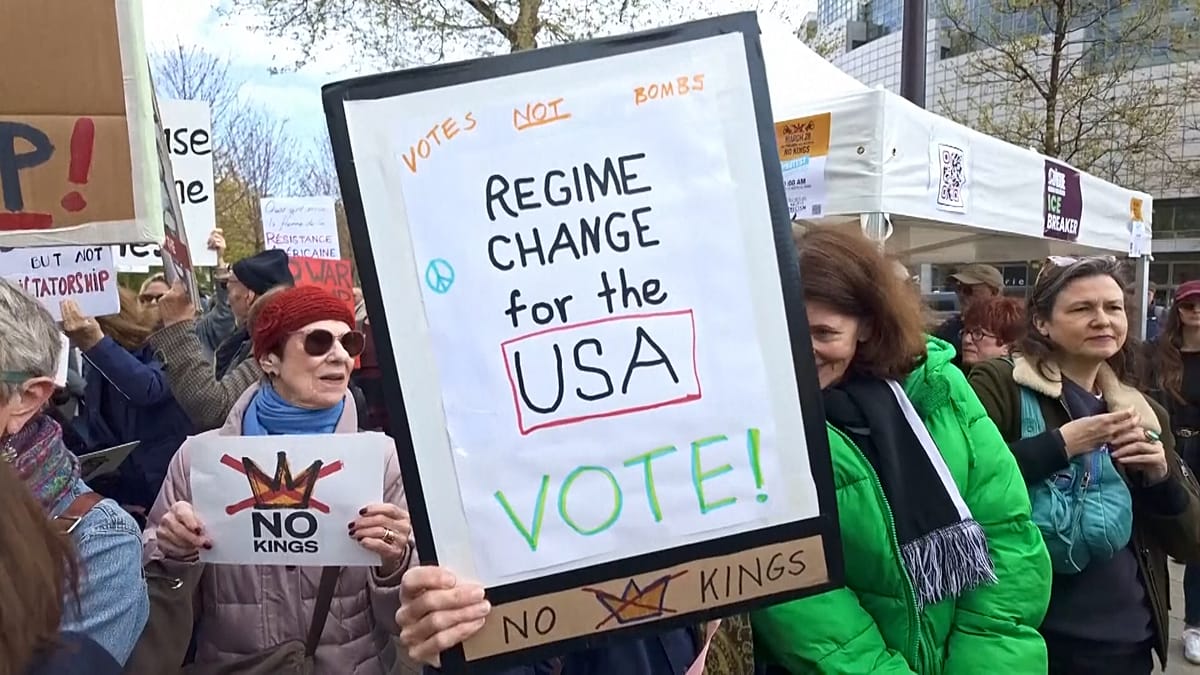
On Saturday, hundreds of demonstrators gathered at the Place de la Bastille in Paris for a 'No Kings' protest, voicing opposition to former US President Donald Trump and his policies. The rally, part of a broader wave of anti-Trump demonstrations across Europe, focused on denouncing what organizers called a rise in authoritarianism and the perpetuation of 'endless wars.'
The choice of the Bastille was symbolic: the square, once the site of a prison stormed during the French Revolution, has long been a focal point for popular uprisings and political dissent in France. Protesters carried signs reading 'No Kings' and 'Stop Trump,' reflecting a transatlantic anxiety about the direction of US politics under a potential second Trump term.
European Protests Spread
The Paris march was not an isolated event. Similar protests have been reported in other European capitals, including Berlin, London, and Brussels, as citizens express concern over Trump's rhetoric and policy proposals. The demonstrations come amid heightened tensions between the US and Europe, particularly over issues such as trade tariffs, climate change, and military alliances.
In Germany, the protests have gained additional resonance following Trump's announcement of a planned withdrawal of 5,000 US troops from the country. The decision, which critics say lacked strategic planning, has deepened the transatlantic rift and fueled debates about European defense autonomy. For more on this, see our analysis: Trump's Germany Troop Withdrawal Lacked Strategic Planning, Sources Say.
The 'No Kings' slogan itself is a direct reference to Trump's own comments and actions, which critics interpret as an embrace of authoritarian tendencies. The protests have drawn a diverse crowd, from left-wing activists to centrists worried about democratic norms.
Broader Context: Transatlantic Tensions
The demonstrations occur against a backdrop of escalating friction between the Trump administration and European leaders. Recent clashes between German Chancellor-in-waiting Friedrich Merz and Trump over troop withdrawals have highlighted the growing divide. European leaders are increasingly seeking to chart their own course, as seen in the recent European Political Community summit in Yerevan, where Armenia explored closer ties with the EU.
Meanwhile, Trump's foreign policy moves, including his handling of Iran and threats to impose new sanctions on Cuba, have unsettled European allies who prefer multilateral diplomacy. The protests in Paris and elsewhere reflect a broader unease about the stability of the US-led international order.
In France, the rally also tapped into domestic frustrations with the government of President Emmanuel Macron, who has faced criticism for his handling of various issues, from pension reforms to security. The 'No Kings' protest thus served as a dual critique: of Trump's America and of perceived authoritarian tendencies closer to home.
As the 2024 US presidential election approaches, European observers are watching closely. The protests suggest that many Europeans are not merely passive spectators but are actively mobilizing to voice their concerns about the potential impact of a Trump victory on the continent's security and values.