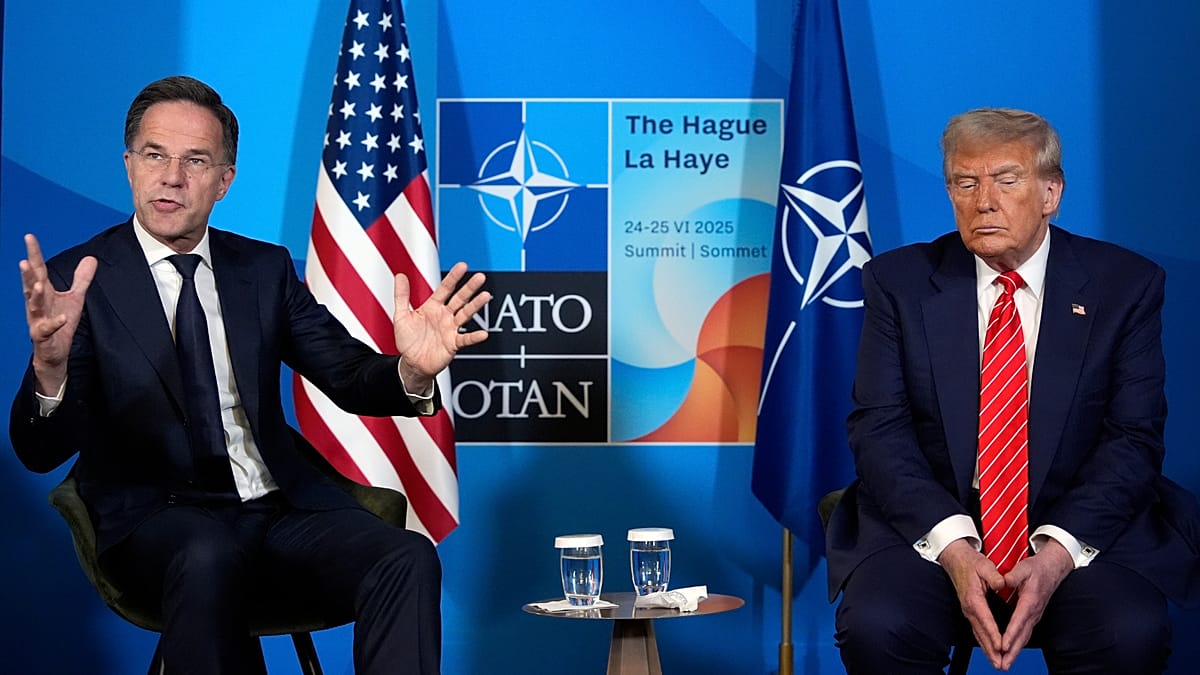
The abrupt announcement by US President Donald Trump to withdraw 5,000 active-duty troops from Germany within the next six to twelve months caught senior NATO officials off guard, according to multiple sources familiar with the matter. The Pentagon's statement on Friday came without prior warning to allies, leaving military planners scrambling to assess the implications for Europe's defence architecture.
Questions about the logistics and scope of the withdrawal remain unanswered. It is unclear whether the departing personnel are part of a rotational force that will not be replenished, an air squadron, or elements of a core unit. “We don't know what are these forces — is it the core of a brigade? An air squadron?” Ivo Daalder, former US ambassador to NATO, told Euronews. “There is no detail because Trump just made this number up,” a US source added.
Trump escalated the situation on Saturday by stating that the troop presence in Germany would be reduced “a lot further” than the initially announced 5,000, though he provided no specifics on timing or scale. The decision appears to be driven by a personal feud with German Chancellor Friedrich Merz, who had recently criticised Washington's strategy in the Iran war, describing Tehran as “humiliating” the United States. Trump responded on social media, accusing Merz of neglecting the war in Ukraine and his own country's problems.
A Decision Made in Anger, Not Strategy
Sources within NATO and the US administration indicate that the withdrawal figure was not based on operational requirements. “The figure of 5,000 is a top-line number that Trump took out of the sky because he wanted to do something demonstrative as part of his confrontation with Merz,” a US source told Euronews. The timeline between Trump's initial post on Wednesday night, in which he said the Pentagon was “studying” a reduction, and the Pentagon's formal announcement on Friday was remarkably short, suggesting a hasty decision.
The White House has also been frustrated by European allies' refusal to join the US-led war in Iran, with Trump describing NATO as a “paper tiger.” This broader tension has fuelled speculation that similar troop reductions could be imposed on other European host nations. Trump has already threatened troop cuts in Spain and Italy over their reluctance to participate in the conflict.
Military planners are downplaying the immediate impact of a 5,000-troop reduction, noting that modern warfare relies more on technology and advanced weaponry than on large numbers of soldiers. Moreover, several European allies, particularly Germany, have significantly increased their defence spending over the past year. NATO countries had been bracing for a potential US troop review, but they expected to be consulted beforehand to ensure an orderly transition that would not disrupt deterrence capabilities.
“We are working with the US to understand the details,” said Allison Hart, a spokesperson for NATO Secretary General Mark Rutte. “This adjustment underscores the need for Europe to invest more in defence and take on a greater share of the responsibility for our shared security.”
The US has maintained a heavy military presence in Germany since the Cold War, with over 36,000 active-duty personnel currently stationed there. This deployment is widely regarded as a critical projection of US power globally, not merely a historical legacy. Daalder argues that the Trump administration has missed this broader strategic picture. “He thinks he can punish allies by removing troops, but he is hurting America's interests,” Daalder said. “He is just demonstrating that he doesn't understand how America's interests are served.”
The withdrawal marks a significant escalation in the transatlantic rift, which has already been strained by trade disputes and disagreements over the Iran war. Trump's decision to order 5,000 US troops out of Germany has deepened concerns about the reliability of the United States as a security partner. European leaders are now reassessing their defence strategies, with some calling for greater strategic autonomy within NATO.
As the details of the withdrawal remain unclear, NATO officials are drawing conclusions about the timing of the announcement, linking it directly to Trump's anger over Merz's remarks. The episode underscores a growing pattern of impulsive decision-making in Washington that prioritises personal grievances over alliance cohesion. For Europe, the message is clear: the era of unquestioned US security guarantees may be coming to an end.