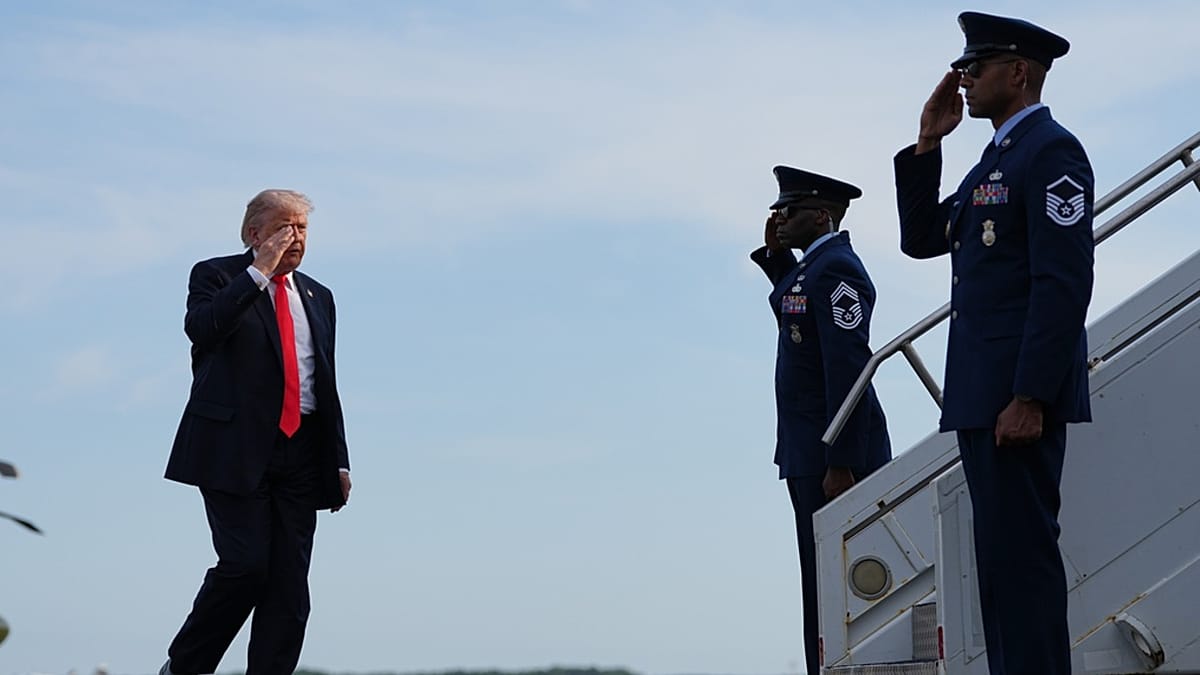
US President Donald Trump has announced the withdrawal of 5,000 active-duty troops from Germany, a decision that fulfills his earlier threats and marks a significant escalation in the transatlantic rift over the US-Israeli war in Iran. The pullout, expected to take place over the next six to twelve months, reduces the American military presence in the country by roughly 14%, from over 36,000 to around 31,000 service members.
The announcement follows a week of escalating tensions between Trump and German Chancellor Friedrich Merz, who had publicly criticized Washington's handling of the conflict. Merz accused the US of being “humiliated” by Iranian leadership and lacking a coherent strategy in the war, which began with US-Israeli strikes on Tehran on 28 February. Trump responded by threatening troop cuts, and on Friday, the Pentagon confirmed the plan.
Pentagon spokesman Sean Parnell stated that the “decision follows a thorough review of the Department’s force posture in Europe and is in recognition of theatre requirements and conditions on the ground.” Germany hosts several key US military installations, including the headquarters of US European Command and US Africa Command at Patch Barracks in Stuttgart, Ramstein Air Base in Rhineland-Palatinate, and the Landstuhl Regional Medical Center, which has treated casualties from conflicts in Afghanistan and Iraq. US nuclear weapons are also believed to be stationed at Büchel Air Base.
Political Fallout in Washington and Europe
The withdrawal drew immediate pushback from Democrats in the US Congress. Senator Jack Reed of Rhode Island, the ranking Democrat on the Senate Armed Services Committee, said the move “suggests American commitments to our allies are dependent on the president's mood.” He urged Trump to “cease this reckless action before he causes irreversible consequences for our alliances and long-term national security.”
This is not the first time Trump has threatened to reduce the US military footprint in Germany. During his first term, he proposed pulling nearly 10,000 troops from the roughly 34,500 stationed there at the time, but the process was never initiated. President Joe Biden formally halted the planned withdrawal shortly after taking office in 2021.
Trump has long complained about the cost of stationing US troops in Germany and has repeatedly criticized NATO allies for not contributing enough to collective defense. The current dispute is rooted in the Iran war, which has caused a global oil price crisis and upended the Middle East. Trump has railed against NATO for refusing to assist Washington in the conflict, and his administration has warned that Europe must take greater responsibility for its own security, including the defense of Ukraine.
The decision also comes amid broader US pressure on European allies. Earlier this week, Trump threatened similar troop cuts in Spain and Italy over their objections to the Iran war. The US currently stations an estimated 80,000 to 100,000 military personnel across Europe, including rotations and exercises.
Analysts warn that the withdrawal could have severe consequences at a time of heightened global instability. The move weakens NATO's eastern flank and reduces the US ability to project power in Europe, the Middle East, and Africa. It also sends a troubling signal to allies about the reliability of American security guarantees.
In Berlin, the government has not yet issued an official response, but the decision is expected to strain relations further. Chancellor Merz, who has sought to maintain a balanced transatlantic partnership, now faces the challenge of managing a reduced US presence while addressing domestic concerns about security and sovereignty.
The withdrawal also raises questions about the future of US nuclear sharing arrangements in Europe. The B61 nuclear bombs stored at Büchel are part of NATO's nuclear deterrence posture, and any reduction in US personnel could complicate their maintenance and readiness.
As the US prepares to reduce its footprint in Germany, European leaders are grappling with the broader implications. The move reinforces the need for the EU to develop a more autonomous defense capability, a goal that has gained traction in recent years but remains politically and financially challenging.