YEREVAN — The eighth edition of the European Political Community (EPC) convened in the Armenian capital on Thursday, drawing nearly 50 heads of state and government from across the continent and beyond. While the official agenda includes democratic resilience, hybrid threats, and economic security, the most anticipated discussions revolve around the transatlantic relationship and the impact of recent US policy moves.
Romanian President Nicușor Dan announced on social media platform X that he would prioritize energy security talks. Polish Prime Minister Donald Tusk struck a different tone, emphasizing the European-American “friendship” and asserting that “there is no alternative to this. We need each other more than ever before.”
Armenia’s border with Iran ensures the Middle East conflict will loom large. But the central undercurrent is the role of US President Donald Trump in Europe and how leaders can respond to his recent trade and defence announcements. Over the weekend, Trump declared 25% tariffs on European cars and car parts, a move that will particularly hit Germany’s automotive sector.
Bernd Lange, a lead European Parliament negotiator on trade with EU member states, criticized the announcement, calling it “clear unreliability” and accusing Washington of “breaking its commitments” in trade relations. He told Europe Today that Trump is “really angry” against Germany and is “really politically against Germany.”
Adding to the tension, the Pentagon confirmed on Friday that it would withdraw roughly 5,000 troops from Germany, raising questions about NATO’s force posture in the region. Many see this as retaliation for German Chancellor Friedrich Merz’s criticism of negotiations surrounding the Iran war. Merz responded on X: “The United States is and will remain Germany‘s most important partner in the North Atlantic Alliance.”
Canada’s Unprecedented Presence
The summit’s dynamics are further enriched by the attendance of Canadian Prime Minister Mark Carney, marking the first time a non-European leader has joined the EPC format. As Euronews’ Europe editor Maria Tadeo noted, Carney flew 11 hours for an 8-hour meeting — a significant commitment to diplomacy.
The invitation is no coincidence. Over the past year, Europe and Canada have both faced Trump’s tariff and annexationist threats. Carney has pitched a new alliance of mid-sized powers to counterbalance the US and China, while polls show growing Canadian support for at least considering EU membership. A senior EU official downplayed the idea of an anti-Trump coalition, stating that Carney’s participation “demonstrates the close proximity between Europe and Canada. I don’t think more should be read into it.”
European Council President António Costa, co-chairing the EPC alongside Armenian Prime Minister Nikol Pashinyan, wrote on X: “Europe and Canada are more than just like-minded partners — together we are building a global alliance to defend peace, shared prosperity and multilateralism.”
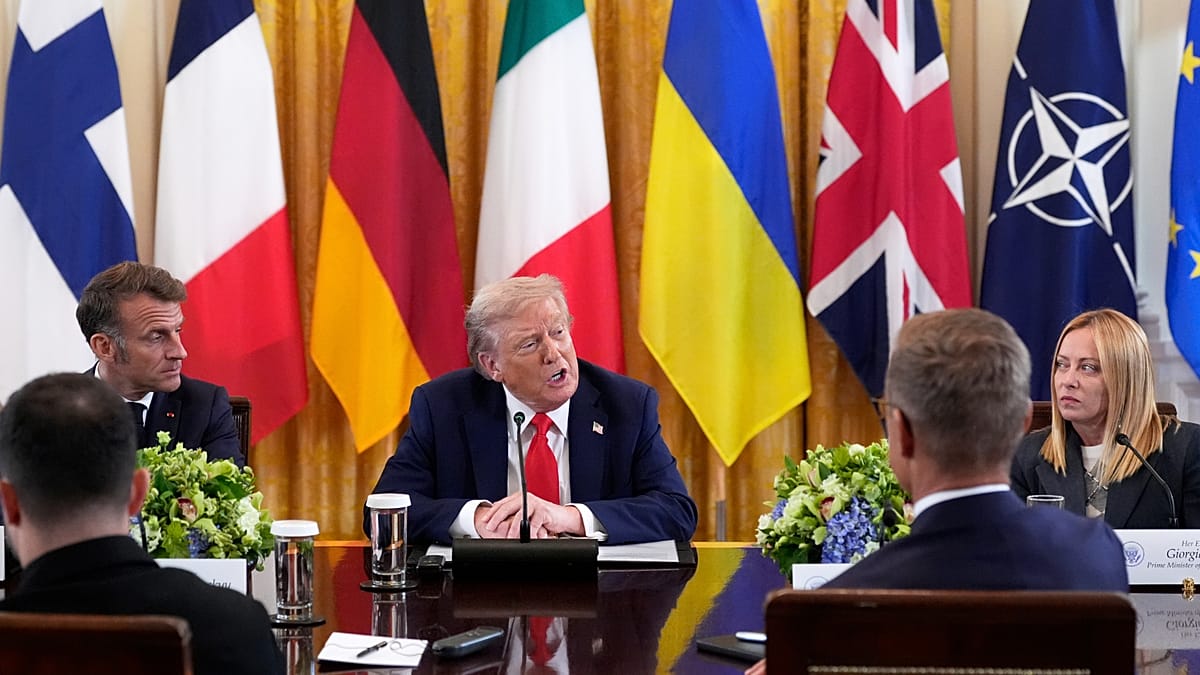
Yet tangible outcomes from the EPC are unlikely. The real value lies in the sidelines, where leaders hold backroom bilaterals captured in photographs that show politics in action.
In related news, senior NATO officials were not warned about Trump’s troop withdrawal decision before the Pentagon’s announcement. Questions about logistics — where and how the troops will be withdrawn — remain unanswered. Trump later suggested the reduction could go “a lot further” than 5,000, without providing details. Former US ambassador to NATO Ivo Daalder told Euronews: “We don’t know what these forces are, is it the core of a brigade? an air squadron?” A US source added: “There is no detail because Trump just made this number up.”
Meanwhile, Hungary’s Prime Minister-to-be Péter Magyar defended appointing his brother-in-law, Márton Melléthei-Barna, as Minister of Justice, despite promises to fight nepotism. In a video, Magyar stated: “We need to start putting our country back on track, bringing home EU funds, kick-starting the economy and improving public services.”