Foreign ministers from across the European Union gathered in Brussels on Monday for a packed Foreign Affairs Council, with a slate of sensitive dossiers on the table. The agenda spans the ongoing war in Ukraine, the conflict in the Middle East, and a renewed push to engage with Syria’s transitional government.
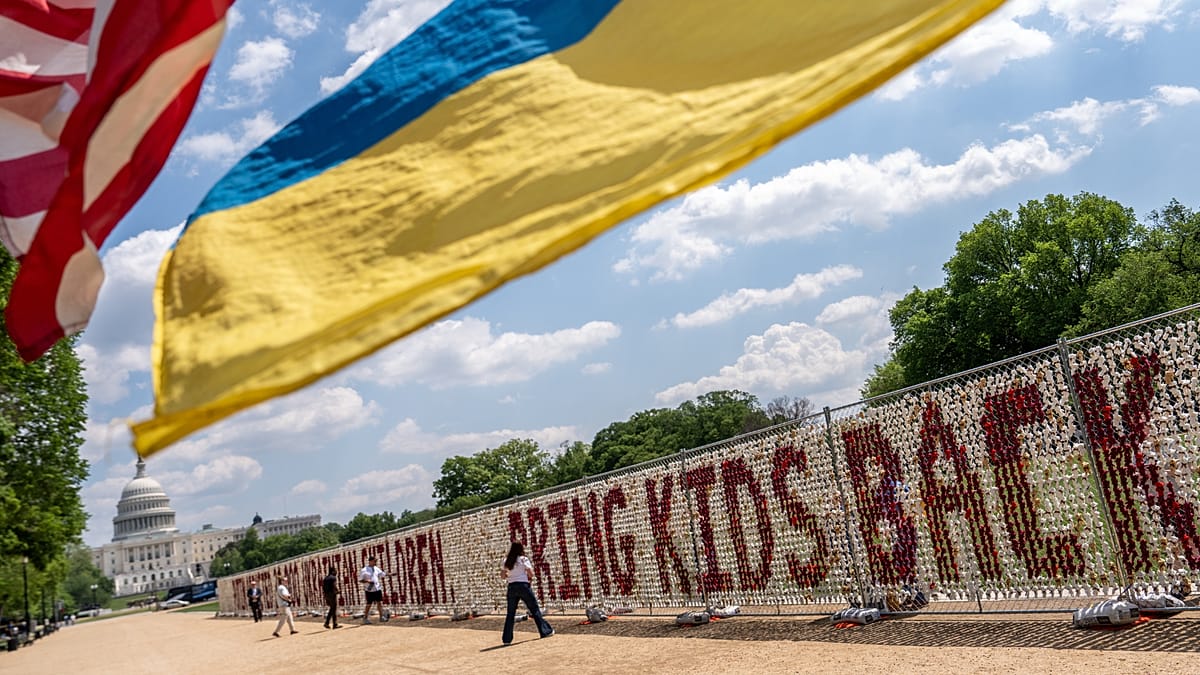
On Ukraine, the bloc is expected to expand its blacklist of Russian individuals implicated in the deportation and forced adoption of Ukrainian children. EU foreign policy chief Kaja Kallas, alongside the foreign ministers of Ukraine and Canada, will later co-host a conference dedicated to the return of these children. Officials estimate that tens of thousands of Ukrainian children have been abducted since Russia’s full-scale invasion began in 2022, a situation that prompted the International Criminal Court to issue an arrest warrant for President Vladimir Putin over alleged war crimes.
“It is awful, what is done to these children,” Kallas told reporters ahead of the meeting, expressing hope that the bloc would move forward with cracking down on those responsible.
Sanctions on Israeli Settlers and EU-Syria Dialogue
Turning to the Middle East, Kallas will brief ministers on possible measures to curtail imports from Israeli settlements. Options include a full trade ban, which would require unanimity under the traditional sanctions regime, or higher tariffs and quotas, which could be approved by qualified majority. France, Sweden, Ireland, Spain, Belgium, and the Netherlands are among the member states pushing for progress.
“We hope we can get the settlers over the finish line. It’s been long overdue,” a senior diplomat said. Sweden’s Foreign Minister Maria Malmer Stenergard added that the bloc “should also move forward with sanctions on extremist ministers in the Israeli government.”
The day will conclude with a high-level political dialogue between the EU and Syria, aimed at restarting negotiations toward an Association Agreement. Such an agreement could unlock fresh funding for post-war reconstruction and stimulate foreign investment. Syria’s foreign minister, Asaad Hassan al-Shaibani, will attend the talks in Brussels. Human Rights Watch welcomed the ramp-up in relations but expressed concern that an Association Agreement may not “address Syria’s challenges on human rights and accountability,” calling for an impartial justice system and greater transparency.
Since President Bashar al-Assad fled Damascus in December 2024, ending decades of dynastic rule, Syria’s transitional government has struggled to assert full authority over a country devastated by nearly 14 years of civil war. A senior EU official cautioned that restarting the Association Agreement “takes time” and that “we’re not there yet.”
Hungary’s New Direction Under Péter Magyar
Brussels is also watching closely for signs that Hungary may soften its long-standing opposition to several key foreign policy files, including support for Ukraine and sanctions measures. After his April parliamentary victory, Péter Magyar was sworn in as prime minister over the weekend. “You are showing the best of Hungary, this joyful Hungary. This Hungary, that is democratic once again,” the 45-year-old Magyar told a jubilant crowd in Budapest on Saturday, coinciding with Europe Day. His proposed cabinet is still undergoing parliamentary approval, and the new foreign minister is not expected to attend Monday’s talks.
One key file is the European Peace Facility (EPF), a special fund that allows member states to partially reimburse military supplies donated to Ukraine. Another flashpoint is sanctions against violent Israeli settlers, which several member states have been pushing for months. “Let’s see if this happens,” a senior diplomat said.
Meanwhile, US President Donald Trump dismissed Iran’s response to a US peace proposal as “totally unacceptable,” leaving a multi-week ceasefire in the balance. Iran’s counter-pitch, delivered through a Pakistani mediator, focused on ending the war and ensuring maritime security in the Persian Gulf, particularly in Lebanon and the Strait of Hormuz. The EU’s role in mediating such conflicts remains limited, but the bloc’s foreign policy chief has stressed the importance of diplomatic engagement.