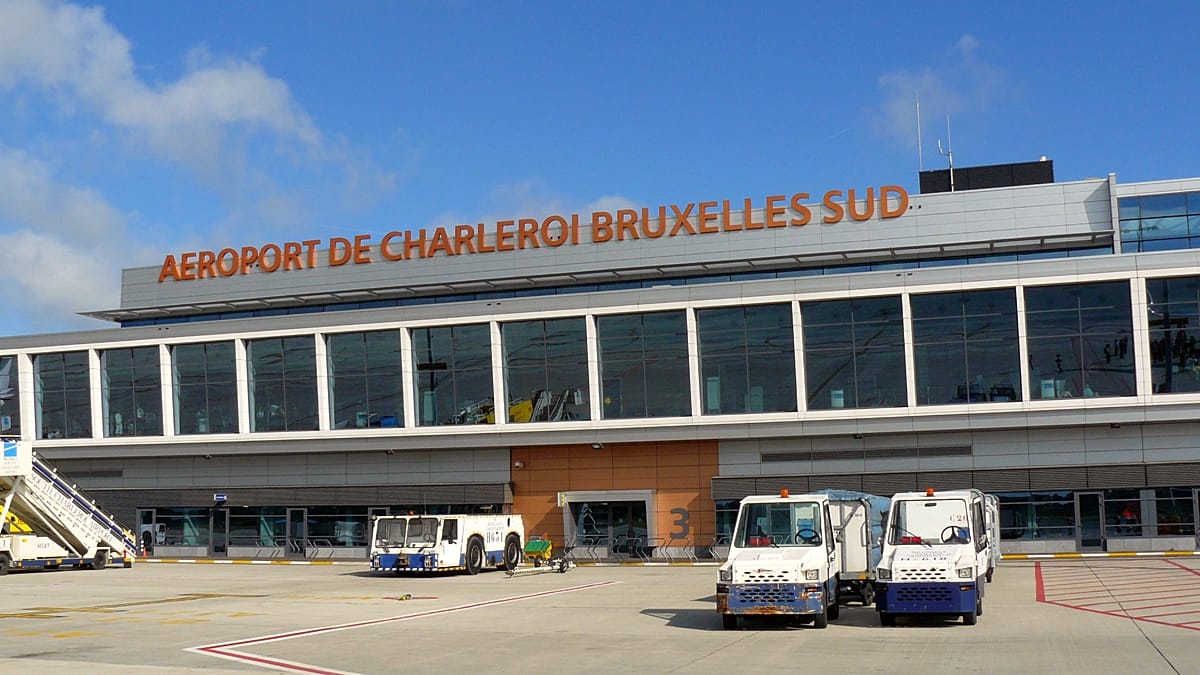
Belgium is bracing for widespread travel disruption on Tuesday as three major trade unions — the socialist ABVV, Christian ACV, and liberal ACLVB — coordinate a national strike over government reforms to pensions, wages, and working conditions. The action will bring all flights at Brussels South Charleroi Airport, the country’s second-busiest hub, to a complete halt.
Charleroi Airport, located in Wallonia and a key base for low-cost carriers, said it would be unable to operate any scheduled departures or arrivals due to safety concerns linked to reduced staffing levels. Passengers affected by the cancellations will be contacted directly by their airlines regarding rebookings or refunds, the airport confirmed in a statement.
Brussels Airport also hit
The disruption is not confined to Charleroi. At Brussels Airport, the country’s primary international gateway, a spokesperson told The Brussels Times that more than half of departure flights may be cancelled on Tuesday. The measure is intended to ensure that remaining flights operate safely and without excessive waiting times. Airlines are expected to adjust their schedules in the coming days and will inform passengers directly about their options.
The strikes are part of a broader push by unions to pressure the federal government over economic reforms that they argue will erode pension entitlements and worsen working conditions. Demonstrations are scheduled to begin in the morning and conclude at 14:00 local time in Brussels. Among the strikers’ demands are a fairer tax system, the preservation of automatic wage indexation tied to inflation, and improved pension schemes.
Public transport in the capital will also see reduced services. STIB/MIVB, which operates metro, bus, tram, and minibuses for passengers with reduced mobility, said it would aim to maintain at least a partial service during the strike.
Belgium’s union landscape is notably fragmented, with the three main confederations representing different political traditions. Their coordinated action underscores the depth of discontent with the current government’s economic direction, particularly as the cost of living remains a sensitive issue across Europe.
For travellers, the disruption is a reminder of the fragility of transport networks during labour disputes. While Charleroi and Brussels airports are the most visible casualties, the ripple effects could extend to road and rail services, depending on participation levels. The strike also echoes similar walkouts in other European countries, where unions have pushed back against austerity measures and pension overhauls.
Passengers planning to fly to or from Belgium on Tuesday are advised to check with their airlines and consider alternative arrangements. The situation is likely to evolve as unions assess turnout and the government’s response.