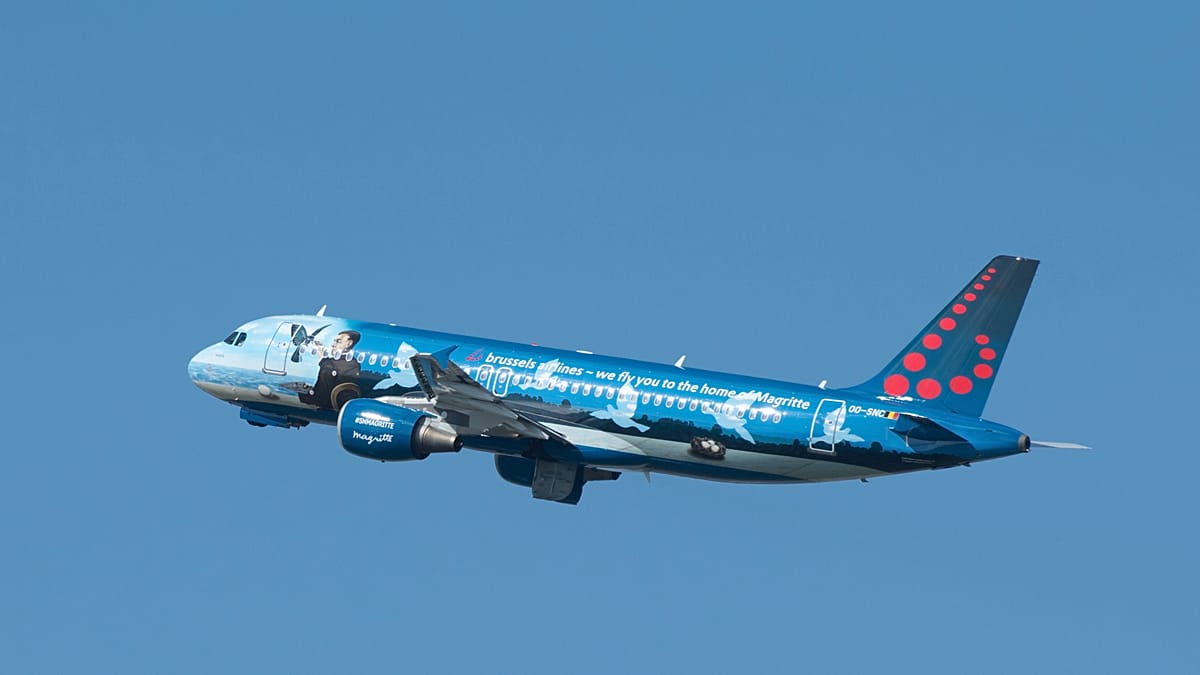
Brussels Airlines has confirmed it will not cancel flights "for the moment" even as the ongoing conflict in the Middle East and disruptions in the Strait of Hormuz threaten jet fuel supplies across Europe. A spokesperson for the Belgian carrier told European Pulse that the airline has secured 80% of its jet fuel requirements for 2026 through a hedging strategy, though this does not guarantee physical delivery of the kerosene.
"It is important to note that it is a financial tool, which means the price has been set at pre-crisis levels. It’s not the actual physical purchase of the kerosene," the spokesperson explained. The hedging and fuel procurement are managed centrally by the Lufthansa Group, which owns Brussels Airlines along with several other carriers.
A Lufthansa Group spokesperson said the company does not foresee disruptions to kerosene supply over the next six weeks, a standard timeline for fuel suppliers to provide delivery information. "Global demand for air travel remains high and has proven resilient even in times of crisis. Against this backdrop, the Lufthansa Group is once again expecting a strong summer travel season," the spokesperson added.
Fuel Costs and Passenger Impact
Jet fuel prices have surged by approximately 150% since the Strait of Hormuz closure, prompting Brussels Airlines to announce in April that it will end free hand-luggage allowances on short- and medium-haul flights. The new basic fare will include only one personal item, such as a laptop bag or small rucksack. Passengers wanting a standard carry-on bag weighing up to 8kg will have to pay an extra fee.
While airlines have warned of possible cancellations due to fuel supply disruptions, EU officials maintain that no jet fuel shortages have been reported across the EU27. The International Energy Agency warned last month that aviation fuel stocks were sufficient for roughly another six weeks, but the European Commission insists that any cancellations so far are unrelated to fuel scarcity.
Transport Commissioner Apostolos Tzitzikostas recently argued that flight cancellations registered to date "have nothing to do" with fuel shortages but rather with airlines' own lack of profitability. However, the Commission acknowledges that if geopolitical disruptions persist beyond the end of May, EU officials and industry representatives have discussed a potential coordinated release of emergency reserves.
"While EU emergency stocks can be released if needed, experts underlined the importance of coordinating such releases at the EU level and of matching them with adequate demand-side measures to achieve effective results," reads a Commission statement dated 7 May.
Force Majeure and Transparency Gaps
The distinction between high fuel prices and actual shortages is critical for passengers. According to the EU executive, high fuel prices are not considered force majeure for airlines to cancel flights, whereas a lack of fuel could be. "If we then get into a situation where airports or airlines are experiencing jet fuel shortages, it can be considered an extraordinary circumstance," Commission spokesperson Anna-Kaisa Itkonen said on 8 May.
However, the Commission may lack sufficient data to verify fuel shortages, as airlines are not obliged to disclose the amount of fuel they procure, even if they participate in the EU's overall coordination effort. The Commission stressed that "obviously there has to be proof" if airlines use fuel shortages as a reason to cancel flights.
The EU executive acknowledged a "lack of transparency" on the evolution of stocks from different actors but noted that the EU has a "full overview" of member states' fuel availability. This highlights a key distinction between commercial stocks, owned by private entities, and strategic reserves, owned by EU countries.
As tensions persist, the European Aviation Safety Agency (EASA) has warned of safety risks if airlines are forced to switch fuel sources. Meanwhile, the EU is considering new strategic reserves to buffer against future disruptions. For now, Brussels Airlines and its Lufthansa Group parent are betting on a strong summer, but the situation remains fluid.