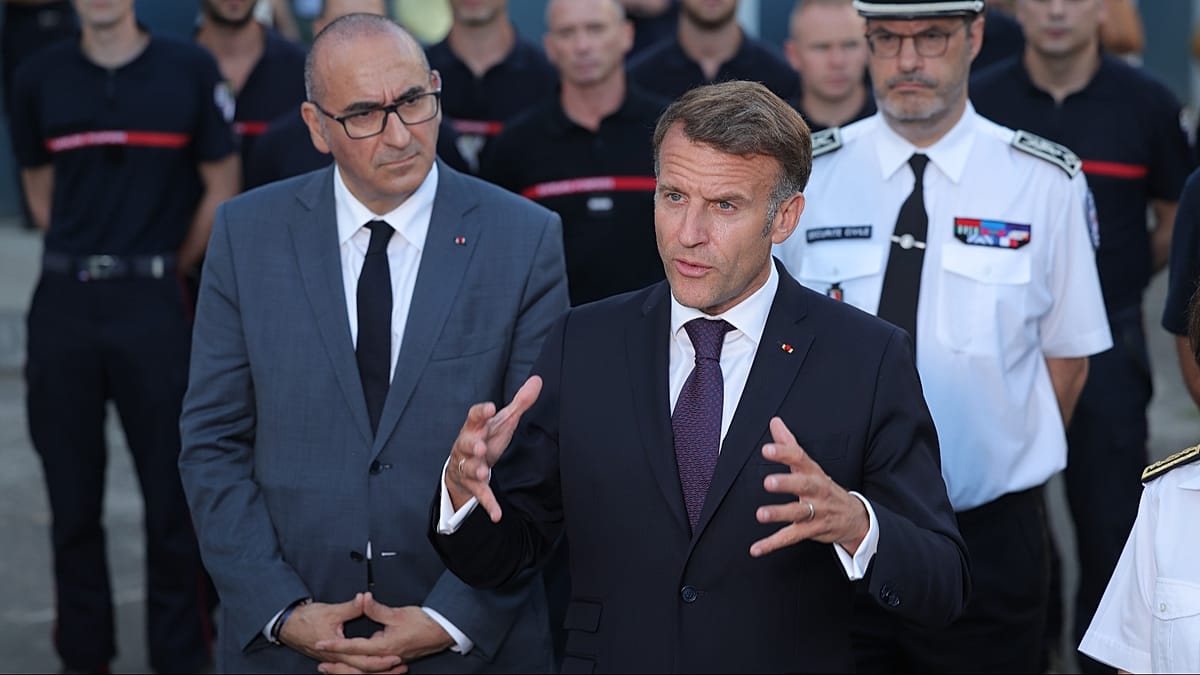
French President Emmanuel Macron has turned down the resignation of Interior Minister Laurent Nuñez, following a weekend of serious violence in several major cities. The decision, announced by the Élysée on Monday morning, comes as the government faces mounting criticism over its handling of public order.
In a statement, the presidency said Macron had refused the resignation “given the need for continuous command of the security forces in the current situation.” The president also asked Nuñez to deploy “new methods of action on the ground as quickly as possible” against violent rioters, implicitly acknowledging that previous approaches had fallen short.
Failures in anticipation and intelligence
Macron’s statement went further, admitting to “failures in anticipation and intelligence-gathering” that allowed riots, destruction, and the looting of numerous businesses to unfold. This rare concession from the Élysée underscores the severity of Saturday’s unrest, which shook cities including Paris, Lyon, and Marseille.
The violence has already drawn political reactions. On Sunday evening, Macron addressed the nation, vowing to punish those who tried to “bring down the Republic.” His remarks were echoed by Prime Minister Sébastien Lecornu, who is due to chair an interministerial crisis unit from 10:00 CEST on Monday to coordinate the government’s response.
The decision to keep Nuñez in place is a calculated one. As Macron’s vow to punish rioters suggests, the government is keen to project stability and continuity in security leadership, even as it recalibrates its tactics.
New methods, same leadership
Nuñez, who has served as interior minister since 2024, will now be expected to implement the “new methods” demanded by Macron. These are likely to include more proactive policing, better use of intelligence, and closer coordination with local authorities. However, critics argue that the same leadership that oversaw the failures may not be best placed to correct them.
The unrest has also reignited debates about policing and social tensions in France. Paris’s Place de la République erupted again as protesters clashed with riot police, with many demonstrators citing economic grievances and a perceived crackdown on dissent. The government, for its part, has blamed “violent rioters” for hijacking legitimate protests.
Macron’s approval ratings, already at historic lows, are unlikely to be boosted by the crisis. A recent poll put his support at just 15%, the lowest since 2017, as far-right leaders also slipped in the polls. The president’s focus now appears to be on restoring order while maintaining his broader political agenda.
Diplomatic tour continues
Despite the domestic turmoil, Macron is pressing ahead with his diplomatic tour of the Gulf. From Monday, he will visit Kuwait, the United Arab Emirates, Bahrain, and Qatar, with the aim of securing supplies of oil and diesel to bring down fuel prices in France. The trip underscores the delicate balance Macron must strike between international engagement and domestic crisis management.
The fuel price issue is a key driver of public discontent, and the government has already announced measures to ease the burden on households. However, the riots have added a new layer of urgency to these efforts, as the government seeks to address the underlying economic frustrations that fuel unrest.
As France grapples with the aftermath of the violence, the coming days will test whether Nuñez can deliver the “new methods” Macron has demanded. The president’s decision to keep him in place signals a preference for stability over change, but it also places a heavy burden on the interior minister to prove that the government can learn from its mistakes.
For now, the Élysée is projecting confidence, but the streets of French cities remain tense. The interministerial crisis unit will be closely watched, as will the government’s ability to prevent a repeat of Saturday’s chaos.