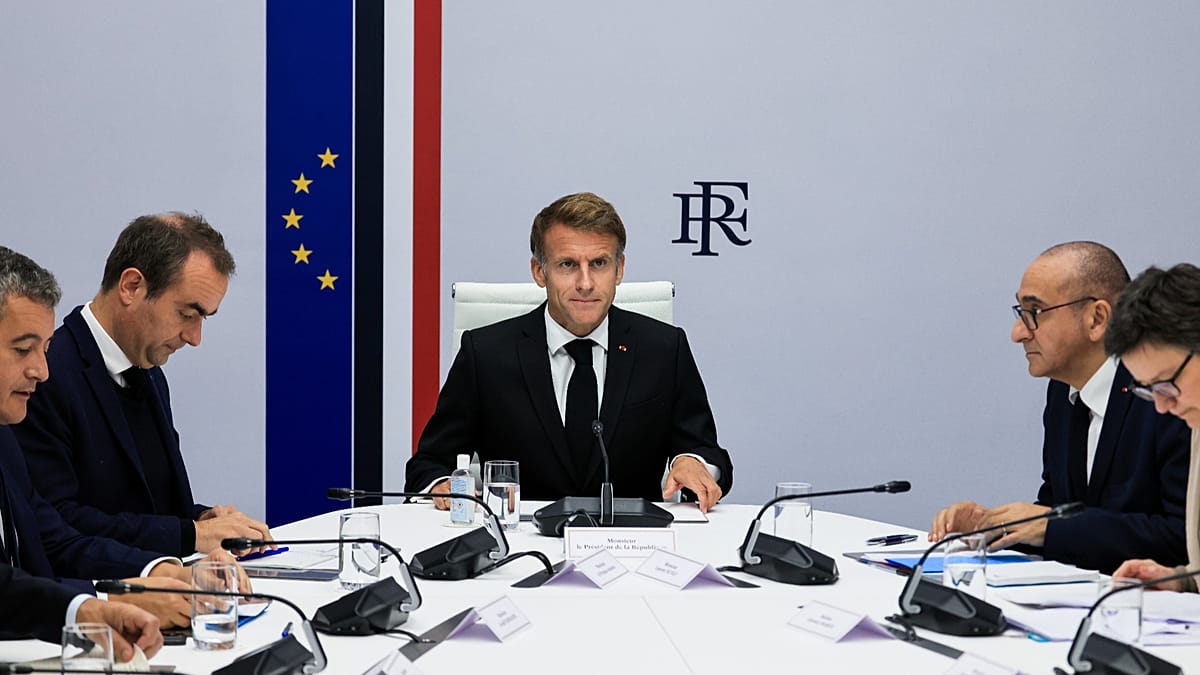
President Emmanuel Macron has pledged to bring to justice those who attempted to destabilise the state, following a weekend of violent protests that saw looting, arson, and clashes with police in cities across France. In a televised address on Sunday, Macron condemned the unrest, saying that “nothing justified” the scenes that unfolded, including the burning of a historic town hall in Limoges.
“Those who looted will have to pay for the damage, and those who sought to bring down the Republic will be held accountable,” Macron declared. He acknowledged public frustration over rising living costs and deteriorating student conditions, but drew a sharp line between peaceful demonstrators and what he called “insurrectionist elements from the radical far left, joined by numerous criminals.”
The president urged all political leaders to condemn the violence and to distinguish between legitimate protest and wanton destruction. His remarks came as his government faced scrutiny over the handling of the police operation, with the interior minister and prime minister also under pressure.
Political fallout and election jockeying
The riots have injected fresh volatility into France’s political landscape, with the presidential election scheduled for April next year. Marine Le Pen, leader of the far-right Rassemblement National and currently leading in opinion polls, accused Macron of laxisme—being too soft on law and order. Meanwhile, progressive and Green parties criticised what they saw as excessive police force against protesters.
Jean-Luc Mélenchon, head of the left-wing La France Insoumise, has been accused by critics of fuelling the chaos through his rhetoric. The political jockeying comes as Macron prepares to travel to Kuwait on Monday, though he did not announce new security measures in his address. Instead, he said local authorities would work directly with police to protect “our cities, our public buildings and our stores.”
The weekend’s protests began as peaceful demonstrations over the cost of living and student hardship, but quickly spiralled into violence. Official figures report more than 2,000 arrests and over 600 police officers, gendarmes, and firefighters injured. The unrest has also drawn attention to broader European debates about social cohesion and migration, as seen in Hungarian Prime Minister Viktor Orbán's linking of the riots to migration.
Macron’s address was highly anticipated, and his failure to announce concrete measures beyond accountability may leave some voters unsatisfied. The president’s handling of the crisis could shape the final months of his term, with the election looming and his popularity already under strain.
The violence has also raised questions about the effectiveness of French policing and the underlying social tensions that persist in many urban areas. As the country seeks to recover, the political class remains divided on how to address the root causes of such unrest, from economic inequality to integration policies.
For now, Macron’s promise of accountability sets the tone, but the coming weeks will test whether his government can restore order while addressing the grievances that fuelled the protests.