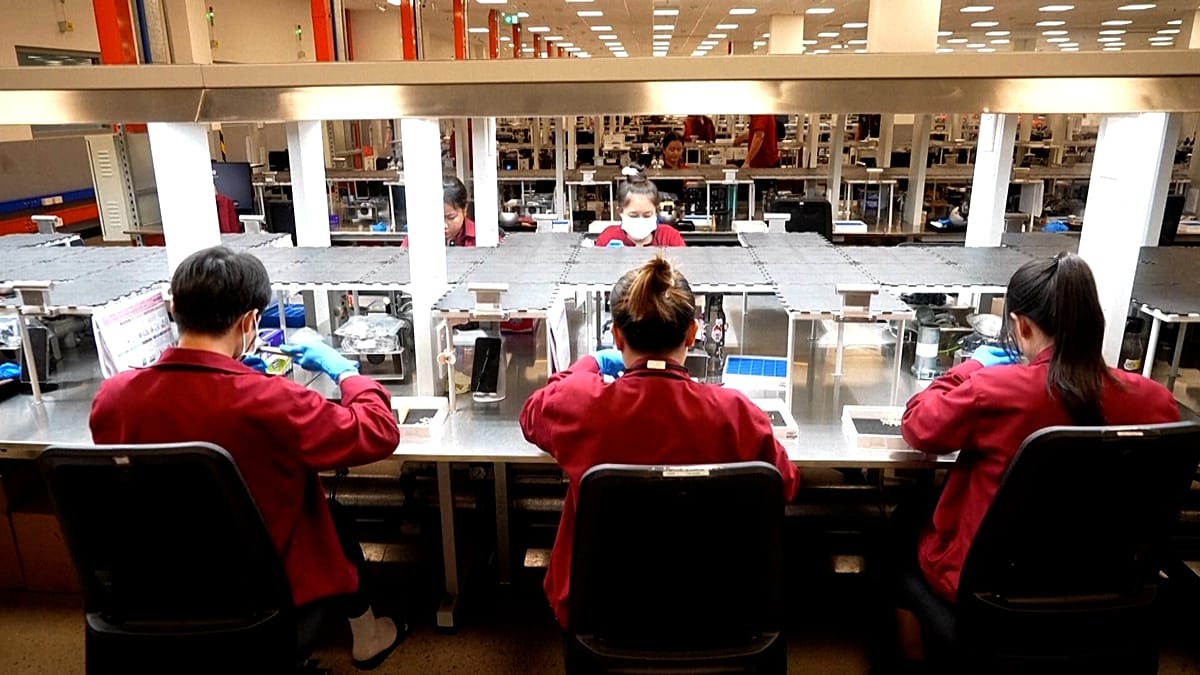
Danish jeweller Pandora has inaugurated a sprawling new production site in Ho Chi Minh City, Vietnam, which it bills as the largest fine jewellery factory on the planet. The facility, built with an investment of $150 million (€132 million), is expected to eventually employ around 7,000 workers and churn out up to 60 million pieces a year — a 50% increase in the company's manufacturing capacity.
The move marks Pandora's fourth factory worldwide and its first outside Thailand, where it has produced jewellery since 1989. The company, which sold 112 million pieces in 2025 — more than three every second — says the new site gives it greater flexibility to craft its full range of collections across all materials and techniques.
Green ambitions meet industrial scale
Pandora's expansion comes with a sustainability pledge: the factory will run entirely on renewable electricity, and since 2024 the company has used only recycled gold and silver in its jewellery. CEO Berta de Pablos-Barbier said the company intends to keep growing “in a sustainable manner,” extending its renewable energy push beyond its own operations to suppliers.
Recycled metals are not without environmental costs, however. Refining still requires significant energy to melt and separate impurities. Yet experts point out that gold is uniquely suited to circular use. “In many ways, it is designed for a circular economy. It doesn't oxidise. That's why it's so valuable,” said Saleem H. Ali, lead researcher for critical minerals and the inclusive energy transition at the United Nations University. “We still have the gold from the ancient Egyptians in pretty good shape.”
The jewellery market is growing at a brisk pace — unit sales are projected to rise 4.1% annually between 2025 and 2028, roughly four times the rate of clothing, according to The State of Fashion 2026 report from McKinsey and The Business of Fashion. That tailwind, however, does not guarantee smooth sailing for Pandora.
Tariffs, inflation, and labour scrutiny
Pandora warned in its August 2026 results that US import tariffs would continue to weigh on profitability. The United States is its largest market, and consumers there are also feeling the pinch of inflation and economic uncertainty. The company's reliance on overseas manufacturing makes it particularly exposed to trade barriers.
Labour practices have also drawn attention. In 2020, Danish investigative outlet Danwatch reported that a Thai labour court had ruled in May 2019 that union activity had contributed to workers' dismissals at Pandora's Bangkok factory. Pandora said the cuts reflected restructuring and employee performance.
As Pandora scales up in Vietnam, it joins a broader trend of manufacturers diversifying production beyond Thailand. The country has become an attractive hub for jewellery and other industries, partly due to its competitive labour costs and improving infrastructure. The new factory is a bet on both efficiency and sustainability, but the company must navigate a complex global environment.
For European consumers, Pandora's expansion raises questions about the true cost of affordable luxury. While the company's commitment to recycled metals and renewable energy is commendable, the challenges of tariffs, labour relations, and the energy intensity of refining mean that sustainability is a work in progress. The industry will be watching whether Pandora can deliver on its promises as it doubles down on scale.
Related coverage: human stories behind luxury gems and a recent Danish data breach show the varied pressures facing Nordic businesses.