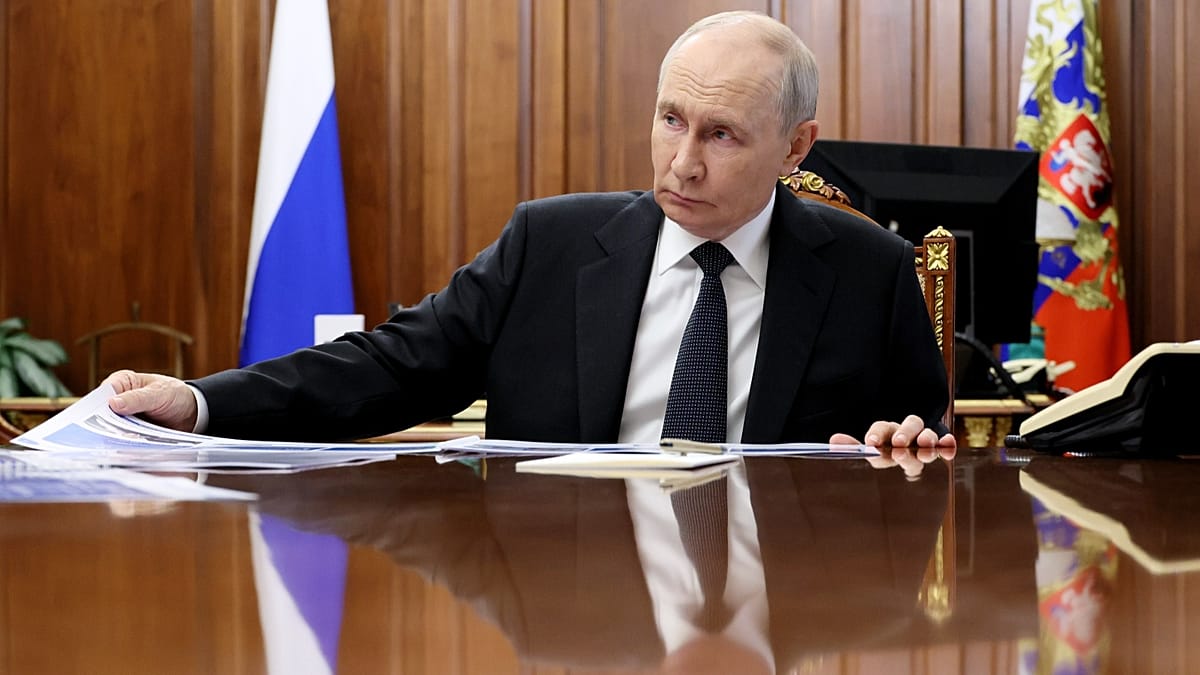
Russian President Vladimir Putin has signed a decree ordering the compulsory takeover of Russian assets belonging to five European companies, including French flooring manufacturer Tarkett, as Moscow intensifies its campaign of asset seizures against businesses from countries it deems hostile.
The decree places the assets under the interim control of Centre Capital, a management company registered in February 2026. Its chief executive is Marat Mirkhaydarov, a former head of the administration of the regional governor of Zabaykalsky, who left that post in 2025 after being injured while fighting in Russia's war in Ukraine.
Besides Tarkett, the affected firms are Kappa Rus, a paper packaging producer formerly part of Ireland's Smurfit Kappa; Ontex RU, the Russian arm of Belgian hygiene products group Ontex; Eviosys Packaging Kuban, a metal packaging manufacturer owned by US-based Sonoco Products; and Menshen Packaging CIS, a subsidiary of German plastics maker Menshen. All five continued operating in Russia after the full-scale invasion of Ukraine in February 2022.
Tarkett, which ranks third globally in floor covering sales and leads the vinyl flooring market, according to its 2024 annual report, kept two of its 34 production sites in Russia and continued paying taxes to the Russian budget. The combined annual revenue of the five companies exceeds 50 billion roubles (€532 million).
Escalating pattern of seizures
The latest action follows a similar move in September, when Putin placed the Russian assets of Swiss food giant Nestlé, German hypermarket chain Metro, French retailer Auchan, and home improvement chain Leroy Merlin under temporary administration. Those assets were transferred to LEV Management, a company established shortly before the decision and reported by Russian media to have links to the country's security services. A French-owned manufacturer of plastic dispensing systems, Aptar Europe Holding, was also placed under temporary administration shortly afterwards.
The legal basis for these seizures is a presidential decree signed in April 2023, which authorises the imposition of temporary administration over certain Russian assets of foreign companies. The first targets were Danish brewer Carlsberg and French dairy group Danone.
Kremlin spokesman Dmitry Peskov has directly linked the transfers to the fact that the companies come from what Moscow calls “unfriendly countries” — an official designation covering all EU member states, the US, the UK, and other nations that imposed sanctions after the 2022 invasion. The move is widely seen as an attempt to dissuade those countries from supporting Ukraine.
Western governments and international legal experts have condemned the seizures as unlawful expropriation. Companies whose assets are taken can, in principle, seek compensation through international arbitration under bilateral investment treaties Russia has signed with EU member states, although enforcing any judgment against the Kremlin and its entities is nearly impossible.
The expropriations come as European businesses face widening security threats beyond cyberattacks, including political and legal risks in Russia. The seizures also underscore the broader confrontation between Moscow and the West, which has seen EU lawmakers push for stricter measures against Russian citizens and Russia detaining foreign nationals as part of its geopolitical leverage.
For the affected companies, the loss of their Russian operations represents a significant financial hit, though many had already written down or sold assets in the country. Tarkett, for instance, had previously announced plans to exit Russia but had not completed the process. The seizures also send a chilling signal to any European firm still considering staying in the Russian market.
As the Kremlin continues to weaponise its legal system against foreign investors, the practical options for European companies are limited. While arbitration remains a theoretical remedy, the reality is that Moscow's actions are unlikely to be reversed without a fundamental change in the political landscape. The broader implications for European business confidence in Russia are profound, and the trend shows no sign of abating.