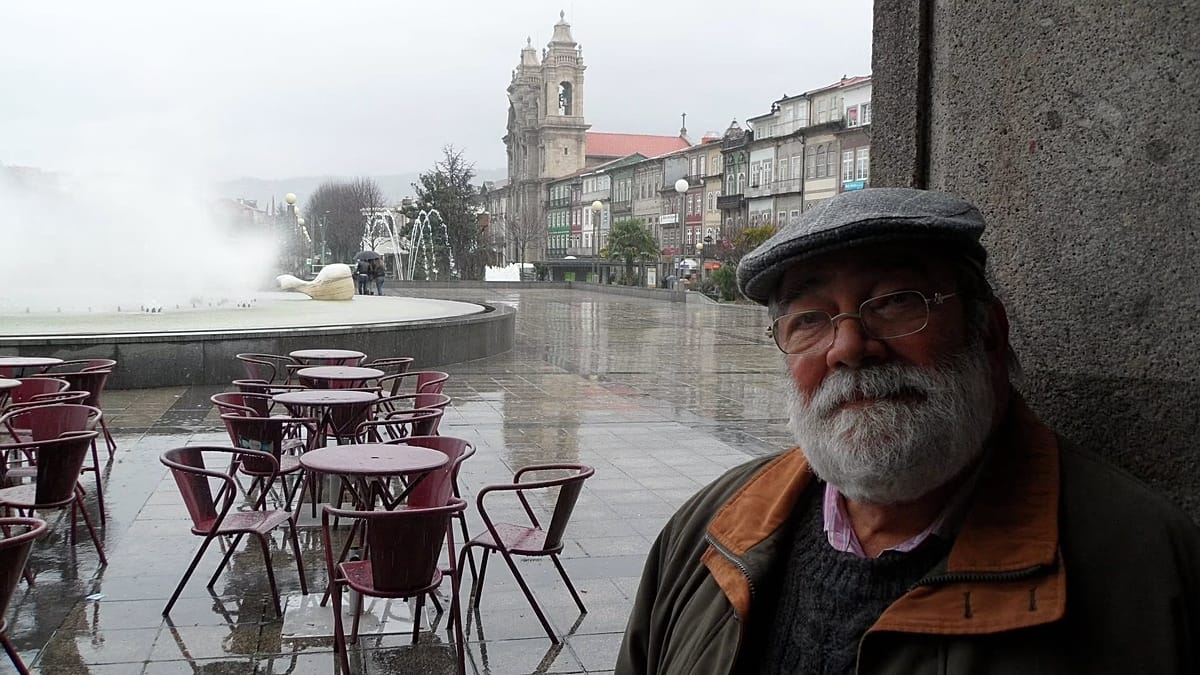
Joaquim Letria, one of the most influential figures in Portuguese journalism, died on Friday at the age of 82. The news was confirmed by the newspaper Observador, citing a source close to the journalist. Letria's career spanned more than six decades, from the authoritarian era to the democratic consolidation of Portugal.
Born in Lisbon, Letria began his professional life at Diário de Lisboa in 1963, during the final years of the Estado Novo regime. He quickly moved to international wire services, working for The Associated Press and later as a correspondent for Deutsche-Presse Agentur until 1970. He also spent time at the BBC in London, honing a style that combined rigorous reporting with a deep commitment to press freedom.
A voice of the revolution and after
Following the Carnation Revolution of 25 April 1974, Letria became a key figure in reshaping Portuguese media. He was one of the founders of the weekly newspaper O Jornal, which became a symbol of the new democratic press, and later co-founded Tal & Qual, a more irreverent publication that pushed boundaries. His leadership at RTP, the public broadcaster, as director of news in the post-revolutionary period helped define the standards of independent journalism in Portugal.
Letria also served as president of the Journalists' Union, where he advocated for better working conditions and the protection of journalistic independence. His efforts contributed to the professionalization of the field in a country that was still emerging from decades of censorship.
Beyond journalism, Letria was a prolific writer, publishing novels, essays, and children's books. His literary work often reflected his journalistic eye for detail and his interest in Portuguese identity and memory. He remained active in public life well into his later years, commenting on media and politics with characteristic sharpness.
His death has prompted tributes from colleagues and public figures across the political spectrum. Many have highlighted his role in building a free press in Portugal and his mentorship of younger journalists. The current generation of Portuguese reporters, many of whom grew up reading his work, have praised his integrity and his willingness to challenge power.
Letria's career also had a European dimension. His time at the BBC and with German news agencies gave him a continental perspective that he brought back to Portuguese newsrooms. He was a firm believer in the importance of European solidarity and the free movement of ideas, values that resonate in today's debates about media freedom across the bloc.
In recent years, Portugal has faced new challenges to press freedom, including strategic lawsuits against public participation and the rise of disinformation. Letria's legacy serves as a reminder of the importance of independent journalism in safeguarding democracy.
He is survived by his family, including his son, the actor and musician António Pedro, who has been a prominent cultural figure in Portugal. The exact details of the funeral have not yet been announced.