For centuries, the cities of Central Asia served as vibrant crossroads of intellectual exchange, where scholars from diverse traditions met, debated, and advanced fields from mathematics to medicine. Today, Uzbekistan is working to bring that heritage to a wider international audience, using a combination of research institutions, museum collections, and digital technologies.
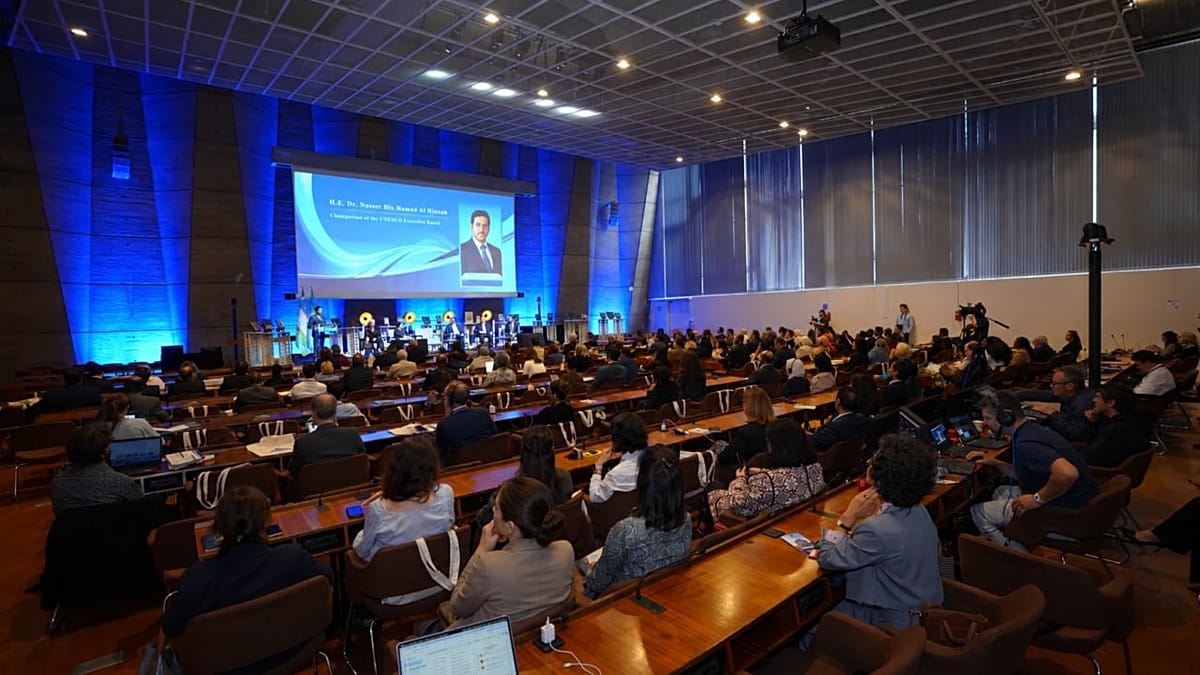
These efforts took centre stage at a conference held at UNESCO headquarters in Paris, which brought together more than 300 participants, including academics, diplomats, and representatives of international organisations. The event was organised by the Islamic Civilization Center in Uzbekistan, together with the country's Permanent Delegation to UNESCO, its National Commission, the foreign ministry, and several scientific and cultural bodies.
The initiative traces its roots to a call made by Uzbekistan's President Shavkat Mirziyoyev at the UN General Assembly in 2017, when he urged greater global recognition of Central Asia's intellectual heritage and stressed the importance of education and religious tolerance. In a further address to the UN in September 2025, he proposed presenting the scientific and spiritual legacy of the region's leading scholars at major international venues. The Paris conference, along with presentations at UN offices in New York and Geneva, forms part of that broader programme.
A region of enduring influence
Much of the discussion focused on Mawarannahr, historically known as Transoxiana, the land between the Amu Darya and Syr Darya rivers that covers much of present-day Uzbekistan and parts of neighbouring states. This region produced or attracted thinkers whose work shaped intellectual traditions across the Islamic world and beyond.
Mahmud Erol Kılıç, Director General of the Research Centre for Islamic History, Art and Culture (IRCICA), highlighted the contributions of Al-Khwarizmi, Al-Farabi, Ibn Sina, and Al-Biruni. Their achievements, he said, reflected a scholarly tradition in which mathematics, medicine, philosophy, and religious studies developed through exchanges across regions.
Farhan Ahmad Nizami, Director of the Oxford Centre for Islamic Studies, added that the region's historical monuments speak to a broader history of creativity and cultural exchange. Salima Dalibey, representing the Organisation of Islamic Cooperation, told Euronews: "Civilisations are not growing in isolation. We cross-fertilise each other, and it is a message that we need to share to see that we have much more in common than elements that separate us."
Mehrdad Shabahang, head of UNESCO's Silk Roads Programme, underlined the role of research institutions in documenting that shared past. "These centres like the Uzbekistan Islamic Civilisation Center can help us to identify, to document and also to promote our shared past, our shared history," he said. Firdavs Abdukhalikov, director of the Islamic Civilization Center, stressed the international significance of this legacy: "Cultural heritage and our great ancestors belong to the whole world."
Beyond the museum
A central pillar of this effort is the Islamic Civilization Center in Tashkent, whose museum exhibitions trace more than 3,000 years of history on the territory of present-day Uzbekistan. The Center's activities include the study of rare manuscripts and historical artefacts, alongside digital technologies designed to support research and make collections accessible to a broader audience.
Abdukhalikov emphasised that its purpose extends beyond displaying objects. "It is not just a beautiful, large building and museum. It is a major platform for scholarship and education," he told Euronews. Frédérique Beaupertuis-Bressand, a specialist in the history and art of the Timurids, described the museum as a valuable resource for researchers and visitors. "Finally, culture is being given the prominence it deserves. We can see these objects, touch them, and study them," she said, adding that access to collections offers further opportunities for historical research.
The Center is also connected to a wider network of specialised institutions, including international research centres dedicated to Imam Bukhari, Imam Termizi, and Imam Maturidi. Sali Shahsivari, managing director of the Al-Furqan Islamic Heritage Foundation, welcomed the expansion of these institutions, saying they were helping to bring greater attention to the region's cultural heritage.
The discussions in Paris also explored opportunities for international research cooperation, including joint studies, the digitisation of historical sources, and closer collaboration between academic institutions. The Center highlighted its use of digital technologies and artificial intelligence in researching and presenting cultural heritage. The talks also considered how a better understanding of shared cultural heritage could contribute to dialogue between different societies.
As Uzbekistan continues to invest in these initiatives, the message from Paris was clear: the scientific and cultural achievements of Central Asia are not a distant relic but a living resource for global scholarship and mutual understanding. For European audiences, the conference offered a reminder that the continent's own intellectual history is deeply intertwined with the Silk Roads, a connection that cross-border projects are now seeking to strengthen.