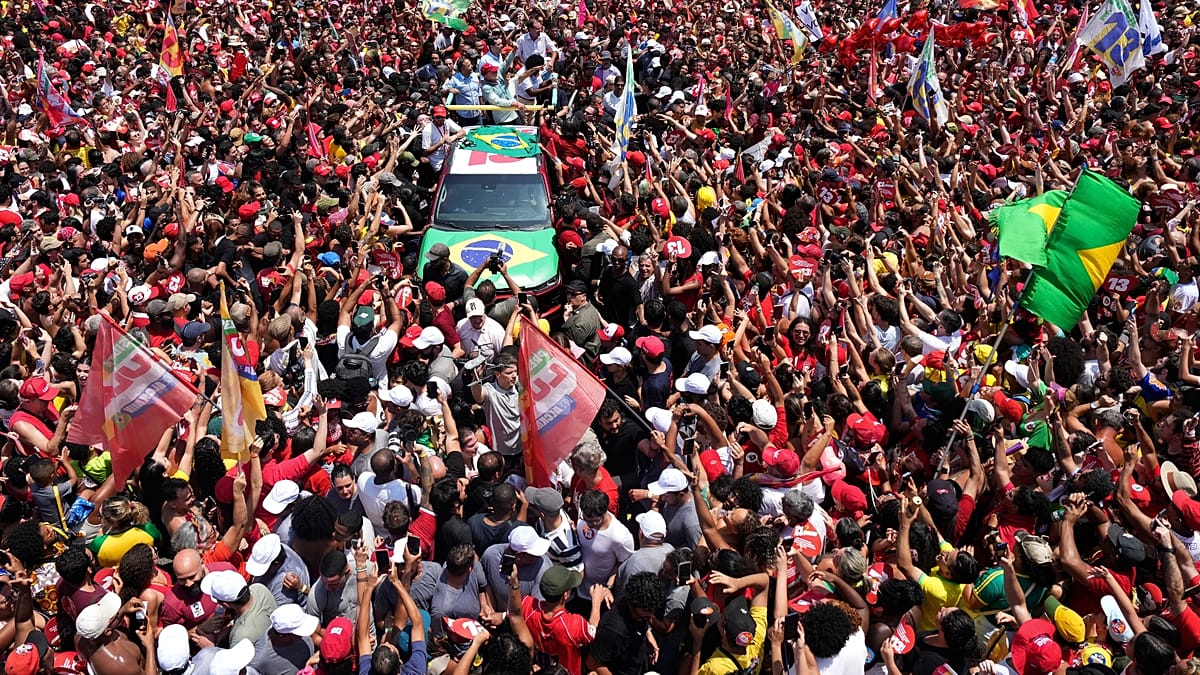
Brazil's presidential election reaches its climax on Sunday, with incumbent Luiz Inácio Lula da Silva and right-wing senator Flávio Bolsonaro holding rival rallies in Rio de Janeiro on the final day of campaigning. The contest, which follows a tense and acrimonious runoff campaign, remains too close to call after the first round left the two candidates separated by just two percentage points.
In the first round, Bolsonaro took 47% against Lula's 45%, but the left-wing incumbent appears to have clawed back ground over the past three weeks. With roughly a fifth of the electorate abstaining in the first round, both campaigns are courting undecided voters and those who stayed home.
A battle of legacies
Lula, now 80, is seeking an unprecedented fourth term — and his third non-consecutive one. A former union leader who became Brazil's first working-class president, he presided over a commodities-driven boom that lifted millions out of poverty through social programmes and cash transfers. His first two terms earned him near-cult status, and Barack Obama once called him “the world's most popular politician.” But his current term has been marred by concerns over crime and the cost of living, with approval ratings dipping as low as 24%.
Flávio Bolsonaro, a former lawyer and Rio's youngest elected state lawmaker at 21, is running to continue the political project of his father, Jair Bolsonaro, who is barred from office and serving a 27-year sentence under house arrest for attempting a coup after losing to Lula in 2022. The younger Bolsonaro has embraced his father's ultra-conservative agenda while trying to soften his tone to attract centrists. His hard-line security policies — including promises to create 500,000 new prison places and slash government spending — have proven popular in polls.
Friday night's final televised debate was calmer than their first, which degenerated into insults. Lula attacked Bolsonaro's lack of experience; Bolsonaro accused the president of leaving a “broken country.” “He doesn't know what hunger is,” Lula said, while Bolsonaro countered: “Why are things so expensive?”
The outcome will determine whether Brazil remains one of the region's few leftist governments or joins a wave of right-wing administrations friendly to Donald Trump — including Argentina, Chile, Costa Rica and Peru. A Bolsonaro victory would also have major implications for the Amazon, which suffered record deforestation under his father. The son has denied human-caused climate change and only committed to stopping illegal deforestation, while Lula's government has used satellite monitoring and targeted enforcement to bring clearances to a record low.
Bolsonaro's campaign has been shadowed by a corruption investigation over his admission that he accepted millions from disgraced banker Daniel Vorcaro to produce a film about his father. He faces allegations of corruption, money-laundering and tax evasion.
Lula has warned Washington against meddling in Brazil's elections and made defending national sovereignty a key issue, particularly against foreign social media interference. Trump has imposed tariffs on Brazilian goods, citing the trial of Jair Bolsonaro and alleged unfair trade practices, and has classified Brazil's major drug-trafficking groups as foreign terrorist organisations — a move Lula's administration opposed as a pretext for intervention.
As Brazilians head to the polls, the world — and Europe — will be watching closely. The Amazon's fate and the balance of power in Latin America hang in the balance. For European policymakers, the result will shape climate diplomacy and trade relations with one of the continent's key partners.