Israeli forces moved into the West Bank city of Hebron on Saturday, displacing up to 250 Palestinian families, some in the middle of the night, and vowing a heavy response to a deadly attack on two soldiers. The operation, announced by Prime Minister Benjamin Netanyahu, is described as the largest since Israel occupied the West Bank in 1967.
The crackdown follows Friday's shooting at a checkpoint near Hebron, where Palestinian militants killed two Israeli soldiers. Hebron is a volatile city where a small number of hardline Israeli settlers live amid a large Palestinian population, often under military protection.
The timing is significant: Israel holds general elections on Tuesday, and Netanyahu faces a tight race against the opposition bloc led by former military chief Gadi Eisenkot. The operation is likely to dominate the final days of campaigning.
Mass displacement and collective punishment
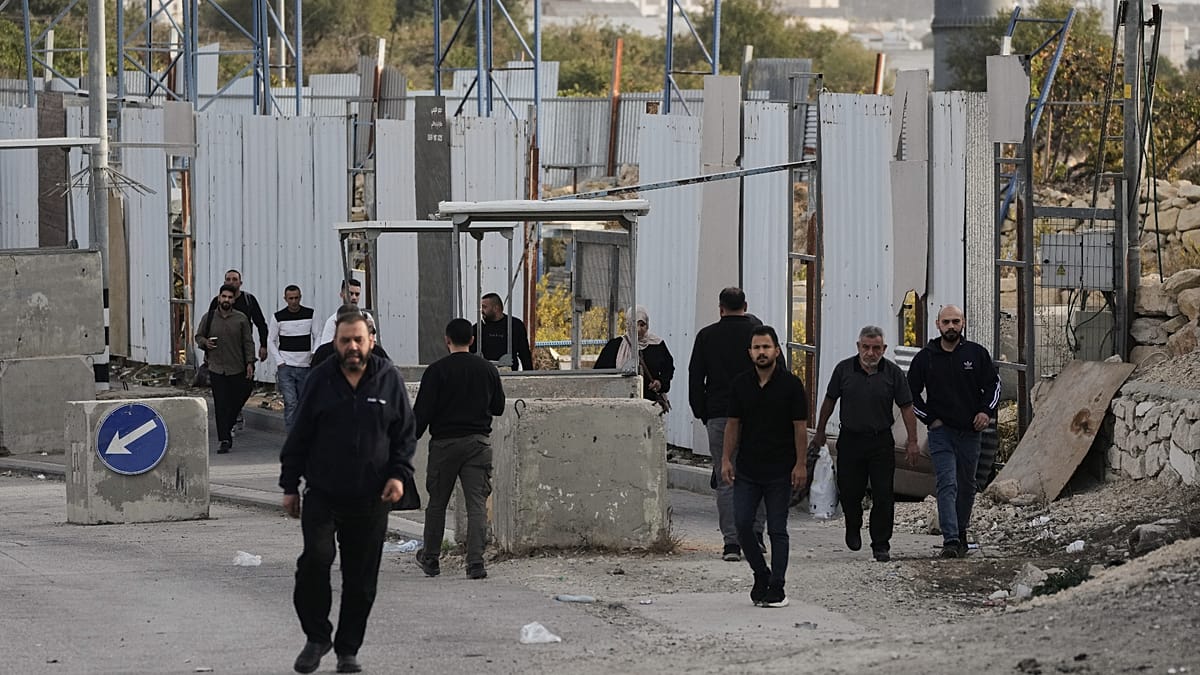
In the Ein Dir Baha neighbourhood, nestled between two hills, buildings were marked with X's to indicate they had been cleared. Streets were empty of civilians and cars, except for Israeli military vehicles. Local governor Khaled Dudin told AFP that about one-third of Hebron has been targeted.
"They started in the neighbourhood from which the people who carried out the attack came, but there is no guarantee that the operation will not expand," Dudin said. "This amounts to collective punishment being imposed on civilians who have nothing at all to do with this."
The governor reported 150 families affected, while Hebron's mayor, Youssef al-Jaabari, and activist Issa Amro put the figure at 250. "We will find them shelter and provide these people with all the help they need," the mayor told AFP.
The Israeli military said it was "conducting precise, targeted and thorough searches" focused on the area where the two gunmen operated, both of whom were killed in the gunfight. The operation is expected to last several days, similar to previous army actions after attacks.
Political fallout and regional implications
National Security Minister Itamar Ben-Gvir, a far-right figure, has called for dismantling the Palestinian Authority, the semi-autonomous body that governs parts of the West Bank under the 1990s Oslo Accords. Asked if he agreed, Netanyahu boasted that he had resisted pressure from three US presidents to work toward a Palestinian state.
The closures have paralysed movement around Hebron. Taxis piled up behind military-controlled gates, and all vehicle entrances to the city were shut, according to Basma Radio, a Telegram channel used by Palestinians to monitor checkpoints.
Rights group Yesh Din reported 672 incidents of settler violence over the past 26 days, nearly half linked to the olive harvest, an annual event of cultural significance to Palestinians that extremist settlers have sought to disrupt. The situation echoes recent detentions of foreign activists during the harvest.
The operation comes as regional tensions remain high, with Gulf states on edge over possible new strikes on Iran. Meanwhile, Donald Trump's endorsement of Netanyahu days before the election has added a further international dimension.
European governments have repeatedly called for restraint in the West Bank and respect for international law. The displacement of families in Hebron is likely to draw sharp criticism from EU capitals, which view Israeli settlement expansion and punitive demolitions as obstacles to a two-state solution.