Voters in Alberta, Canada's oil-rich province, have decisively chosen to remain part of the country, handing Prime Minister Mark Carney a political boost as US President Donald Trump's trade war and annexation rhetoric push Canadians closer together. With roughly 90% of ballots counted, 75% of Albertans voted against beginning a process that could have led to a future independence referendum, according to unofficial results from Elections Alberta.
Carney, who took office earlier this year, called the outcome "a great result for Canada" and stressed that Albertans had chosen unity. Speaking to reporters in Ottawa before a cabinet meeting on Tuesday, he argued that the quarter of voters who supported the separation question did not necessarily want independence. "Only a smaller hard core favours leaving," he said, noting that some voters used the ballot to send a message to the federal government rather than to break away.
The referendum was not a direct vote on secession. A "yes" result would have set Alberta on a path toward a later, binding vote on leaving Canada. The result is a relief for Ottawa, which has been navigating a fraught relationship with the province over energy policy, fiscal transfers, and constitutional grievances.
A province's frustration, a nation's solidarity
Alberta, home to the world's fourth-largest proven oil reserves, has long harboured resentment toward the federal government in Ottawa. Its political culture, shaped by cowboy traditions and a conservative ethos, often has more in common with the American West than with much of Canada. Yet Tuesday's vote suggests that even deep-seated grievances have not translated into broad support for independence.
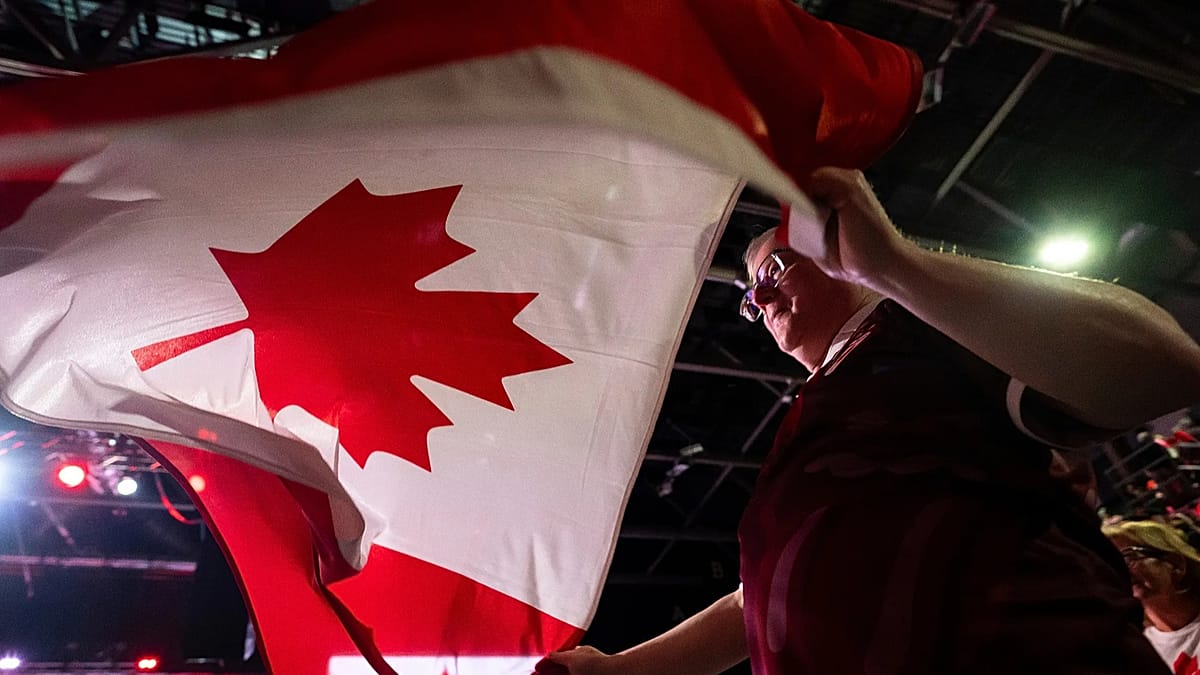
Thomas Lukaszuk, a former Alberta deputy premier who led the "Forever Canadian" campaign against separation, told supporters: "Don't mess with Canada. President Trump is watching this." His words captured the mood of a province that, despite its frustrations, appears to have rallied around the flag in the face of external pressure.
Some voters admitted they backed the separation question without wanting to leave. Shawn Campbell, an Edmonton voter, said he voted to begin the process to send a message: "It sends a message to Ottawa that Albertans are not happy." Others criticised the vote itself. Dave Malka, 59, also of Edmonton, objected to spending money on a "referendum on a referendum" rather than on healthcare. With Trump threatening Canada, he said, "It seems to be happening at the absolute worst time when we should be united. Instead, we're fighting among ourselves."
Premier Danielle Smith, who had called the referendum, welcomed the outcome in a televised address on Tuesday night and promised not to call another separation vote while she remains in office. "Yesterday, Albertans voted overwhelmingly in favour of remaining a province of Canada," she said. "The voter turnout was historic and a powerful testimony of the passion Albertans feel for our country and our province." She added that Alberta would continue to push for more provincial autonomy, but that disputes would be resolved through Canada's political and legal institutions, not through separation.
Separatists concede defeat but vow to continue
Separatist leaders acknowledged the scale of the loss. David Parker, an organiser, wrote on social media: "Independence feels far away, and we should not pretend this was not a defeat." At a referendum-night gathering in an Edmonton restaurant, the crowd fell silent as results came in. Jeff Rath of the Alberta Prosperity Project insisted the movement would persist. "We're not going anywhere," he said. "We've dominated the conversation in the last year. We've been educating Albertans on the benefits of independence, and we're going to continue moving forward."
Rath had said before the vote that he would be thrilled with 30% support. He also expressed hope that the United Conservative Party (UCP) might splinter, potentially giving rise to a new pro-independence party. Former Premier Jason Kenney noted that separatist parties historically drew only 1% or 2% of the vote, but that anger over COVID-19 restrictions helped mobilise activists who later embraced the cause.
The result is a significant moment for Carney, who has made national unity a cornerstone of his premiership. With Trump's trade war and annexation threats—including repeated talk of making Canada the 51st US state—the prime minister has sought to project a united front. The Alberta vote, coming at a time of external pressure, reinforces that message. As Carney put it, "It's a great result for Canada."
For Europe, the episode offers a reminder of how external threats can reshape domestic politics. The dynamics in Alberta echo, in some ways, the tensions between EU member states and Brussels, where nationalist movements have at times gained traction but rarely achieved lasting success. The Canadian vote, however, suggests that even in a province with deep grievances, the pull of unity can prevail when the alternative is uncertainty and division.