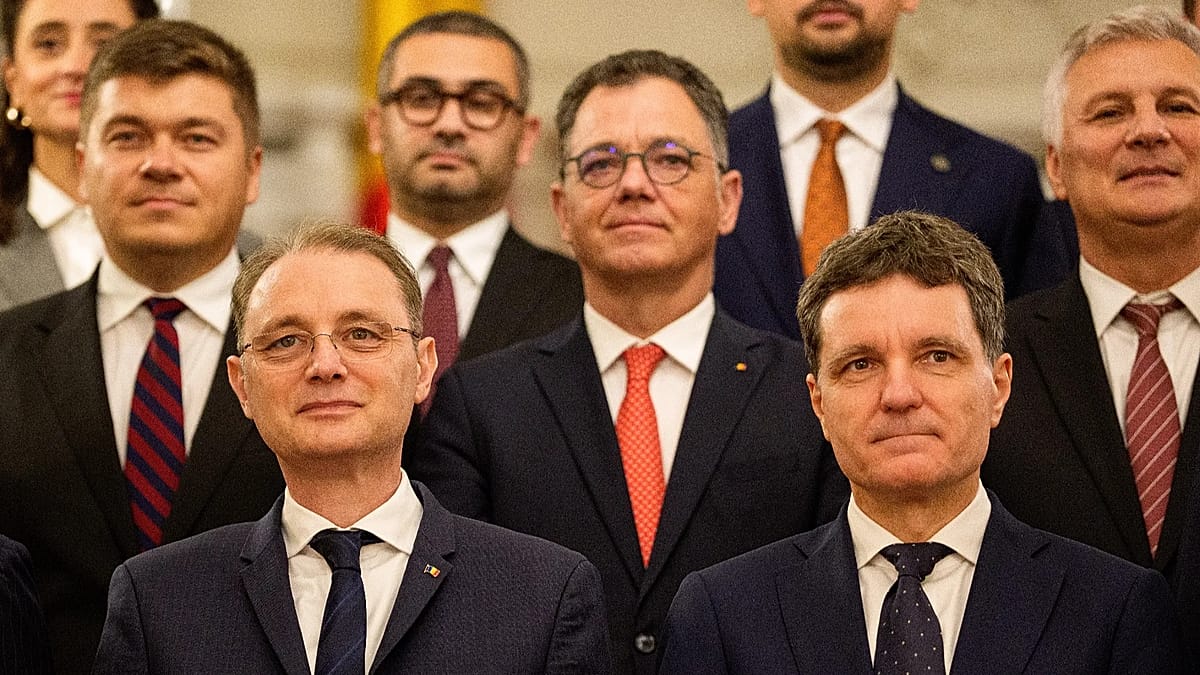
Romania's new cabinet was sworn in on Tuesday, ending a political deadlock that had paralysed the country since May. Prime Minister Luca Niculescu, an independent diplomat and former journalist, secured 280 votes in favour of his proposed government, with 58 against, in a parliamentary vote that capped weeks of negotiations.
Niculescu, 55, was nominated by President Nicușor Dan on 5 October, the president's fourth attempt to form a government after three earlier candidates failed. His appointment had been widely anticipated after he secured pledges of support from the Social Democratic Party (PSD) and other parties for a minority administration. Reports suggest he has agreed to a six-month confidence-and-supply arrangement while a longer-term coalition deal is negotiated.
Speaking in Parliament after the vote, Niculescu thanked lawmakers for their trust and outlined his priorities. "I present a governing programme, a team, and a commitment to work toward several clear objectives," he said. "And I want to tell the Romanian people, from the very start, what kind of government this will be. A government that brings funds and investments into the country."
The new prime minister faces an immediate challenge: a large budget deficit, one of the highest in the European Union, alongside persistent inflation and a technical recession. His predecessor, Ilie Bolojan, had pursued strict austerity measures, which ultimately led to his downfall.
A crisis rooted in May
The political turmoil began in May, when Bolojan was ousted in a no-confidence motion filed jointly by the PSD—then part of his governing coalition—and the nationalist Alliance for the Unity of Romanians (AUR). Bolojan had taken office in 2025 with a mandate to stabilise the country after one of its worst political crises since the end of communism, but his austerity programme proved politically unsustainable.
The instability has been compounded by the annulment of the December 2024 presidential election, which left the country without a fully legitimate head of state for months. The crisis also unfolded against a backdrop of regional security concerns, with Romania sharing a border with Ukraine and playing a key role in NATO's eastern flank. The country has recently been involved in intercepting drones over the Black Sea, and President Dan has called for a stronger NATO presence in the region.
Tuesday's vote came weeks after lawmakers rejected a cabinet proposed by Dan's third pick, Siegfried Muresan, prolonging the crisis and raising the spectre of early elections. Analysts had warned that a prolonged stalemate could undermine Romania's credibility with EU partners and investors, at a time when the bloc is grappling with its own economic and security challenges.
Niculescu's diplomatic background—he has served as Romania's ambassador to Germany and as a foreign policy adviser—is seen as an asset in navigating these pressures. His cabinet includes a mix of technocrats and political appointees, reflecting the delicate balance of support he has assembled.
Despite the breakthrough, analysts caution that the calm may not last. The minority government's reliance on ad hoc support from the PSD and other parties leaves it vulnerable to shifting political alliances. "The six-month window is a test," said one Bucharest-based political analyst. "If Niculescu can deliver on fiscal consolidation without triggering a social backlash, he may extend his mandate. But the underlying fractures remain."
For now, the new government is expected to move quickly on several fronts: presenting a revised budget, renegotiating EU recovery funds, and addressing energy prices that have hit households and businesses. Niculescu has also pledged to restore investor confidence, a key priority given Romania's need for external financing.
The broader European context adds another layer of complexity. Romania's fiscal woes are part of a wider pattern of budgetary strain across the EU, with several member states struggling to balance growth and debt reduction. The new government's ability to stabilise the economy will be closely watched in Brussels, where finance ministers have been pushing for deeper capital market integration to bolster resilience.
As Niculescu and his team settle into office, the immediate test will be whether they can translate parliamentary support into effective governance. The coming months will reveal whether Romania's latest political reset marks a genuine turning point or merely a temporary truce.