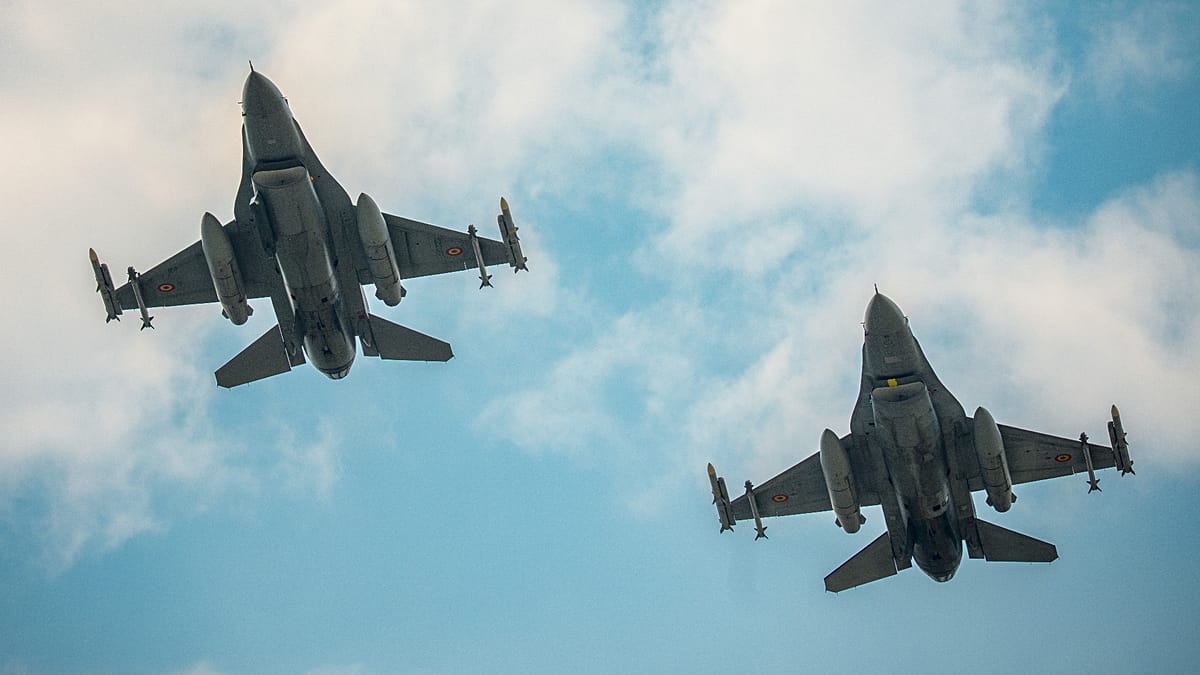
Romanian F-16 fighter jets intercepted and destroyed two drones over the Black Sea on Saturday, marking the latest in a series of aerial incidents affecting the country's southeastern flank. The Defence Ministry in Bucharest said the aircraft were scrambled from the 86th air base at Borcea, near Fetești, after radar systems detected multiple unidentified targets.
Defence Minister Radu Miruta provided a detailed timeline of the operation. The first drone entered Romanian airspace at approximately 17:59 local time and was shot down within two minutes, about 25 kilometres south-east of the coastal town of Sulina. The second drone, detected in the same area, was engaged and destroyed at 18:05, just five minutes after crossing into national airspace, roughly 20 kilometres east of Sulina.
The two F-16s were conducting air policing missions as part of NATO's enhanced vigilance activities in the region. The ministry's press release confirmed that the pilots acted after ground-based radar surveillance identified several aerial objects approaching Romanian territory.
Black Sea security under the spotlight
The incident has reignited discussions about the security of the Black Sea, a vital corridor for global grain exports, energy shipments, and industrial goods. Romania's Foreign Minister Oana Toiu took to social media to stress the strategic importance of the region, writing: "The Black Sea serves as a critical maritime artery for the global export of grain, energy resources, and industrial commodities, making its stability vital to international food and energy security."
Toiu added that NATO would address Black Sea "defence and deterrence" at an upcoming meeting, and expressed confidence that "the Black Sea will be safe again." Her remarks come amid heightened concerns over Russian drone activity near NATO's eastern border, with Romania having already investigated a suspected drone strike on a tanker in its waters earlier this year.
The downing of the drones is likely to reinforce calls for a stronger allied presence in the region. Romanian President Klaus Iohannis has previously urged NATO to take a more robust role in Black Sea security, arguing that the area remains a flashpoint for hybrid and conventional threats.
NATO Secretary General Mark Rutte has also been pressing allies to boost air defence support for Ukraine, which shares a long border with Romania and has faced relentless Russian drone and missile attacks. The proximity of these incidents to Romanian territory underscores the spillover effects of the war in Ukraine on neighbouring NATO members.
Saturday's interception is not the first time Romanian forces have engaged aerial targets. In previous months, fragments of drones have been found on Romanian soil, prompting temporary closures of airspace and heightened alert levels. The use of F-16s, which Romania acquired as part of its modernisation programme, signals a more assertive posture in defending its airspace.
The Black Sea has become a key theatre in the broader geopolitical contest between Russia and the West. Beyond military incidents, the region's economic significance cannot be overstated: Ukraine's grain exports, which are crucial for global food security, depend on safe shipping lanes. Any disruption has ripple effects on international markets and on the European Union's efforts to stabilise food prices.
For Romania, the challenge is twofold: ensuring the safety of its citizens and territory while contributing to NATO's collective defence. The country has invested heavily in upgrading its air force and integrating with allied command structures. The successful interception of the drones demonstrates both the readiness of Romanian pilots and the effectiveness of NATO's integrated air defence network.
As the alliance prepares to discuss Black Sea strategy, the incident serves as a stark reminder of the volatile environment on Europe's eastern edge. With the war in Ukraine showing no signs of abating, and with Russia's military budget prioritising defence spending, the pressure on NATO's eastern flank is unlikely to ease. The coming weeks will show whether the alliance translates rhetoric into concrete measures to secure the Black Sea region.