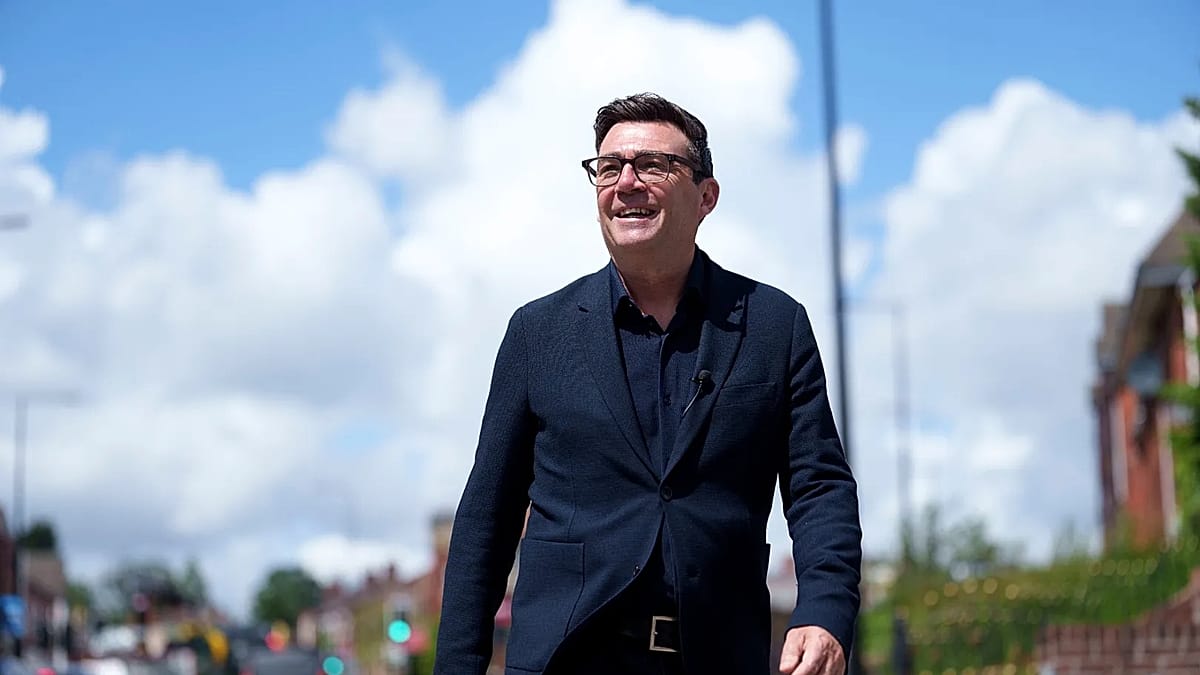
Andy Burnham, the MP for Makerfield and former mayor of Greater Manchester, is set to be named the new leader of the UK Labour Party on Friday, paving the way for him to become the country's seventh prime minister in a decade on Monday. The announcement, expected at a special press conference, comes after a rapid succession triggered by Keir Starmer's resignation last month following Labour's poor performance in local elections in May.
Burnham is expected to deliver a speech in which he will pledge to be "unashamedly Labour" and vow that his government will have the "courage to fix the big things that politics has neglected." His path to Downing Street was cleared after his last potential rival for the leadership ruled out challenging him last week. He secured 379 nominations from Labour MPs out of a possible 403, an uncontested run that has sparked concern among some analysts and government insiders. Opposition leader Kemi Badenoch has accused Labour of "running scared" of scrutiny.
Who Is Andy Burnham?
Born on Merseyside and raised in the village of Culcheth in Cheshire, Burnham has said he was first inspired to enter politics after watching "Boys From The Blackstuff," a 1982 television drama about five unemployed men in Liverpool navigating life under Margaret Thatcher. He studied English at the University of Cambridge before working as a journalist for trade publications. He then moved into politics as a researcher for the late Tessa Jowell, a former MP for Dulwich, in his early twenties.
Burnham became MP for Leigh in 2001, a seat he held until 2017, and served in several senior ministerial roles, including secretary of state for health and chief secretary to the Treasury. He ran unsuccessfully for the Labour leadership in 2010 and 2015, losing to Ed Miliband and Jeremy Corbyn, respectively. In 2017, he was elected mayor of Greater Manchester, overseeing a period of growth and gaining a reputation for defending the region during the Covid-19 pandemic lockdowns. Known as the "king of the North," he returned to Westminster in June after winning a large majority in the Makerfield by-election, comfortably beating candidates from Nigel Farage's Reform UK and Rupert Lowe's hard-right Restore Britain.
Since his return, Burnham has emphasised the need for change in British politics, focusing on devolution and pledging to help power flow to other parts of the UK through a "No. 10 North." He has also said he would end trickle-down economics and neoliberalism and embark on "the biggest council house building programme since the post-war period." On Europe, Burnham has previously called for the UK to rejoin the European Union but softened his stance during the Makerfield campaign. "My view is that Brexit has been damaging," he said in May. "But I also believe the last thing we should do right now is rerun those arguments."
Burnham's rise comes at a time of political flux across Europe, where leaders in Berlin, Paris, and Rome are grappling with similar challenges of economic inequality and regional devolution. His emphasis on decentralisation resonates with broader European debates about the balance of power between capitals and regions, from Catalonia to Bavaria. As he prepares to take office, European Pulse will be watching how his government navigates relations with the EU and addresses the lingering scars of Brexit. For more on UK political transitions, see our coverage of Starmer's farewell to Parliament.