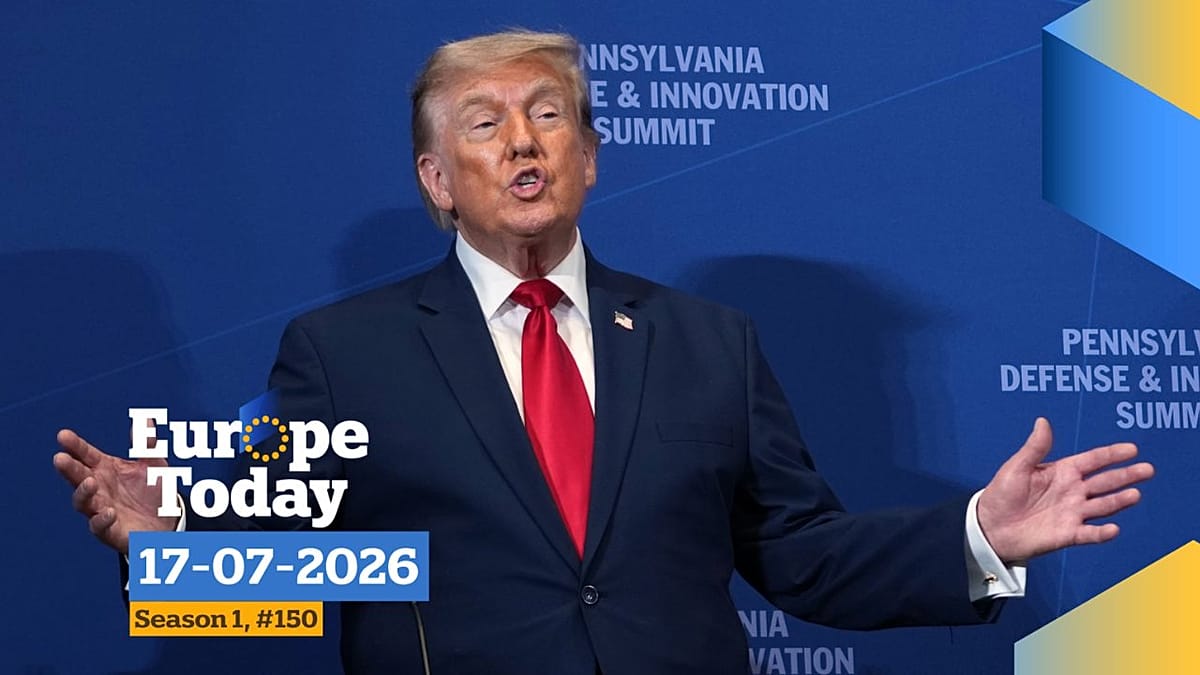
The standoff between the United States and Iran has entered a dangerous new phase, with six consecutive days of US strikes and Iranian retaliation effectively scuttling the June ceasefire understanding. Regional tensions continue to rise as both sides escalate their military operations in the Gulf. The crisis has direct implications for European security, given the bloc's reliance on stable energy routes and its diplomatic efforts to de-escalate conflicts in the wider Middle East.
EU Security Partnerships in the Horn of Africa
EU foreign policy chief Kaja Kallas travelled to Ethiopia and Djibouti this week to reinforce the bloc's security partnerships in the Horn of Africa. The visit underscores Europe's strategic interest in the Red Sea corridor, where EU naval operations are critical for protecting commercial shipping from Houthi attacks and ensuring freedom of navigation. Kallas met with Ethiopian Prime Minister Abiy Ahmed and Djiboutian President Ismaïl Omar Guelleh to discuss counter-piracy, maritime security, and regional stability. The EU has also stepped up support for the African Union Transition Mission in Somalia (ATMIS), reflecting a broader commitment to preventing the spread of instability from the Middle East into the African continent.
Annual Rule of Law Report: Democracy and Media Freedom Under Scrutiny
In Brussels, the European Commission released its annual Rule of Law Report, a comprehensive assessment of democracy, judicial independence, and media freedom across the 27 member states. The report highlights persistent concerns in several countries, including Poland and Hungary, where judicial reforms have drawn criticism from the European Court of Justice. Media pluralism remains a key issue, with journalists in some member states facing intimidation and legal harassment. The report also notes progress in others, such as Slovakia and Greece, where recent legislative changes have strengthened anti-corruption frameworks. The findings will feed into the Commission's broader rule of law mechanism, which can trigger infringement procedures or even the withholding of EU funds.
CJEU Backs Spain's Amnesty Law
The Court of Justice of the European Union (CJEU) delivered a significant ruling this week, upholding Spain's amnesty law for Catalan separatists. The decision has direct implications for the legal case of former Catalan leader Carles Puigdemont, who fled Spain after the 2017 independence referendum. The CJEU found that the amnesty does not violate EU law, as it falls within Spain's constitutional prerogative to grant pardons. The ruling is a blow to Spanish prosecutors who had argued that the amnesty undermines the rule of law. However, it also sets a precedent for how EU member states can handle secessionist movements within their borders, a matter of particular relevance to Belgium, Italy, and the United Kingdom.
World Cup Final: Spain vs. Argentina
On a lighter note, Spain is counting down to Sunday's World Cup final against Argentina in Madrid. The match has captured the imagination of the continent, with fans across Europe tuning in to see if La Roja can secure its first title since 2010. EU Sport Commissioner Glenn Micallef will join the programme to discuss the tournament's global impact and the future of football, including the role of technology and the growing influence of state-owned clubs. The final also highlights the deep cultural ties between Europe and Latin America, a relationship that extends beyond sport into trade, migration, and diplomacy.
As the Middle East crisis deepens, Europe is being forced to balance its diplomatic ambitions with hard security realities. The EU's engagement in the Horn of Africa, its annual rule of law review, and the CJEU's ruling on Spain's amnesty all reflect a continent grappling with internal and external pressures. Whether the bloc can maintain its commitment to the rule of law while navigating geopolitical storms remains an open question.