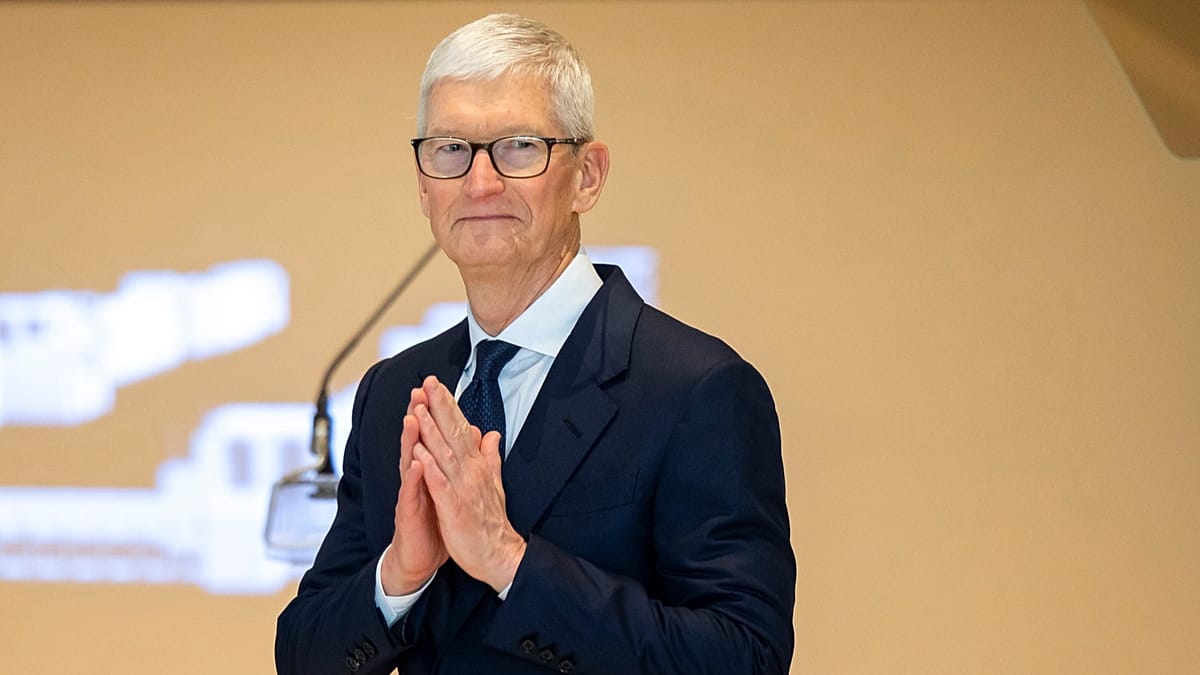
For the first time in 15 years, Apple has a new chief executive. John Ternus, a hardware engineer who has overseen some of the company's most iconic products, took the helm on Tuesday, succeeding Tim Cook. Cook, who transformed Apple from a niche computer maker into a $4.6 trillion (€4tn) global behemoth, will remain as executive chairman, a role that keeps him close to the company's strategic decisions.
The transition comes at a critical juncture for the Cupertino-based tech giant. The rapid rise of artificial intelligence has reshaped the industry since the first iPhone was unveiled in 2007, and Apple has struggled to keep pace. Its AI features, promised nearly two years ago, have been slow to materialise, and the company has faced criticism for falling behind rivals like Google and Microsoft. Earlier this year, Apple unveiled upgrades to its Siri assistant, emphasising privacy and everyday utility, but the market remains sceptical.
A hardware engineer's challenge
Ternus, who previously led hardware engineering, is stepping into a role that demands far more than technical expertise. He must navigate the complex geopolitics of global supply chains, particularly Apple's heavy reliance on manufacturing in Asia. The company has already felt the impact of trade tensions, and Cook's relationship with US President Donald Trump was a key asset. Trump publicly praised Cook on Tuesday, a sign of the diplomatic tightrope Apple must walk.
Beyond AI, Ternus faces the challenge of maintaining Apple's innovation edge. He has been instrumental in developing the Apple Watch, AirPods, and the mixed-reality headset Vision Pro, but the next big product—rumoured to be a foldable iPhone—will test his ability to deliver on consumer expectations. The company's upcoming foldable iPhone Ultra is already generating buzz, but it remains to be seen whether it can replicate the success of earlier launches.
European observers will be watching closely. Apple's relationship with the European Union has been fraught, with regulators imposing fines and demanding changes to its App Store policies. The new CEO will need to balance innovation with compliance, a task that has become increasingly complex under the bloc's Digital Markets Act. Ternus's background in hardware may give him a different perspective, but he will need to engage with Brussels on issues ranging from data privacy to interoperability.
Cook's legacy is a tough act to follow. He took over from Steve Jobs in 2011, when Apple's market value was less than $350 billion. Under his leadership, the company became the world's most valuable, with a loyal customer base and a services business that now generates billions in revenue. His ability to cultivate relationships with political leaders, including Trump, was seen as crucial to navigating trade wars that targeted Asian manufacturing hubs.
Ternus, who has spent his career at Apple, is known for his calm, methodical approach. He is not a showman like Jobs, nor a master of diplomacy like Cook, but he has earned respect internally for his technical acumen and his role in delivering products that have defined Apple's modern era. Whether he can translate that into success as CEO remains an open question.
The AI race is the most immediate test. Apple's competitors have moved aggressively, with Nvidia's chips powering the AI boom and companies like Meta integrating AI into their platforms. Apple's emphasis on privacy could be a differentiator, but it also limits the data available for training models. The company's dependence on Nvidia for high-end chips adds another layer of complexity, as supply constraints could hinder its AI ambitions.
In Europe, the shift in leadership may also signal a change in how Apple engages with the continent. The company has faced criticism for its tax arrangements and its treatment of app developers. Ternus, who has little public profile in Europe, will need to build relationships with EU officials and member states, from Berlin to Paris, to ensure Apple remains a welcome player in the world's largest trading bloc.
For now, the markets have reacted cautiously, with Apple's stock dipping slightly on the news. Investors are waiting to see if Ternus can deliver on the promise of AI and maintain the company's growth trajectory. Cook's departure marks the end of an era, but it also opens a new chapter—one that will be defined by how well Apple adapts to a world where artificial intelligence is no longer a novelty but a necessity.
As Ternus settles into his new role, he will be mindful of the legacy he inherits. The challenge is not just to maintain Apple's dominance but to redefine it for a new generation. Whether he succeeds will depend on his ability to innovate, to navigate global politics, and to keep the company's focus on the products that made it great.