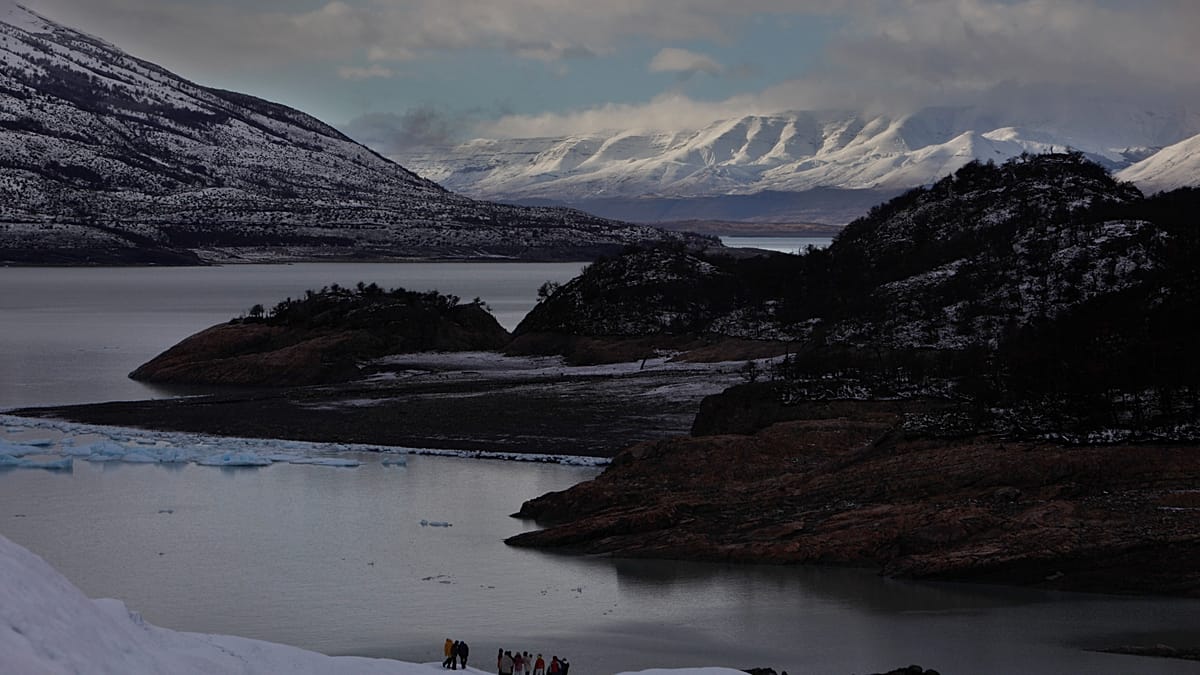
Argentina's windswept Patagonian plateau, long home to sheep ranchers and little else, is being pitched as the next frontier for artificial intelligence infrastructure. President Javier Milei is betting that a combination of cheap land, cool air, and a pledge to keep AI unregulated will lure billions in data centre investment to the country's south.
Speaking to the US Chamber of Commerce in Washington last month, Milei was blunt: "We are not going to regulate artificial intelligence. We are going to leave it free." His government is offering a corporate tax cut for large AI projects, though the measure still awaits Senate approval.
The pitch stands in sharp contrast to the pushback seen in parts of the United States and Europe, where communities and regulators are questioning the environmental and social costs of data centres. In Argentina, the government sees them as a rare opportunity to attract foreign capital and high-skilled jobs.
Patagonia's practical appeal
Patagonia offers what many data centre operators crave: vast empty spaces, a cool climate that reduces cooling costs, strong winds for renewable energy, and natural gas from the Vaca Muerta shale formation. Polish renewable energy company Green Capital plans to build a $3 billion (€2.7 billion) data centre in Chubut province, leasing it to big tech firms for AI computing. Marta Zlotkowska, head of international development at Green Capital, said the company compared potential sites worldwide and "Argentina — well, Patagonia — came out on top in every category."
Visitor logs obtained by The Associated Press show a steady stream of tech figures meeting with Milei and his aides, from venture capitalist Peter Thiel to representatives of OpenAI, Amazon, Google, Oracle, and data centre developers. Foreign Ministry records indicate that Crusoe, which helped build OpenAI's flagship campus in Texas, sought talks with Argentine energy officials about US government-backed investments.
Milei, an ally of US President Donald Trump, frequently posts AI-generated images on social media and has floated the idea of "nonhuman corporations" run entirely by AI agents. His administration argues that Argentina's lack of AI regulation gives it a competitive edge at a time when the European Union and many US states are adopting new rules.
Concerns over sovereignty and safeguards
Critics are less convinced. Alan Rocha Varsanyi, a researcher at Observatorio Petrolero Sur, an Argentine environmental group, said the proposed incentives do not require companies to reserve computing capacity for local use or disclose energy and water consumption. "We're not talking about data centres designed to strengthen Argentine technological sovereignty," he said. "The computing capacity will be exported wherever OpenAI or the other companies need it."
Nicolás Wolovick, a computer science professor at the National University of Córdoba, warned that without rules Argentina could become a "laboratory" for AI experiments that would not be permitted elsewhere. "It's like when companies go to developing countries to test strange drugs they can't test in major developed countries," he said.
Even some within Milei's own government acknowledge the risks. A senior official, speaking on condition of anonymity, said companies are waiting for Argentina to settle rules on training AI with copyrighted works and on sending personal data abroad. The lack of a clear legal framework complicates efforts to build investor confidence.
Local hopes and doubts
In Chubut's remote ranching outposts, the wool industry has been in decline for decades due to drought, overgrazing, and rising costs. Some ranchers are now betting on a different kind of harvest. Francisco Sáenz, a fourth-generation sheep farmer, said his family is among 14 landowners who have leased a combined 130,000 hectares to Green Capital. "Sheep farmers are looking very hard at what alternatives can be found to bring in more income," he said.
But construction is not expected to begin until around 2028, and the project's environmental impact remains unclear. If operated at peak demand, the campus would consume about 2.7 times as much electricity in a year as the entire city of Buenos Aires used in 2025, according to an AP calculation. Green Capital says it will generate its own power from wind, solar, and gas, avoiding strain on Argentina's congested grid.
Residents of Trelew, a city near the proposed site, are sceptical. "There's just so little information," said Cristina Gibón, 46, who fears the environmental toll. "Maybe we'll have water until we're old. But afterwards, our children will still be here, and they won't."
Milei may face similar concerns when Pope Leo XIV, who has warned of AI's threats to humanity, visits Argentina on his Latin American tour. For now, the president's promise of unregulated AI remains a bold experiment — one that could reshape Patagonia's economy or leave it with little more than blueprints.