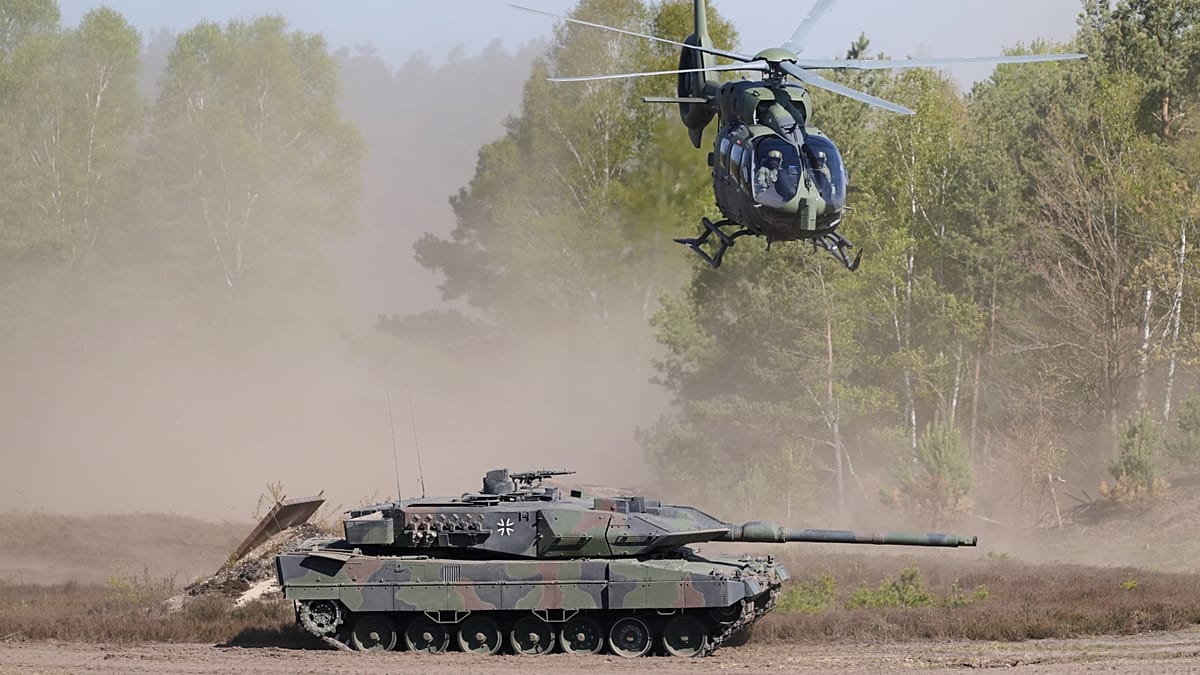
The German government announced on Monday its intention to acquire a 40% stake in KNDS, the pan-European defence contractor that manufactures the Leopard battle tank and France's Leclerc. The decision places Berlin alongside Paris as a state shareholder in one of the continent's most strategically significant arms manufacturers, reflecting a broader push to strengthen Europe's military-industrial base.
KNDS was formed in 2015 through the merger of Germany's Krauss-Maffei Wegmann and France's Nexter. Until now, the French state held a 50% stake, while the remaining half belonged to the German family that controlled Krauss-Maffei Wegmann. The family's planned exit created an opening for Berlin to step in, a move that had been anticipated since German Defence Minister Boris Pistorius first floated the idea in 2025 as a way to safeguard strategic expertise and jobs.
Strategic Rationale Amid Shifting Security Landscape
The timing of the acquisition is no coincidence. European governments are scrambling to expand military spending and production capacity as Russia's war in Ukraine continues to drain existing stockpiles and raises questions about the long-term reliability of the United States as a security guarantor. Berlin framed the investment in explicitly strategic terms, stating that the stake would secure lasting influence over a business it considers vital to European security and defence.
In a joint statement, Germany and France said they had agreed on the future strategy and governance of KNDS, which they intend to co-own through arrangements aimed at giving both countries equal shareholdings. The two governments cast the deal as a joint commitment to building up Europe's defence industry and armed forces, and to securing the continent's strategic independence well into the future.
Beyond its tanks, KNDS also produces the Puma infantry fighting vehicle and the Boxer and Dingo armoured personnel carriers—equipment in growing demand as European armies replenish stocks depleted by years of underinvestment and donations to Ukraine's defence. The group, headquartered in Amsterdam, reported revenue of €4.4 billion last year and employs more than 11,000 people.
Path to a Stock Market Listing
Neither government specified a timeline or the final level at which their holdings would settle, but they stated that the agreement opens the way for a possible flotation of KNDS in the near future. According to people familiar with the matter cited by the Associated Press, the two states plan to trim their stakes to around 30% within two to three years of any listing, while retaining equal voting rights regardless of the size of each holding.
The German government added that the stake would reinforce domestic industrial output, technological independence and the safeguarding of key national security interests and technologies. The move also aligns with broader European efforts to reduce reliance on external suppliers for critical defence capabilities, a theme that has gained urgency as the continent reassesses its security architecture.
While the announcement did not include specific financial terms, the deal signals a deepening of state involvement in a company whose hardware has become central to Europe's rearmament efforts. For France, which already holds a 50% stake, the arrangement ensures continued influence over a key industrial partner. For Germany, it provides a direct hand in shaping the future of a company that produces the Leopard tank, a cornerstone of NATO's armoured forces across the continent.