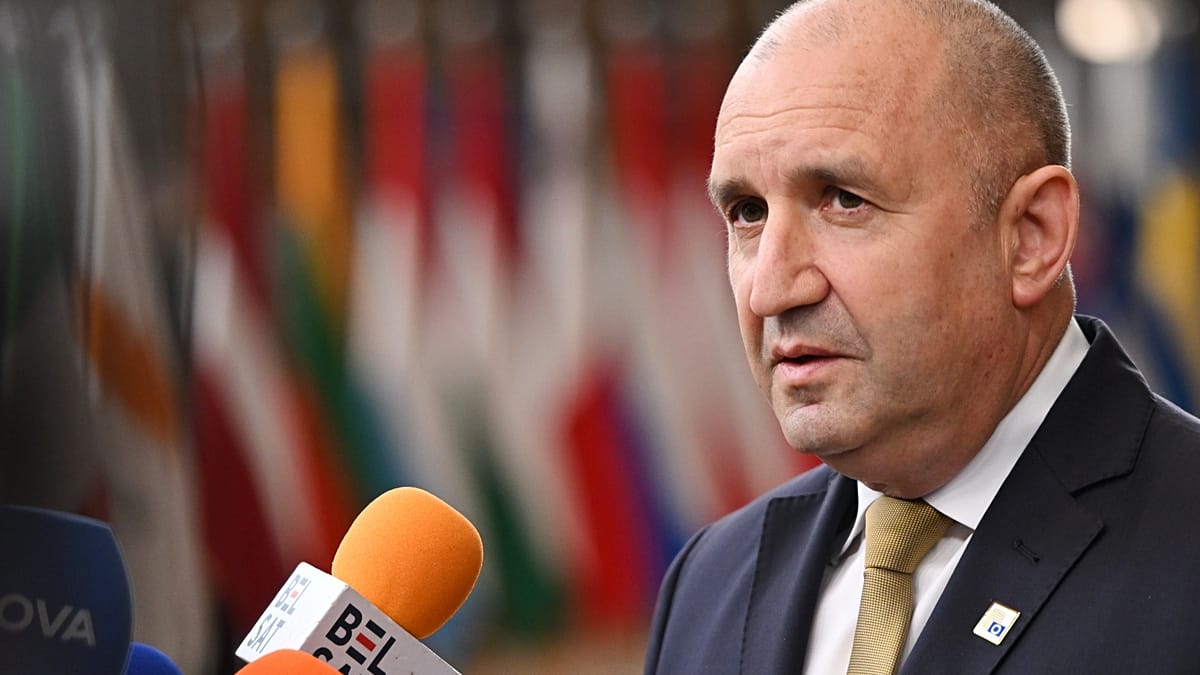
Bulgarian Prime Minister Rumen Radev has broken ranks with his European Union counterparts by publicly welcoming the diesel supply agreement struck between US President Donald Trump and Russian President Vladimir Putin. The deal, which eases US sanctions on Russian diesel imports until April 2027, has drawn sharp criticism across the bloc, but Radev framed it as a pragmatic response to Europe's energy woes.
Speaking in English as he arrived at a two-day EU summit in Brussels, Radev said: "You know what is our problem right now in Europe? High fuel prices. Any step in reducing fuel prices and to guarantee our competitiveness, we appreciate." His comments put him at odds with the prevailing mood among EU leaders, who view the agreement as a dangerous concession to Moscow.
A divided European response
Swedish Prime Minister Ulf Kristersson voiced the frustration of many, saying: "We very much regret this agreement on diesel. It's obviously not a very big part, but still it's in the wrong direction. Every step now to help the Russians to increase their financing of the war is a bad sign."
EU foreign policy chief Kaja Kallas had earlier told Euronews that the deal was a gift to Putin at a time when Russia is intensifying its bombardment of Ukraine. "The question is: what has he (Putin) given in return? What we see is that he's actually increasing the attacks on civilians and civilian infrastructure. The ceasefire that was also announced is not really working on the Russian side," she said.
Radev's stance is particularly striking given that he has positioned himself as a contrarian voice in the European debate over Russia's full-scale invasion of Ukraine since his election victory earlier this year. His latest remarks echo his previous criticism of EU policy on the conflict.
Radev opposes strikes on Russian refineries
In another sign of his divergence from EU consensus, Radev criticised Ukraine's drone strikes on Russian oil refineries, which Trump has asked President Volodymyr Zelenskyy to halt immediately. Zelenskyy has since insisted the campaign will continue.
"I don't support strikes on any refineries," Radev said. "I don't support strikes on any energy power plants, like Russian attacks on energy power plants in Ukraine, because this hits us back. The prices in Europe are (skyrocketing)."
His comments contrast with the position of most European leaders, who have rallied behind Ukraine's right to target Russian energy infrastructure as a means of exerting leverage over Moscow. Many see Trump's request as a bid to lower fuel prices ahead of the US midterm elections, where Republicans risk losing control of both chambers of Congress.
The summit in Brussels is also addressing broader energy price concerns, with leaders seeking quick fixes as costs spiral across the continent. The diesel deal has added a contentious layer to those discussions, exposing deep divisions over how to balance economic pressures with support for Ukraine.
Radev's backing of the deal may resonate with some EU citizens struggling with high fuel costs, but it has isolated him diplomatically. As the bloc grapples with the twin challenges of energy security and geopolitical unity, his stance serves as a reminder that consensus on Russia policy is far from universal.