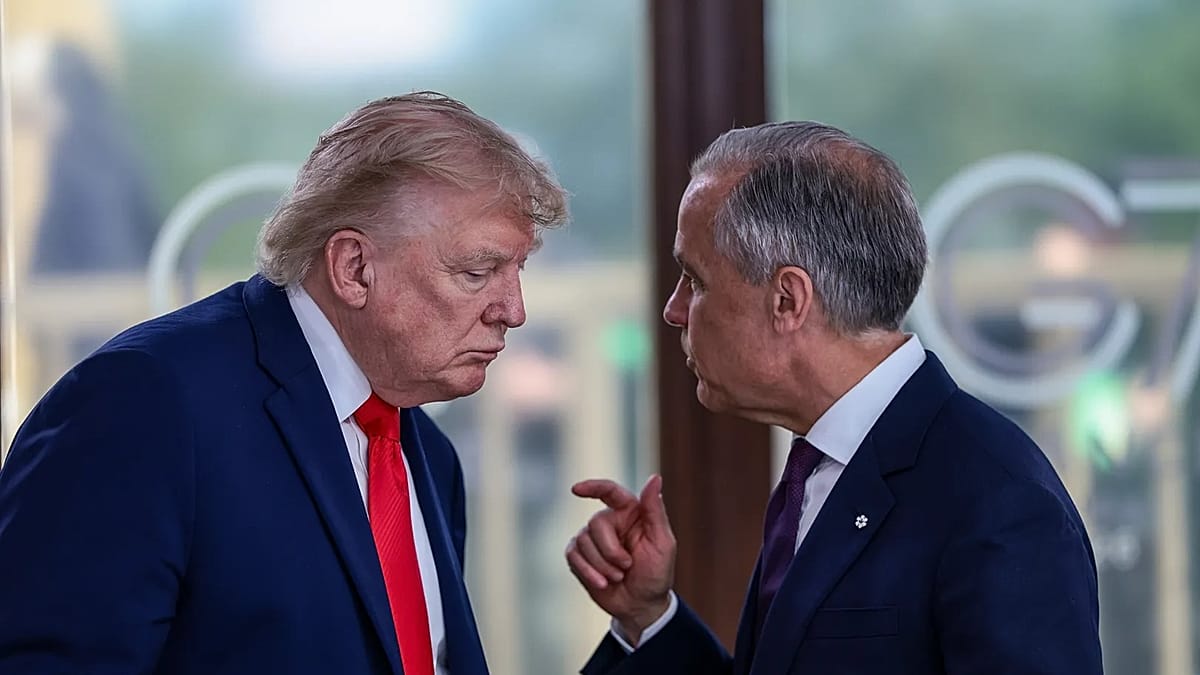
Canadian Prime Minister Mark Carney has pledged to retaliate against new US tariffs with matching measures, after trade negotiations between Ottawa and Washington broke down over the weekend. The announcement marks a sharp escalation in a dispute that has already disrupted supply chains and weighed on economies on both sides of the border.
Speaking on Saturday, Carney confirmed that hefty 50% duties on approximately $20 billion worth of Canadian goods had taken effect, following what he described as "last-minute changes in the U.S. proposed terms" that were "unfair, uneconomic, and called into question the reliability of any deal."
"Canada will match those tariffs dollar for dollar to protect our workers and businesses," Carney said in a statement. "In recent weeks, we made important progress toward improving Canada’s position as having the best deal in the world with the U.S. However, that progress has not been enough to meet our objectives for Canadians."
The collapse of the talks came despite US President Donald Trump having expressed optimism about reaching an agreement, citing his "good relationship" with Carney. Washington had initially postponed the tariffs, which were due to take effect on Wednesday, as negotiations appeared to be moving forward.
US Trade Representative Jamieson Greer blamed Canada for the breakdown, saying on Friday that "tonight, Canada declined to finalise the trade deal under the terms agreed earlier this week." Greer added that the Trump administration had offered "significant tariff reductions on steel, aluminium, autos and lumber" in exchange for Canadian concessions.
Washington has justified the levies by accusing Canada of "discriminatory treatment" against US alcohol, automobile, and dairy products. Ottawa, for its part, has been seeking relief from US tariffs on steel, aluminium, and autos—measures that have hit Canadian manufacturers hard and contributed to job losses in the sector.
Broader implications for transatlantic trade
The dispute is being closely watched in European capitals, where officials have already faced their own battles with Washington over tariffs. Earlier this year, the Trump administration imposed a 15% tariff on European drone imports, while the UK was hit with a 10% rate. European leaders have repeatedly called for a unified response to US trade policy, and Canada's stance could serve as a precedent for how other allies push back.
For Canada, the stakes are high. The United States is its largest trading partner, and the tariffs threaten to deepen an economic slowdown. Analysts warn that prolonged uncertainty could deter investment and further strain the relationship between the two neighbours.
Carney, who took office earlier this year, has positioned himself as a defender of Canadian interests. His government has already announced a $70bn clean energy plan that could reshape North American power dynamics, but trade tensions now threaten to overshadow those ambitions.
The breakdown in talks also raises questions about the reliability of US commitments under the Trump administration. As one European diplomat put it, "If Washington can walk away from a deal with its closest ally, what does that mean for the rest of us?"
Both sides have left the door open for further negotiations, but no new talks have been scheduled. In the meantime, the tariffs are set to remain in place, with the potential for further escalation if either side chooses to expand the scope of the dispute.