Canadian officials have unveiled what they describe as the largest clean energy investment in North American history, a C$70 billion (€43.6 billion) package aimed at dramatically expanding wind and hydropower capacity in the country's east. The agreement, struck between Prime Minister Mark Carney's government and the provinces of Quebec and Newfoundland and Labrador, is still tentative, but it signals a serious push to increase electricity generation and reduce reliance on fossil fuels.
If fully realised, the plan would add 14,000 megawatts of power—enough, in Carney's words, to “light, heat [and] cool the homes in Toronto, Montreal and Vancouver combined.” The project is also projected to support 23,000 jobs and contribute C$31 billion (€19.3 billion) to Canada's GDP through the early 2040s. Beyond the economic boost, it could make a significant dent in Canada's carbon emissions by displacing fossil-fuel-based energy.
Canada already generates around 80 per cent of its electricity from non-emitting sources, chiefly hydro, with nuclear, wind, and solar making up the rest. That clean mix has helped keep residential electricity costs among the lowest in the G7. Carney framed the new investment as part of a broader strategy: “We are making Canada the best place in the world to build and invest in clean energy,” he said, citing clean economy tax credits, streamlined project approvals, and cooperation with provinces and territories.
A boost for hydroelectric power in North America
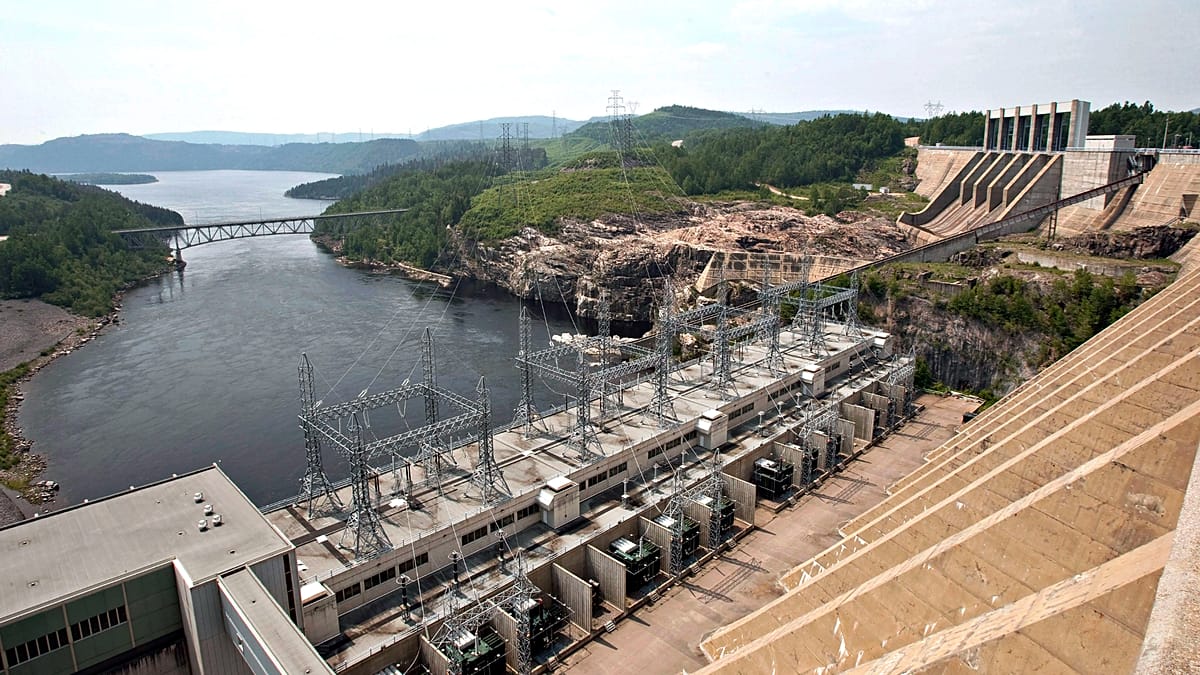
The agreement includes upgrading the Churchill Falls generating station and developing a new hydro project at Gull Island, both in Labrador on Canada's Atlantic coast. Some of the new power would be transmitted to Quebec, where utility Hydro-Quebec would sell a significant portion into the northeastern United States. For many US policymakers, importing more Canadian hydroelectricity is seen as a key step toward decarbonising the American grid while improving reliability and lowering costs for consumers.
But the initiative could stall within months. At the signing ceremony on Monday in Newfoundland, Quebec Premier Christine Frechette acknowledged that the separatist Parti Québécois could scrap the deal if they win provincial elections in October—a result current polls suggest is likely. Such political uncertainty is not unusual in Canadian energy megaprojects, but it adds a layer of risk to an already ambitious timeline.
Since taking office last year, Carney has faced criticism from environmental groups who accuse him of backtracking on climate commitments made by his predecessor, Justin Trudeau. One cabinet minister resigned last year over plans to advance a new oil pipeline from Alberta to the Pacific coast. Monday's announcement, however, was welcomed by the Canadian Climate Institute, which said it demonstrated “the level of ambition needed to reach Canada's goal of doubling the electricity grid with clean energy.”
The Canadian plan also resonates beyond North America. As Europe grapples with its own energy transition, the continent has looked to geothermal energy as an untapped domestic resource, while households increasingly take power into their own hands through rooftop solar and community projects. Canada's approach—combining federal incentives with provincial cooperation—offers a contrast to the more fragmented European landscape, where national policies often diverge.
For the US, the prospect of cheaper, cleaner Canadian electricity could ease pressure on grids already strained by extreme weather, such as the heatwaves that have also hit Europe. But the political fragility of the deal means that its future is far from assured. If the Parti Québécois takes power, the agreement could be torn up, leaving the project in limbo and delaying a major step toward a cleaner North American grid.
Despite the uncertainties, the announcement marks a notable shift in Canada's energy posture. With abundant hydro resources and a federal government willing to invest, the country is positioning itself as a potential clean energy superpower. Whether it can overcome the political hurdles will determine if this record investment becomes a reality or just another ambitious plan on paper.