Off the coast of Gandía, south of Valencia, fishermen like Tony Beltrán haul in more than just their catch. Nets often come up tangled with plastic bottles, bags, and other debris. "Plastic alone now accounts for around 80% of everything we bring up. This is our daily reality," Beltrán says, showing the waste collected on a recent trip. "Even before recycling became popular, we were already collecting it, the only difference was that we didn't separate it."
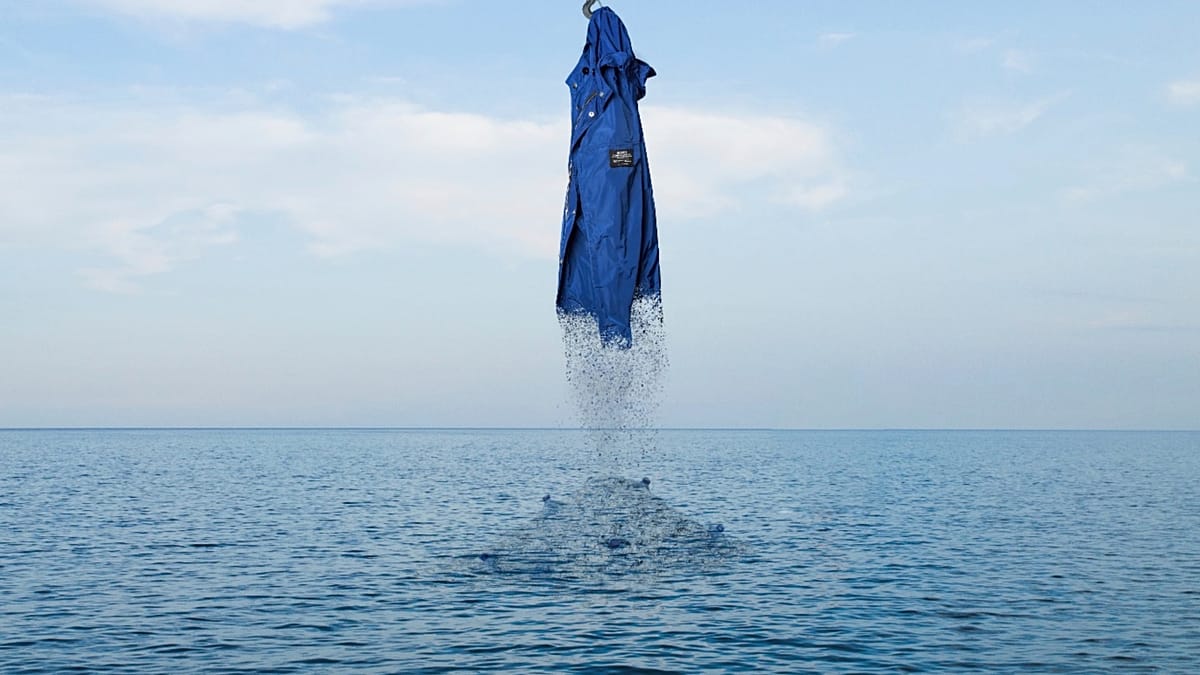
That waste is now the raw material for a growing sustainable fashion movement. Ecoalf, a Spanish company founded in 2009, has built a supply chain that turns marine litter into fabric. Through its Upcycling the Oceans project, launched in 2015 with the Ecoalf Foundation, the initiative has recovered more than 2,000 tonnes of waste—roughly 100 truckloads—from the Mediterranean and beyond. Today, it operates in around 80 ports and has expanded to France, Italy, Greece, Egypt, and Thailand.
Yet the scale of the problem remains daunting. The foundation notes that every minute, the equivalent of a truckload of plastic enters the world's oceans. "Our goal has always been to bring together 10,000 fishermen across the Mediterranean so that, together, we can help clean up the Mediterranean Sea," explains Andrea Ruzo, director of the Ecoalf Foundation.
From bottle to fabric
Most recovered materials—glass, metals, and other debris—follow conventional recycling routes. But around 5% of the waste consists of plastic bottles, which Ecoalf transforms into what it calls Ocean Yarn. "The first step, once the waste has been collected, is to shred it and turn it into flakes and then pellets, that's the stage before spinning," says Ángela Pérez, Ecoalf's expert in textile innovation and sustainability.
At Ecoalf's headquarters in Madrid, Ocean Yarn and other recycled materials are spun into fabrics. The company sources from a range of waste streams: discarded fishing nets, tyres, and recycled natural textiles like cotton and wool. The goal, according to the company, is to reduce the environmental impact of both production and the finished garment, while maintaining quality and aesthetics.
Circularity influences every design decision, says Julie Sohn, Ecoalf's creative director. "It changes everything from the very beginning. Everything is designed so that the garment can be completely disassembled, without any additional processing, and re-enter the circular economy," she explains.
A profitable model?
Ecoalf has grown into a global brand with annual revenues of around €65 million, 300 employees, and dozens of stores worldwide. Its slogan, "There is no Planet B," is emblazoned across collections. But the company's leadership is candid about the industry's broader challenges.
"The problem we've been facing in recent years is mass overconsumption and overproduction. Brands need to move beyond sustainable capsules or focusing on a single material. We need to learn to design with eco-design principles from the very beginning," says Carolina Álvarez-Ossorio, Ecoalf's chief marketing officer.
Can sustainable fashion eventually replace fast fashion? Álvarez-Ossorio is cautious. "There is still a long way to go," she says, but she believes designers have a role in finding new ways to work with purpose and ultimately help protect the planet.
Ecoalf's efforts come amid broader European debates on sustainability and consumption. In Spain, housing and environmental issues are also making headlines, from housing decrees to mental health gaps. The fashion industry, one of the world's most polluting, is under increasing scrutiny from regulators and consumers alike.
For now, Ecoalf's model remains a niche in a sector dominated by fast fashion. But the company's growth suggests that circularity can be commercially viable. As Álvarez-Ossorio puts it, "We need to learn to design with eco-design principles from the very beginning." Whether that philosophy can scale across the industry is the question that will define the next decade of fashion.