The European Union's flagship carbon market is at the centre of a political tug-of-war that could determine whether the bloc meets its 2040 climate target. A leaked compromise proposal, drafted by the Irish Presidency of the EU Council, seeks to shield energy-intensive industries from rising carbon costs, but critics argue the concessions would dilute the system's effectiveness at the very moment it needs to drive deeper emissions cuts.
The document, seen by Euronews, is due to be discussed by EU ambassadors on Wednesday. It aims to build consensus among the 27 member states ahead of the Environment Council meeting on December 11, with the European Parliament expected to vote in Strasbourg during its December 14-17 plenary session. Yet the path to agreement is fraught, as capitals remain split over how quickly to tighten the Emissions Trading System (ETS) and how much flexibility to grant industry.
Free allowances and international credits
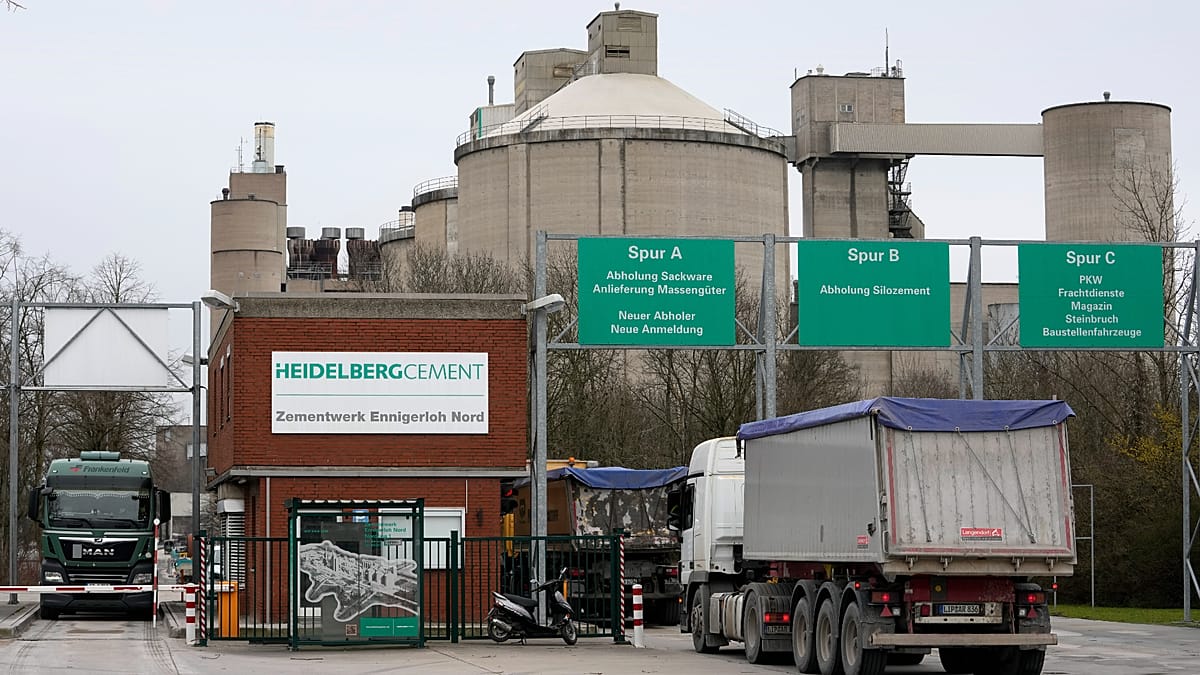
Under the Irish proposal, industrial companies would retain 80% of their free allowances if they submit an investment plan, even if they subsequently fail to implement the promised decarbonisation projects. The remaining 20% would be conditional on starting construction of eligible initiatives. Free allowances are permits given to companies without auction, designed to protect EU producers against competition from countries with weaker climate rules, such as China and the United States.
This marks a significant concession to industries that fear losing their competitive edge. However, it raises a fundamental question: if companies can keep most of their allowances without delivering on investments, will the ETS still provide a strong enough price signal to spur the modernisation of European industry? The compromise would effectively shield industry from carbon costs for longer, leaving governments to ensure that this protection translates into real investment in clean technologies.
On international carbon credits, the Council has retained the Commission's proposal to set aside allowances equivalent to 260 million tonnes of CO2 to finance their purchase. It also leaves open the possibility of a pilot phase between 2031 and 2035, allowing the EU to test the system before full implementation. The Council has maintained stringent quality and integrity requirements for these credits, making the ETS emissions reduction trajectory increasingly dependent on their availability. But if industries cannot buy them, the 2040 target—which requires at least an 85% domestic net emissions reduction, with international credits covering the remaining 5%—could be jeopardised.
Fragmentation at national level
The Irish Presidency faces an uphill battle given the depth of divisions among member states. According to a second document seen by Euronews, countries are already split over how quickly the supply of carbon permits should shrink, whether companies should be allowed to use international credits, and how far industrial sectors should be shielded from rising costs. Taken together, these demands risk diluting the ETS when it is expected to deliver a large share of the bloc's next phase of emissions cuts.
Governments generally want to preserve the ETS as a source of revenue for decarbonisation, but concerns are mounting about the costs it imposes on energy-intensive industries competing with manufacturers from China or the US. Some capitals argue that allowances should decline faster to increase carbon prices and encourage divestment from fossil fuels, while others fear the impact of withdrawing free allowances on their struggling industries. A slower reduction would ease pressure on power plants and factories, potentially tempering carbon prices and giving companies more time to adapt—but it would also mean fewer emissions cuts in the sectors covered by the ETS, making the 2040 target harder to reach.
The debate comes amid broader tensions over the EU's climate agenda. As the bloc prepares its next round of sanctions against Russia, the question of energy security and industrial competitiveness remains intertwined with climate policy. Meanwhile, a recent UNESCO report highlighted how AI chatbots can distort climate facts, underscoring the challenge of maintaining public trust in climate action.
Environmental groups sound the alarm
A recent analysis by the Öko-Institut, commissioned by WWF Germany, warned that the Commission's proposed ETS reform was "incompatible" with the EU's target of cutting net emissions by 90% by 2040. "The Commission would rather gamble on climate protection than safeguard the future of European industry," said Lisa Okken, industrial policy expert at WWF Germany. "Its proposed reform lacks the carbon price signal needed to incentivise the urgent modernisation of European industry. This gap is being filled with complicated accounting tricks and excessive flexibility."
Another key concern is the proposal to allow additional emissions beyond the existing cap in exchange for future permanent carbon removals through expensive technologies designed to capture CO2 from the air. Environmentalists argue this creates a dangerous loophole that could delay real reductions. The stakes are high: the ETS is the EU's main tool for pricing carbon, and its credibility depends on maintaining a clear trajectory towards the 2040 goal.
The Irish Presidency hopes to secure a political agreement in December, but the compromises being floated may only postpone the hard choices. As the bloc's climate ambitions collide with industrial realities, the coming weeks will test whether the EU can reconcile its environmental leadership with the economic pressures facing its member states. For now, the leaked text suggests that protecting industry may take precedence over the pace of decarbonisation—a trade-off that could have lasting consequences for the continent's climate commitments.