As world leaders gather at COP31 in Türkiye to debate climate action, new research offers a stark reminder of what is already at stake. The Climate Risk Index (CRI) 2027, published by Germanwatch, ranks countries by the human and economic toll of extreme weather, and the findings are sobering for Europe.
In 2025, the world recorded 367 extreme weather events, which together claimed nearly 35,000 lives, affected more than 100 million people, and caused direct economic losses exceeding US$158 billion (€143 billion). The true death toll is likely far higher, as heat-related mortality is severely underreported in poorer nations. Over the past three decades, extreme weather has killed roughly 900,000 people and inflicted losses of more than US$4.7 trillion (€4.2 trillion) — almost equivalent to Germany's entire GDP.
Spain: Europe's most exposed country
Spain ranked third globally in the CRI for 2025, behind only Jamaica and Sri Lanka, and ahead of Thailand, the Philippines, and Pakistan. The country endured seven extreme weather events, but the most devastating was a prolonged heatwave from April to September, with temperatures peaking at 46°C. Officially, it claimed 3,900 lives, though the real number is probably higher. That summer was Spain's hottest on record at the time, averaging 2.1°C above the 1991-2020 baseline — a record since surpassed by 2026.
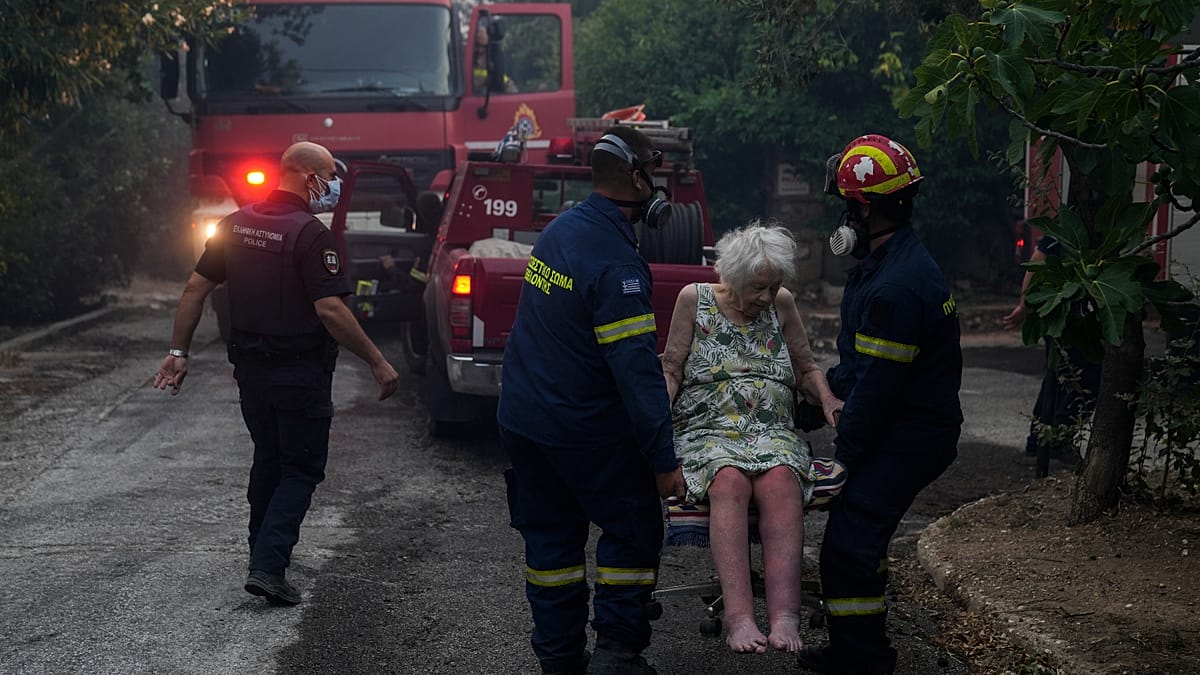
The heatwave also fueled Spain's worst wildfire season in three decades. The European Forest Fire Information System (EFFIS) estimated that 382,607 hectares burned — about 1.5 times the size of Luxembourg. Fires raged across Galicia, Asturias, Castilla y León, and Extremadura, regions that, except for Extremadura, are among Spain's most depopulated. Depopulation has weakened traditional forest management, such as extensive livestock grazing that once kept undergrowth in check. Fire brigades have repeatedly warned about the lack of resources and inadequate forest upkeep.
Spain's costliest event was Storm Alice, which triggered a Depresión Aislada en Niveles Altos (cold drop) and caused US$100 million (€91 million) in damages, affecting more than 1,000 people.
Heatwaves: a silent killer and economic drag
Heatwaves were by far the deadliest type of extreme weather in 2025, accounting for nearly 70% of all deaths. Italy suffered the most, with 6,710 fatalities during a summer that reached 45.7°C. Spain followed with 3,893 deaths. Even Germany, which recorded only one extreme weather event — a heatwave peaking at 38.3°C in July and August — saw more than 2,400 deaths.
The economic impact is equally severe. In Germany, each day above 30°C is estimated to cost €124 million in lost output. Globally, worker productivity declines by about US$1.30 (€1.20) per hour for each additional degree between 30°C and 35°C. Heat reduces productivity, increases accidents and sick leave, and hits physically demanding jobs like construction hardest. Italy has often had to ban outdoor work during the hottest hours. For informal workers, such as fruit pickers and market traders, earnings can drop by around 40% during heatwaves, pushing families into debt or forcing children out of school.
Heatwaves also disrupt infrastructure. In 2025, nuclear power plants in France, Romania, and Hungary had to shut down because of insufficient cooling water. Low river levels hamper transport and raise costs for businesses.
Europe's growing vulnerability
The CRI report highlights that wealthy European nations, including Spain, France, and Italy, have become markedly more vulnerable to deadly weather over the past three decades. The authors warn that “human losses and economic costs of climate-related extreme weather events will continue to rise unless there is a sizeable shift in mitigation ambition and financial support.”
The findings come as Europe faces a future of more frequent and intense extremes. As climate experts point to 2026 as a turning point, the pressure on governments to adapt and cut emissions grows. The report also notes that the current 'godzilla' El Niño is not even factored into the data, suggesting the situation could worsen.
For Spain, the challenges are compounded by other crises, such as the housing shortage that has sparked cooperative living experiments and the recent general strike over housing and wages. Meanwhile, European health systems are already bracing for new pressures.
At COP31, negotiators have a chance to accelerate the transition away from fossil fuels, which the UN says account for about 68% of global greenhouse gas emissions and nearly 90% of all carbon dioxide. Without a significant shift, the human and economic costs documented in the CRI will only escalate.