As European governments pour billions into defence and reinforce NATO's eastern flank, a quieter but equally vital preparation is underway: making the continent's hospitals and health systems resilient enough to survive a major conflict. From missile strikes to chemical and biological attacks, a war would place unprecedented strain on medical infrastructure — and many experts warn that Europe is not ready.
“Healthy society, it's a resilient society,” says Brigadier General Petter Iversen, Norway's Surgeon General and chair of NATO's Committee of the Chiefs of Military Medical Services. “If you are resilient, you can withstand the pressure from the adversaries.” His message is clear: healthcare preparedness is not just a public health issue, it is a matter of national security.
The new biological threat
One of the most unpredictable dangers comes from the convergence of artificial intelligence and biotechnology. While AI can accelerate drug discovery and personalised medicine, it also lowers the barrier for malicious actors to engineer dangerous pathogens. Laurent Muschel, Director of the EU's Health Emergency Preparedness and Response Authority (HERA), warns that “you don't know what you are facing, because it can be a virus engineered with AI or a state actor developing a new virus.” He stresses that “biosecurity is going to be very high on the agenda,” requiring robust regulatory frameworks and surveillance systems to control the dual-use potential of AI.
Iversen echoes this concern, describing the combination of synthetic biology, bioinformatics, and AI as a “really serious” threat. He singles out weapons of mass destruction — chemical, nuclear, and biological — as the gravest danger, one that could generate enormous numbers of patients requiring vastly different treatments simultaneously. To counter this, HERA is investing in broad-spectrum medical countermeasures, such as antivirals and monoclonal antibodies, that can offer protection before the exact nature of a biological attack is known.
Uneven readiness across Europe
Preparedness varies sharply across the continent. Countries bordering Russia and those on NATO's eastern flank, such as the Baltic states, Finland, and Poland, have a heightened sense of urgency. Germany and Norway are also expanding hospital capacity and healthcare provision. Yet Iversen cautions that infrastructure alone is insufficient. “We are around 200 metres in the 400-metre lap,” he says, meaning Europe is only halfway to where it needs to be.
One key challenge is shifting from peacetime specialisation to wartime generalisation. In a crisis, hospitals may need to abandon highly specialised services and adopt a more flexible, all-hands-on-deck approach. Training medical professionals to work in unfamiliar conditions is essential. Another vulnerability is the supply chain. Iversen advocates for a combination of stockpiling, warehousing, and a stronger industrial base to withstand the first wave of an emergency and adapt to what follows.
Lessons from Ukraine
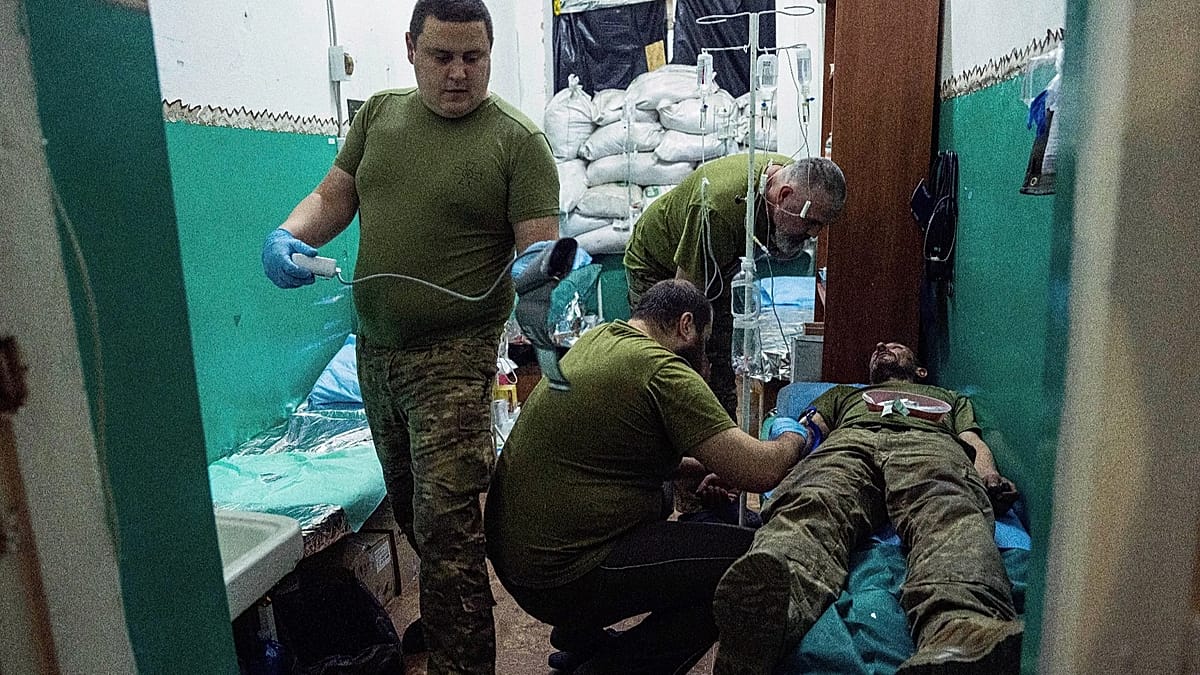
The war in Ukraine has turned many theoretical scenarios into practical lessons. Hospitals and ambulances have been attacked, forcing medical workers to operate under fire. The conflict has also highlighted the long-term healthcare needs that extend beyond battlefield trauma. Jarno Habicht, former head of the WHO Country Office in Ukraine, notes that “we saw that there is much more need for trauma care.” The scale of injuries has led to thousands of amputations, creating a surge in demand for rehabilitation services — a need that will persist for years.
For European health authorities, Ukraine is a stark reminder that preparation must go beyond emergency response. It requires sustained investment in mental health services, rehabilitation, and the ability to treat mass casualties while maintaining routine care. As Iversen puts it, preparedness is a continuous process, not a one-time exercise.
While governments are increasingly aware of these challenges, translating awareness into action remains difficult. Funding is often scarce, training is time-consuming, and regular exercises are costly. Yet the cost of inaction could be far higher. As Europe navigates a more dangerous security environment, the resilience of its health systems will be a decisive factor in how well it withstands the unthinkable.