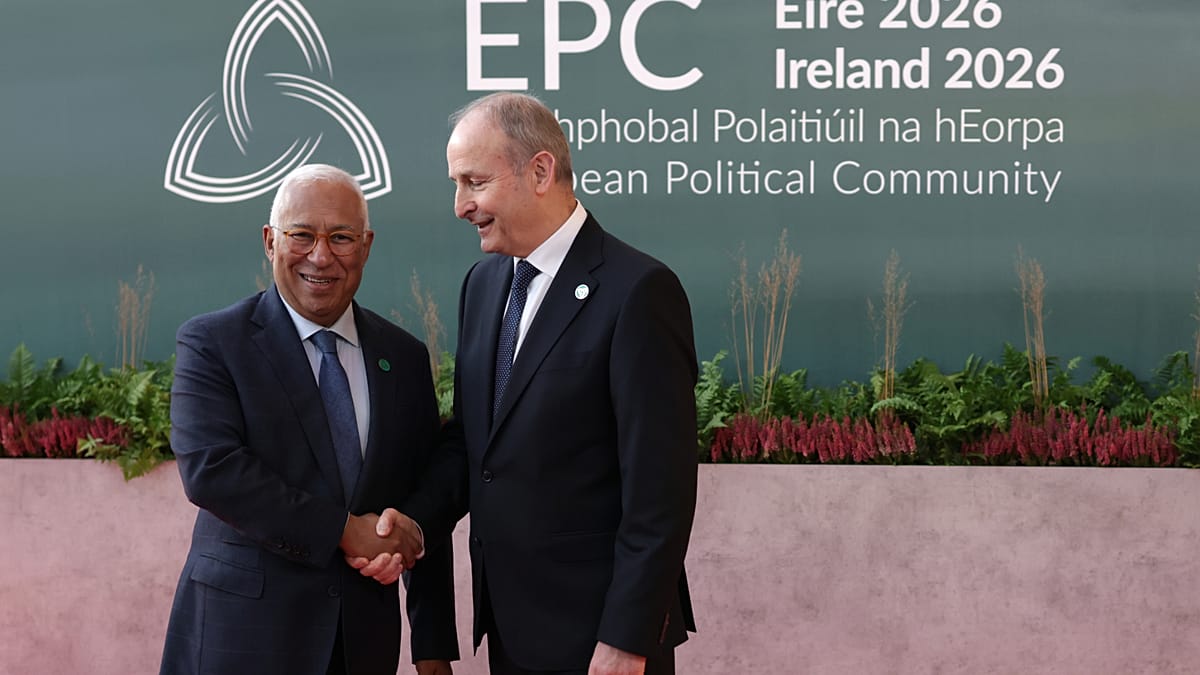
DUBLIN — The informal European Council summit, originally planned to focus on artificial intelligence, was swiftly overtaken by the urgent question of who will represent Europe in the Ukraine peace negotiations. As leaders arrived at Dublin Castle, the corridors buzzed with speculation about a potential EU peace envoy, a role that has become the subject of intense jockeying.
The summit's agenda was set aside after Ukrainian President Volodymyr Zelenskyy met late Wednesday with US envoys Jared Kushner and Steve Witkoff at a military airbase outside Dublin. The hastily arranged encounter followed two days of talks in Abu Dhabi and a direct meeting between the envoys and Russian President Vladimir Putin in Moscow. According to reports from the ground, the atmosphere was tense as the envoys arrived in cold, bleak conditions.
Zelenskyy confirmed that Europe would take part directly in the next round of negotiations, a shift from earlier discussions where European leaders feared being sidelined. Witkoff had floated that Putin agreed to open the table to Europeans, though the Kremlin quickly played down the prospect. Kushner was more emphatic, stating, "We cannot conclude this deal without the Europeans being at the table. We've been telling President Putin that we believe that's very important, and President Zelenskyy has been a very strong supporter, and he's been saying that from the very, very beginning."
When asked about Putin's demands, Zelenskyy declined to elaborate, saying only that everything would "depend on when and how the war will end in Ukraine."
Europe's security architecture under scrutiny
Earlier in the day, Zelenskyy warned the European Political Community summit that Europe must pay close attention to the ongoing cooperation between Washington and Moscow, which he said could reshape the continent's security framework. "It's more about some kind of new security framework between Europe and Russia," he said. "We are waiting for more details, and Europe needs to pay close attention."
Russia has sought to turn the negotiations into a broader restructuring of European security, a move EU leaders have rejected as an attempt to divert attention from Moscow's battlefield setbacks and re-establish its sphere of influence. At the EPC meeting, 43 countries signed a declaration on key principles for the future of European security, stressing that any matter on European security must be decided by Europeans. The signatories also "underline the necessity to provide robust and credible security guarantees to Ukraine and reiterate, for those concerned, their intention to do so, in order to prevent the recurrence of aggression in Europe in the future."
The question of who will speak for Europe has become more pressing now that a seat at the table may actually be on offer. Italian Prime Minister Giorgia Meloni was the first to raise the issue, warning that the different formats risked undermining Europe's credibility and calling for someone with a clear mandate. Rome has since secured a place for Meloni's sherpa, Fabrizio Saggio, alongside his E3 counterparts in Abu Dhabi. Speaking to reporters, Meloni said, "We need to identify who should represent European interests and with which mandate. When we talk about the security of European nations, we are talking about making commitments about countries not present at the table."
Polish Prime Minister Donald Tusk, whose country is another major player excluded from the E3 format, tried to lower the temperature. "I do not feel that Poland is suffering from a lack of participation. Quite the opposite. As I have told you many times, I sometimes feel there are too many meetings," he said.
The name game has already begun. Luxembourg's Prime Minister Luc Frieden backed European Council President António Costa, saying, "We, as heads of government, have a representative. And that is President Costa." Costa has built a reputation as an honest, even-handed broker, though his head of cabinet, Pedro Lourtie, caused a stir in June by attempting to open a diplomatic channel with Moscow.
EU foreign policy chief Kaja Kallas has also pitched herself, alongside Costa, pointing out that the decision on who should deal with Russia was taken when she was offered the post in 2024. However, some leaders view Kallas as an anti-Russian hardliner, which may not help her case.
If no final decision is reached today, the matter will be postponed to the special summit at the end of the month, which is already loaded with the EU budget and financing for Ukraine. Meanwhile, Ukraine's air defences face mounting strain as renewed restrictions on Starshield satellite services compound a chronic shortage of anti-ballistic interceptors. Zelenskyy confirmed on Thursday that restrictions had been reintroduced on Starshield, the military version of SpaceX's Starlink satellite service.
The Dublin summit has underscored the difficulty of forging a unified European position on a conflict that has exposed deep divisions among member states. As the negotiations move forward, the bloc's ability to speak with one voice will be tested like never before.