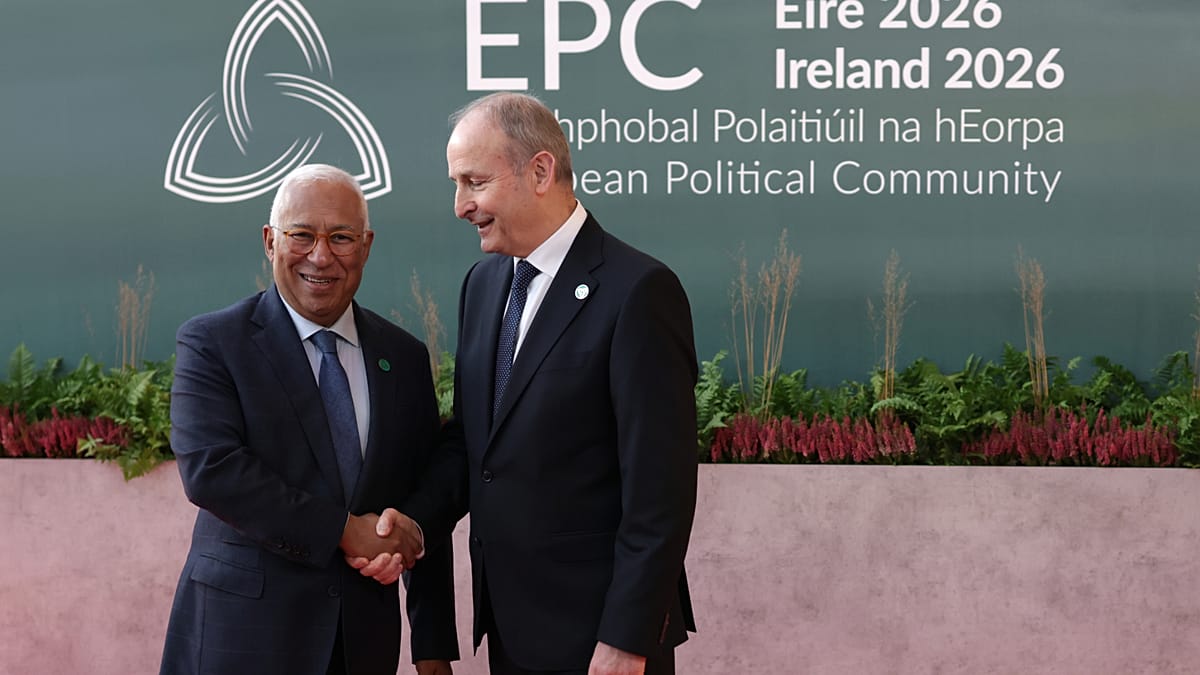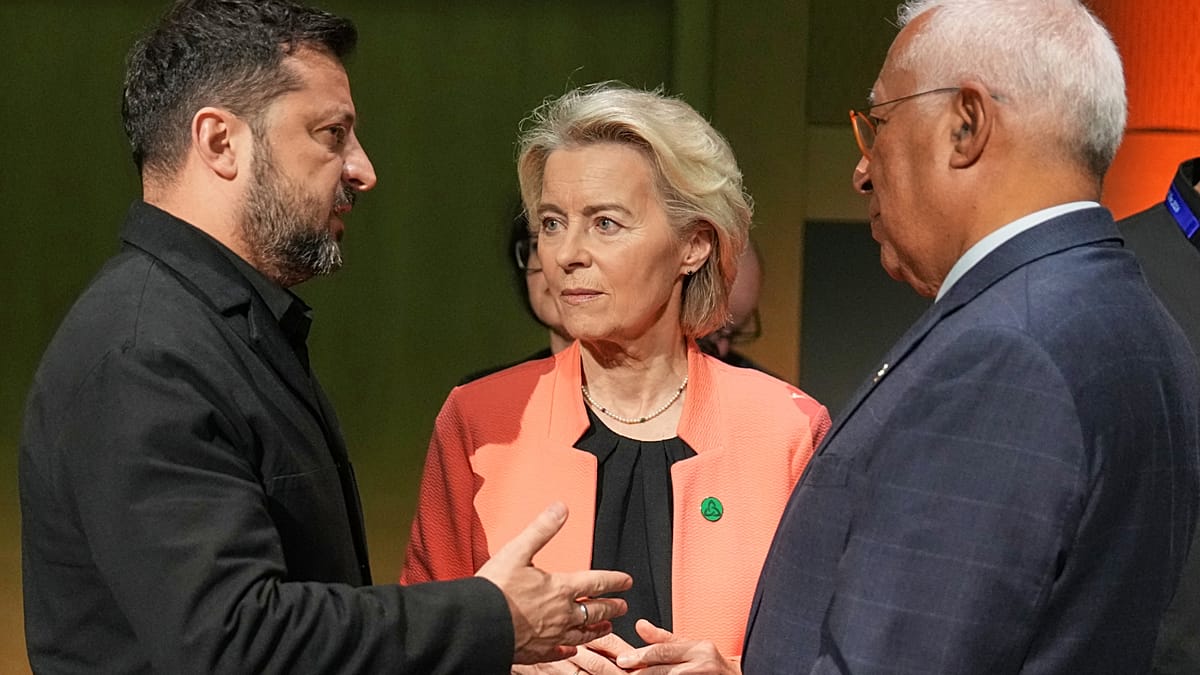
European Union leaders are meeting in Dublin on Friday for their first-ever summit dedicated to artificial intelligence, but the agenda has been hijacked by a more immediate geopolitical question: who should represent Europe in the Ukraine peace negotiations. The informal gathering, hosted by European Council President António Costa, was designed to allow for open discussion on AI without the pressure of adopting formal conclusions. Yet the escalating dispute over the EU's envoy in the Ukraine talks has taken centre stage.
Meloni's warning and Costa's bid
The Ukraine issue was added after Italian Prime Minister Giorgia Meloni wrote to Costa, warning that the EU's involvement in the talks was becoming "less credible" due to the proliferation of formats and representatives. She urged the bloc to agree on a clear mandate for participation. Costa, who agreed to put the item on the agenda, appeared to position himself for the role, noting that "the European Union's interests need to be represented by its institutions, in accordance with the Treaties."
He has already secured backing from Luxembourg's Prime Minister Luc Frieden, who told reporters on Thursday that Costa would be the natural choice. "We, as heads of government, have a representative. And that is President Costa. We elected him. He is the President of the European Council. I could live with someone else as well, but of course, we have a President," Frieden said.
EU foreign policy chief Kaja Kallas, however, argues that the EU treaties are clear: on matters of European security, she and Costa should be in the driving seat. "The leaders, of course, may choose differently and go into these discussions again, which is always difficult. Or we should just stick to the agreements that we made in 2024," she said, referring to the allocation of the EU's top jobs last year.
Pressure from Kyiv and divisions among leaders
The matter is pressing because Ukrainian President Volodymyr Zelenskyy has urged Europeans to decide who will represent them at the negotiating table by the end of the month. Danish Prime Minister Mette Frederiksen stressed the need for unity: "It is important to have a discussion about who will represent Europe during these negotiations. That being said, for me the substance is the most important thing. I think we need to stand firm. I think we have to stand united."
Frederiksen and her Swedish counterpart, Ulf Kristersson, had previously criticised the leaders of Norway and Finland for holding direct talks with Russian President Vladimir Putin without prior consultation. German Chancellor Friedrich Merz, meanwhile, defended the E3 format, in which Germany, France and the UK are committed to providing the security guarantees needed to enforce any peace agreement with Russia. "We will also discuss who, if necessary, will represent the European Union. But that is a matter we will discuss behind closed doors. So, first of all, we have a tried-and-tested format in the E3," he said, adding that the three were also working with Poland and Italy.
Merz may also raise the financing of Ukraine's war effort. Costa invited him to do so after he openly threatened to veto an EU budget deal without a unanimous solution on the matter, prompting a backlash from several leaders. Ukraine financing and the EU budget will take centre stage at a special European Council on 26-27 November.
AI discussions: competitiveness and societal impact
The AI discussion is split into two parts. The first, on boosting Europe's competitiveness and sovereignty, features Arthur Mensch, CEO of Mistral AI, the French start-up taking on American tech giants in large language models. US and Chinese companies have largely captured the development of the most advanced AI technologies. To strengthen European players, the EU is advancing rules to ensure that public contracts in sensitive use cases go only to European companies.
The second part turns to AI's impact on society. Nobel laureate Geoffrey Hinton, one of the field's most renowned figures, will address leaders. He has been among the most prominent voices warning of the technology's existential risks, estimating a 10% to 20% risk that AI could cause human extinction by escaping human control.
While the AI summit is a first for the EU, the political drama over Ukraine has overshadowed the tech agenda. As Europe's week of diplomacy unfolds, the Dublin gathering is just one stop in a series of high-stakes meetings. Zelenskyy is also expected to meet US envoys in Dublin, adding another layer of urgency to the discussions.
The outcome of the summit could set the tone for how the EU handles both AI policy and its external representation in the coming months. With the special European Council on the horizon, leaders will need to reconcile their differences on Ukraine and present a united front. As Moscow downplays Europe's role in the talks, the pressure on EU leaders to agree on a single envoy is mounting.