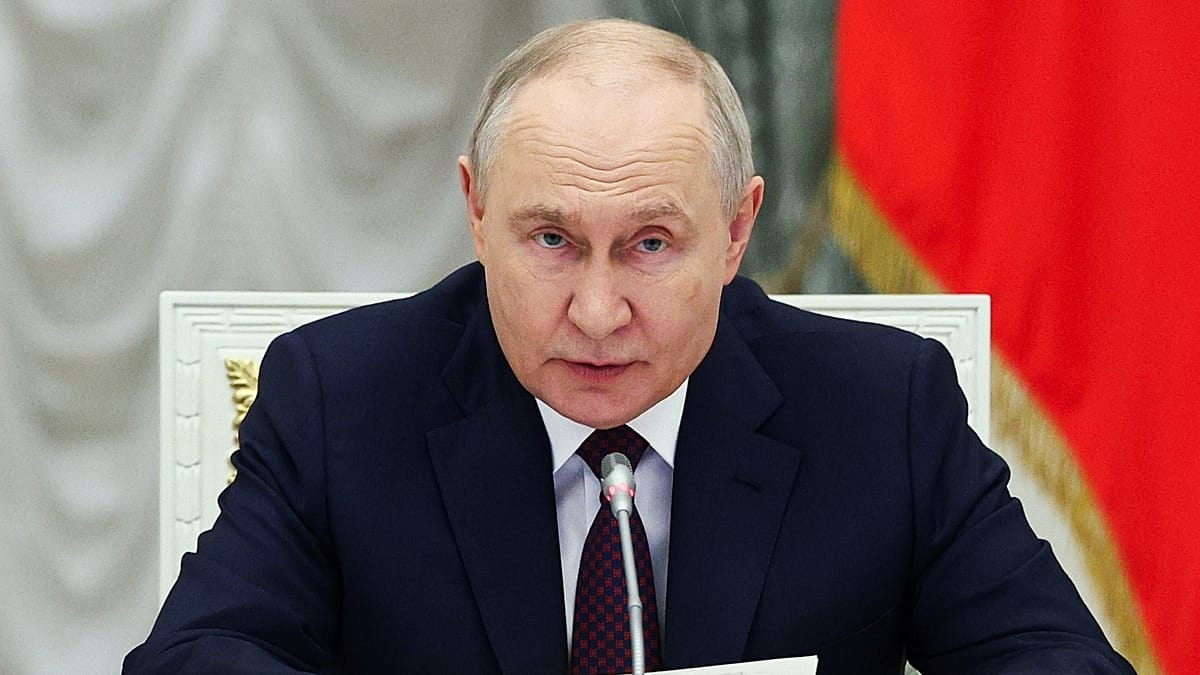
Moscow has poured cold water on suggestions from US special envoy Steve Witkoff and Jared Kushner that President Vladimir Putin is open to a European role in peace negotiations over Ukraine. Instead, the Kremlin reiterated its long-standing demand that European nations stop supplying weapons to Kyiv as a precondition for any broader dialogue.
Witkoff and Kushner flew to Moscow on Thursday to press Putin to accept a multilateral format that would include European representatives. So far, talks have been conducted trilaterally, with Ukraine and Russia negotiating under American mediation. The US envoys' visit followed two days of discussions in Abu Dhabi, where the Russian delegation reportedly refused to sit with their European counterparts.
Speaking to reporters after the Moscow meeting, Witkoff said: "The Europeans will join at the next meeting, which we consider to be a very important moment because they are our partners and it's important to us that they take part." Kushner described the talks as "very fulsome and detailed" and expressed hope they would feed into a multilateral process.
But Yuri Ushakov, Putin's foreign policy aide, quickly pushed back. He said Europeans must first decide whether they stand for "peace" or "war", pointing to their continued military assistance to Ukraine. "So far, all their practical actions point precisely to the latter," Ushakov said, echoing Moscow's narrative that Europe is effectively a party to the conflict.
Putin's broader agenda
During the meeting, Putin made clear that his primary interest lies in reshaping Europe's security architecture, a topic that European leaders view as a distraction from the war and a vehicle for Russian great-power ambitions, including a veto over NATO enlargement. He invoked President Donald Trump's proposal for a "big, beautiful agreement" that "might involve all of Europe" to support his argument.
"President Trump offers to agree on instruments for European security as a whole," Putin told the envoys. "What do we hear from the Europeans? No, only after there is peace in Ukraine," he added, apparently referring to statements by European Commission President Ursula von der Leyen and High Representative Kaja Kallas, who have both insisted that security discussions must follow a ceasefire. "But once there is peace in Ukraine, they intend to deploy troops into its territory, which would mean the continuation of the war."
Witkoff and Kushner argued that European participation is essential to move the process forward, which so far has yielded little beyond prisoner exchanges. Kushner tried to entice Putin with the prospect of discussing security guarantees. "The Europeans have a desire for this war to really be the end and for there to be a long peace after," he said. "And understanding the long-term security between Russia, Ukraine, and Europe is a conversation that we started having with them."
European leaders push back
In Dublin, European leaders rejected Putin's revisionist framing, insisting that Russia violated the security agreements that had underpinned the continent for decades. They stressed that any discussion on security architecture must include European voices. German Chancellor Friedrich Merz said: "It is important that Russia comes to the table and that Russia is ready for talks."
EU leaders are expected to discuss on Friday the possibility of appointing a special envoy for the diplomatic process. Ukrainian President Volodymyr Zelenskyy has urged them to name a common representative by the end of the month. Kremlin spokesperson Dmitry Peskov indicated that such a designation would be a prerequisite for Moscow to engage with Europeans directly. "The Europeans squabble like spiders in a jar. If someone takes the initiative to establish contact with the Russian side, such people are facing ostracism," Peskov said.
The diplomatic manoeuvring comes amid a busy week for European diplomacy, with the Dublin summit and Abu Dhabi talks highlighting the continent's efforts to shape the peace process. Meanwhile, Zelenskyy is set to meet US envoys in Dublin following the Moscow discussions, underscoring the transatlantic dimension of the negotiations.
European leaders remain wary of Putin's intentions, seeing his push for a new security order as an attempt to divide the continent and weaken NATO. The Kremlin's insistence on linking European participation to an end of military aid is widely interpreted as a tactic to undermine Ukraine's defence capabilities. As the talks continue, the gap between Moscow's demands and European red lines appears as wide as ever.