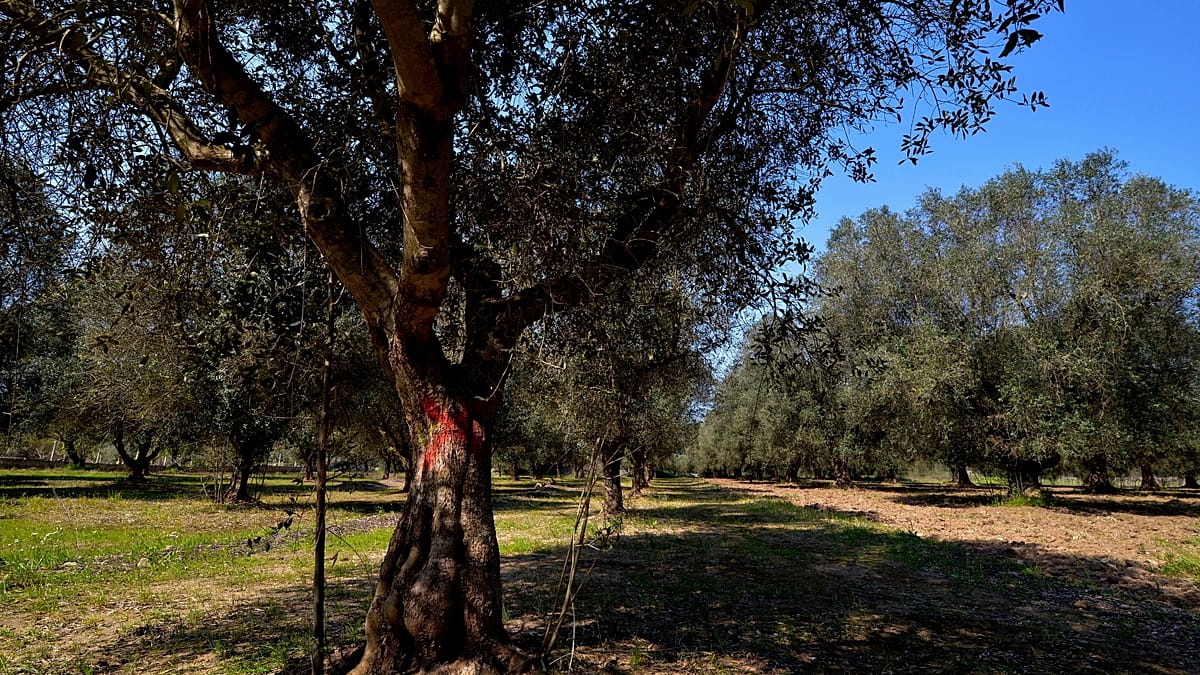
In the heart of Salento, between the towns of Calimera and Vernole in the province of Lecce, the landscape is quietly changing. Where olive trees once stood, groves of Hass, Bacon, and Fuerte avocados now stretch across the farmland. Harvesting began in mid-November, and what started as a curiosity has become a calculated bet for Apulian farmers seeking a future after the devastation wrought by Xylella fastidiosa.
The shift is not without its complications. Avocado trees are thirsty, especially during the scorching summer months, in a region already grappling with drought and stressed aquifers. The gamble, then, is twofold: can tropical crops thrive where olives once did, and can the land sustain them?
From olive groves to avocado orchards
The Tommasi farm, one of the pioneers of this transition, planted its first avocado trees in 2017. Nearly a decade on, each tree yields between 70 and 100 fruits, translating to an estimated 10 quintals per hectare. In April, the farm added another 700 trees, signaling confidence in the crop's viability.
This transformation is a direct response to the arrival of Xylella fastidiosa, a bacterium first detected in the European Union in October 2013, right here in Apulia. The pathogen colonises the xylem—the plant's water-conducting tissue—leading to rapid dieback and, in severe cases, death. For olive trees, the result has been catastrophic, reshaping vast swathes of the region's agricultural landscape.
But the threat has not stayed within Italy's borders. Over the years, Xylella has been found in France, Spain, and Portugal, affecting not only olives but also almonds, citrus, vines, and ornamental plants. The European Food Safety Authority (EFSA) updated its host plant database in 2025, listing 727 species in which the bacterium has been reported, with 463 backed by robust scientific evidence. The ability to cause disease, however, depends on the specific bacterial strain, the host, and environmental conditions.
New outbreaks in southern Italy
2026 has brought fresh warnings. In Calabria, near Taurianova in the province of Reggio Calabria, seven olive trees tested positive for the pauca subspecies—the first outbreak in that region. In Basilicata, the multiplex subspecies was found on an almond tree near Matera. Both areas have triggered emergency plant health measures and eradication efforts.
The spread underscores that surveillance cannot be a purely local or national affair. For the European Union, protecting agricultural production means preventing a local outbreak from escalating into a continent-wide crisis.
The potential cost to European agriculture
How much could an uncontrolled spread cost? A November 2025 assessment by the European Commission's Joint Research Centre (JRC) and EFSA confirmed Xylella as one of the EU's most significant plant health threats. In a worst-case scenario of large-scale spread, annual production losses could reach €7.1 billion, with over 540,000 jobs at risk. These are simulations, not current damages, but they illustrate why the bacterium is no longer just an Apulian problem.
Olive oil, almonds, citrus, and wine are pillars of several European economies. A collapse in production would ripple through processing, distribution, and related industries. The EU has responded with strict regulations: Xylella is a quarantine pest, and implementing regulation 2020/1201 mandates surveillance, outbreak delimitation, and removal of infected plants. Where eradication is feasible, infected zones and buffer areas are established; where the disease is entrenched, as in parts of Apulia, containment measures apply. Member states must conduct annual surveys, with EU co-financing for control activities.
Prevention, however, cannot restore lost olive trees. That is why diversification has become a lifeline for many farmers.
A tropical future for southern farmland?
According to the University of Bari's Department of Soil, Plant and Food Sciences, some 23,885 hectares of olive groves in Xylella-affected areas of Apulia could be suitable for avocado cultivation. Already, land devoted to tropical crops in the region has reached an estimated 4,000 hectares.
This is not purely a business decision. Rising temperatures are altering the conditions for traditional crops and opening doors for species that would have struggled a few decades ago. Avocado, mango, and papaya are the most visible examples. Climate data from Copernicus ERA5-Land, analysed by Coldiretti Apulia, show that Italy's temperature anomaly in the first ten months of 2026 reached +2.11°C compared with the 1991–2020 average.
Yet the water question looms large. Avocados require substantial irrigation during the hottest months, and Apulia's aquifers are already under pressure. As heatwaves become more frequent and severe, the sustainability of this tropical turn remains uncertain. Some experts warn that the region may be trading one vulnerability for another.
For now, Salento's farmers are pressing ahead, betting that the future lies in exotic fruits rather than ancient olive trees. But as Xylella continues its march across the Mediterranean, the broader lesson for Europe is clear: agricultural resilience requires not just adaptation, but also vigilance and cooperation across borders.