Péter Magyar's first official foreign trip as a leading Hungarian opposition figure concluded in Warsaw yesterday, signaling a renewed focus on the Visegrád Four (V4). The bloc, comprising Poland, Czechia, Slovakia, and Hungary, was founded in 1991 to guide post-communist states toward Western integration. Now, it is staging a comeback, driven by shifting economic dynamics and a shared desire to protect EU cohesion funds.
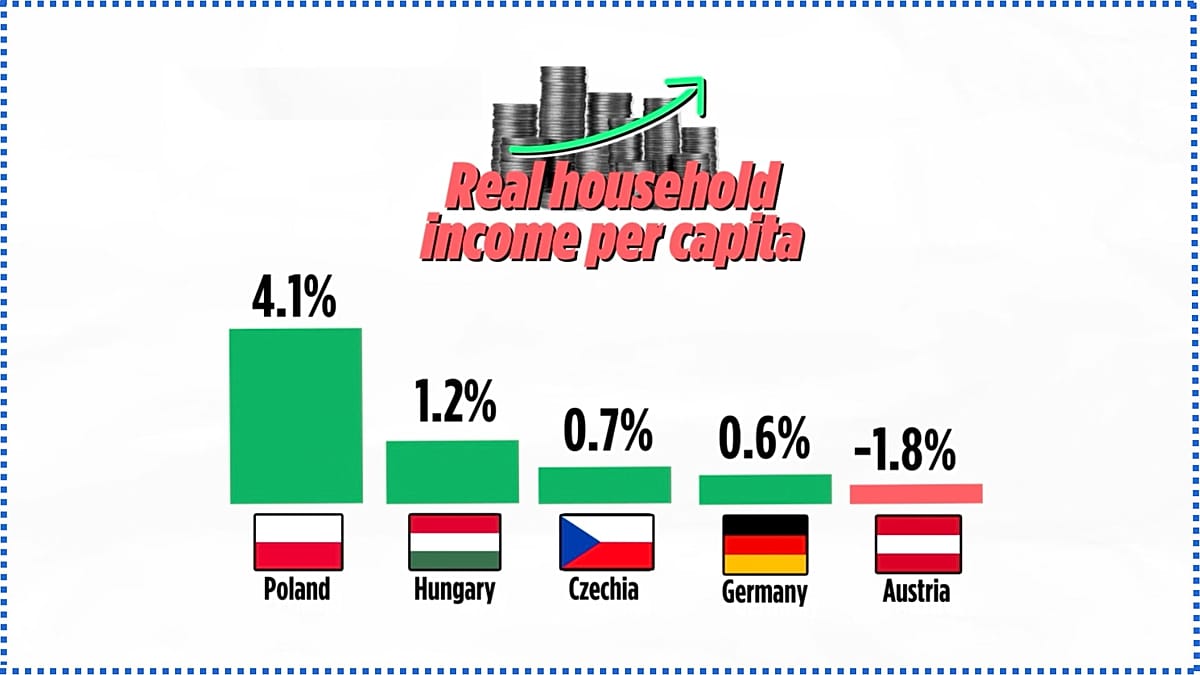
The V4's most notable political achievement came in 2015, when its united front forced Brussels to abandon mandatory migrant quotas. But the region is no longer the poor cousin of Western Europe. Central Europe enters this new chapter with newfound economic confidence. Last year, Poland led the continent with a 4.1% rise in real household income, while Germany managed just 0.6% and Austria saw a decline, as Poland and Portugal lead Europe in real income growth as major economies stagnate. This wealth shift gives the V4 a stronger hand in Brussels.
Magyar's Vision and the Austrian Question
Magyar is reportedly pitching an ambitious plan to merge the V4 with Austria, creating a Benelux-style alliance. Reports suggest Vienna is receptive to the idea, which would expand the bloc's economic and political weight. However, critics note that the V4 has historically struggled with internal divisions. Past cooperation was derailed by fears of Austrian hegemony, and today, bilateral disputes between Slovakia and Hungary still cause friction.
Acting as a unified voice in EU institutions will not be seamless. While the V4 aims to cooperate on regional energy and transport infrastructure, geopolitical fault lines remain. Hungary, Czechia, and Slovakia are opting out of the EU's €90 billion loan package for Ukraine, unlike Poland, which supports it. This divergence could undermine the bloc's credibility on foreign policy.
Despite these challenges, the V4's revival reflects a broader shift in European power dynamics. Central Europe is no longer a passive recipient of EU directives but an assertive player. As EU states and parliament deadlocked over timeline for new migrant return rules, the V4's coordinated stance on migration could again shape policy.
Whether the V4 can deliver tangible results remains uncertain. But with Magyar finally in the fold, the three musketeers may have found their fourth. The bloc's future will depend on its ability to balance national interests with collective goals, and to navigate the tensions between economic cooperation and geopolitical reality.