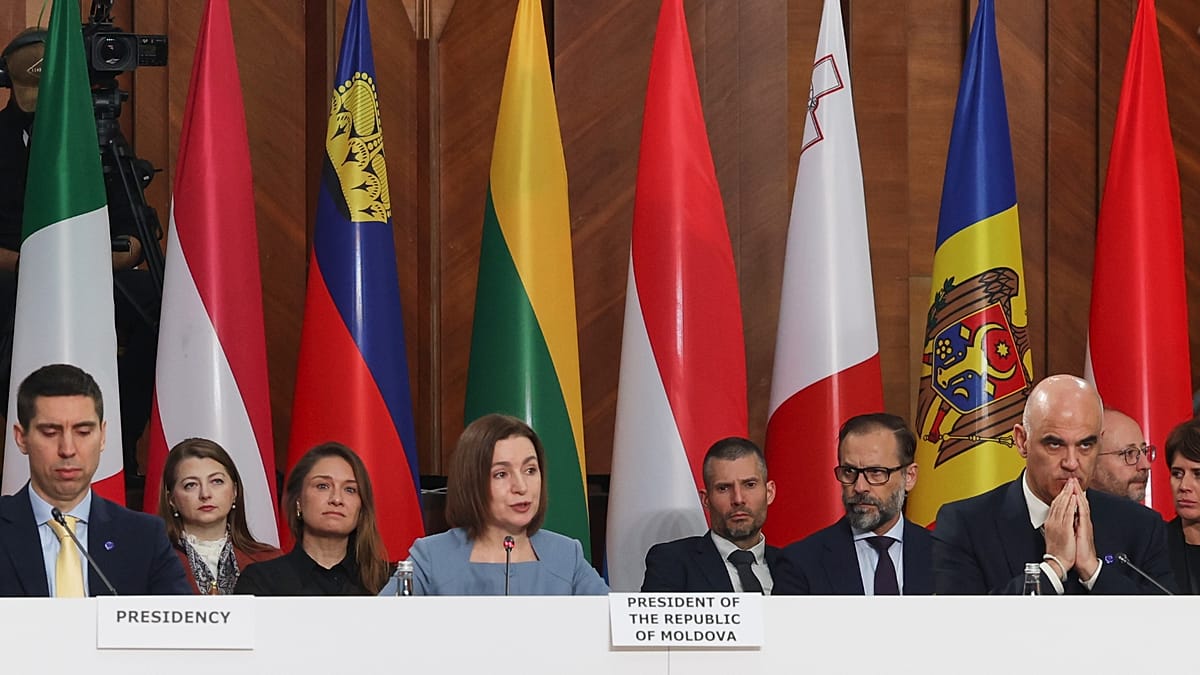
At a meeting of the Council of Europe's Committee of Ministers in Chișinău, Moldova, on Friday, the 46 member states adopted a declaration that reinterprets key provisions of the European Convention on Human Rights (ECHR) regarding migration. The decision, spearheaded by Italy, aims to facilitate the expulsion of irregular migrants, including to repatriation centres located in third countries.
The declaration addresses Articles 3 and 8 of the ECHR, which respectively prohibit torture and inhuman or degrading treatment and protect the right to private and family life. While reaffirming the absolute nature of the prohibition of torture, the text introduces a relative assessment: 'the assessment of the minimum level of severity of ill-treatment that constitutes inhuman or degrading treatment or punishment is relative and depends on all the circumstances of the case.' This nuance could lower the bar for states seeking to deport individuals to countries where conditions might previously have been deemed unacceptable.
Regarding Article 8, the declaration states that states may expel foreign nationals even when they have established private and family life, provided the expulsion serves a legitimate aim such as national security. The European Court of Human Rights would need 'valid reasons' to override a state's decision, effectively shifting the burden of proof toward the individual.
Italy's Undersecretary for Foreign Affairs, Massimo Dell'Utri, framed the declaration as a necessary evolution. 'It is essential to be able to respond with new tools to today's challenges,' he said, noting that the document acknowledges the need to address irregular migration effectively, strengthen border protection, and cooperate with third countries to combat smuggling and organised crime—all while reaffirming the Convention's central role.
Meloni's Victory Lap
Prime Minister Giorgia Meloni celebrated the outcome as a vindication of her government's approach. In a social media post, she wrote: 'The Chișinău Declaration, adopted today by the 46 member states of the Council of Europe, recognises the legitimacy for nations to pursue innovative solutions in managing migration flows, such as repatriation hubs in third countries, following the model launched by Italy in Albania.'
Meloni added that 'what was prompting debate only a year ago has today become a principle shared by the 46 member states' and that 'the Italian approach to an orderly management of migration flows, pursued with seriousness and consistency by our government, has now also become Europe's approach.' She credited Danish Prime Minister Mette Frederiksen for joint efforts in pushing the agenda.
The Italy-Albania model, under which Rome sends migrants rescued at sea to processing centres in Albania, has been controversial. Critics argue it risks violating human rights and outsourcing asylum responsibilities. The Council of Europe's declaration does not explicitly endorse any single country's scheme but provides a legal framework that could legitimise such bilateral deals.
Beyond migration, the summit reaffirmed strong support for Ukraine. Thirty-six member states, including Italy, and the European Union adopted the founding decision to establish a Special Tribunal for the crime of aggression against Ukraine, aimed at holding Russia accountable for its invasion.
The declaration marks a significant shift in the Council of Europe's stance on migration, potentially reshaping how member states balance human rights obligations with border control. For Meloni, it is a diplomatic win that bolsters her domestic narrative of a firm, effective migration policy. For human rights advocates, it raises alarms about the erosion of protections for some of the most vulnerable people in Europe.