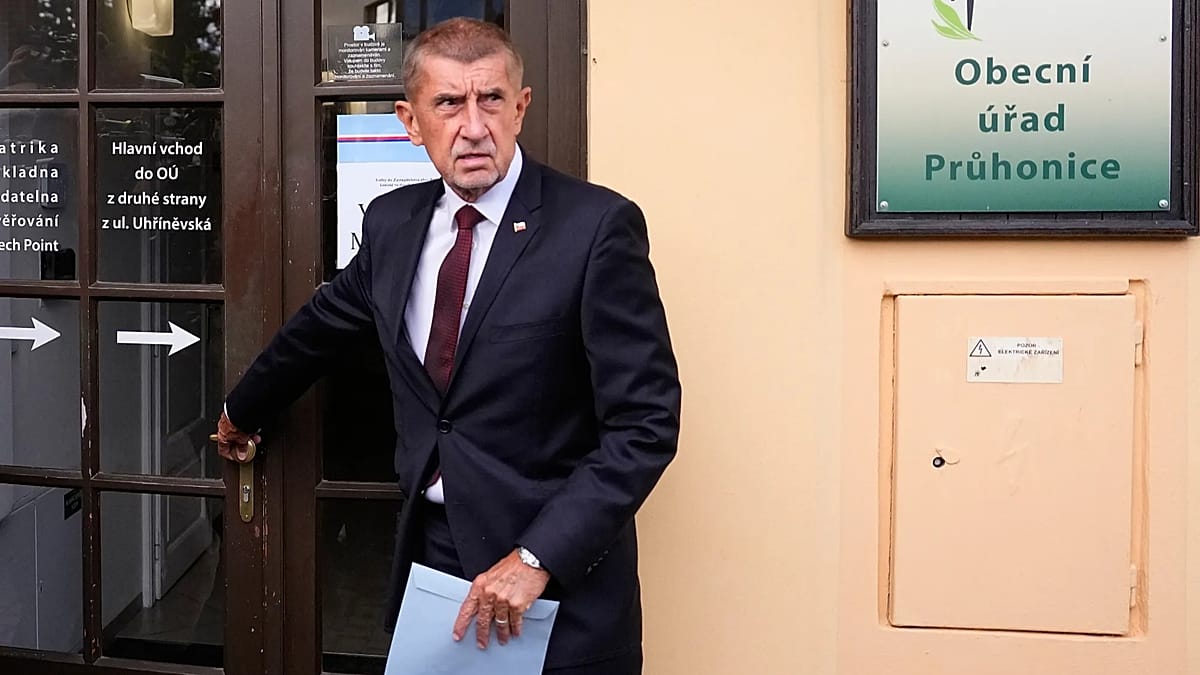
Voters across Czechia are heading to the polls this weekend for the second day of local and Senate elections, a ballot widely read as a mid-term verdict on Prime Minister Andrej Babiš and his coalition government. The elections, which began on Friday and continue on Saturday, will fill seats in municipal councils and a third of the 81-seat Senate, the upper chamber of the Czech parliament.
Babiš, the billionaire founder of the Agrofert food and chemicals conglomerate, returned to the prime minister's office in October 2025 after his ANO party secured a decisive victory in parliamentary elections. ANO, which has consistently topped opinion polls since then, formed a nationalist coalition with the Motorists for Themselves (AUTO) and Freedom and Direct Democracy (SPD) parties. The government has pledged to prioritise domestic concerns such as energy prices, pensions, and housing, tapping into public frustration over the cost of living.
A test for Babiš's coalition
The Senate elections are particularly significant for Babiš, as ANO currently holds only a minority of seats in the upper chamber. A strong showing could strengthen his hand in pushing legislation through both houses, while a weak result might embolden opposition parties and complicate his agenda. Political analysts in Prague note that Senate races often turn on local issues, but national politics inevitably colour the outcome.
Babiš's government has also drawn attention for its shift away from the previous administration's strong support for Ukraine. During the campaign, ANO argued that too much Czech money was being sent to Kyiv, a message that resonated with voters worried about inflation and the national budget. President Petr Pavel, however, remains a vocal backer of Ukraine, and the opposition has criticised the government's stance as a break with European solidarity.
The prime minister survived a no-confidence vote earlier this month, which was partly linked to the country's widening budget deficit. That vote exposed tensions within the coalition and underscored the fragility of Babiš's parliamentary majority. The local and Senate elections are therefore being watched not only for their immediate results but also for signals about the government's stability ahead of the next national ballot.
In Prague, voters interviewed outside polling stations expressed mixed views. Some praised the government's focus on housing and pensions, while others voiced concern about the direction of foreign policy. "I voted for change in October, but I want to see results on prices and rents," said one voter in the capital's Vinohrady district. Another, in Brno, said she was voting for opposition candidates to send a message against the coalition's "nationalist turn".
The elections come at a time when European politics are increasingly polarised, with populist and nationalist parties gaining ground in several member states. In neighbouring Germany, recent state elections delivered heavy losses for the CDU, while in France the far-right has secured a Senate group for the first time. These developments highlight a broader trend that Czech voters are also navigating.
For Babiš, the immediate challenge is to convert his party's national popularity into local and senatorial gains. ANO has fielded candidates across the country, focusing on bread-and-butter issues rather than ideological battles. The party's campaign materials emphasise practical improvements in public services, transport, and municipal infrastructure, a strategy that has worked well in previous local elections.
The opposition, led by the centre-right Spolu coalition and the Pirate Party, is hoping to hold its ground in the Senate and make inroads in city halls. They have sought to tie the government to the budget deficit and to what they call a "reckless" approach to public finances. The outcome will be closely watched in Brussels, where Czechia's position on Ukraine and EU funding remains a point of interest.
As the votes are counted, the results will offer a snapshot of the Czech electorate's mood less than a year after the parliamentary election. For Babiš, a strong performance would consolidate his authority; a poor one could embolden his critics and set the stage for a more turbulent second half of his term.



