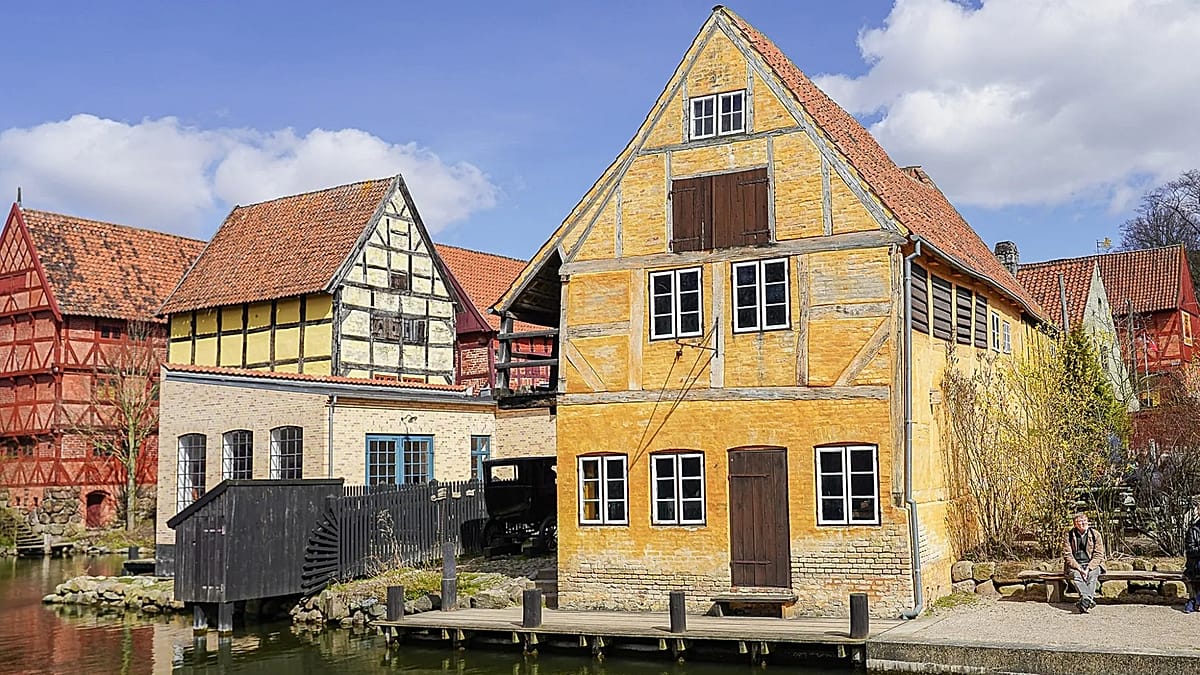
Den Gamle By, the National Open-Air Museum of Urban History and Culture in Aarhus, Denmark, has been awarded the 2026 European Museum of the Year Award. The prize was presented on Saturday evening at a ceremony in Bilbao, Spain, organised by the European Museum Forum.
The jury highlighted the museum's ability to connect historical and contemporary urban environments to address pressing modern questions. Daniëlle Kuijten, co-chair of the EMYA jury, described Den Gamle By as "a pioneering institution that brings together historical and contemporary urban environments to address urgent contemporary questions, including migration, sustainability and social justice."
A Living Museum of Urban Life
Located in Denmark's second-largest city, Den Gamle By is an open-air museum created "by (ordinary) people about (ordinary) people." It invites visitors to explore four centuries of Danish urban history through interactive and immersive exhibitions. Currently, four exhibitions allow guests to travel from 1600 to 2014, encountering everything from petting horses and colourful advertisements to a nuclear family home and SAS's ticketing office—all within the same site.
The museum's mission extends beyond historical display; it aims to educate the community on topics such as sustainability, equality, and empowerment. The judging panel specifically praised its environmental efforts, noting that "sustainability is an increasingly prevalent theme in the museum's newly developed activities, which include cultivating and promoting heirloom plant varieties, courses on gardening, and workshops on clothing and building repair."
Central to Den Gamle By's philosophy is the idea of an ever-evolving space rather than a static museum. Volunteers play a crucial role, contributing expert knowledge and personal experience to the narratives explored, while participatory projects embed the museum deeply within civic life. The awarding committee stated: "Volunteers play a central role, contributing expert knowledge and personal experience to the narratives explored, while participatory projects embed the museum deeply within civic life."
Other Winners at the Ceremony
Several other European museums received honours at the Bilbao ceremony. The Young V&A in London, United Kingdom, won the Council of Europe Museum Prize. The Kenneth Hudson Award for Institutional Courage and Professional Integrity was awarded to the Museum of Madness Institute in Trate, Slovenia.
The Museum of the Rural Civilisation of Mendrisiotto in Stabio, Switzerland, received the Portimão Museum Prize for Welcoming, Inclusion, and Belonging. The Silletto Prize for Community Participation and Engagement went to AlpenStadtMuseum in Sonthofen, Germany. Finland's Lahti Museum of Visual Arts Malva won the Museum Prize for Environmental Sustainability.
Special commendations were given to several institutions: the Obersalzberg Documentation Centre (Berchtesgaden, Germany), Cern Science Gateway (Meyrin, Switzerland), Tartu City Museum (Tartu, Estonia), the Research Centre – Tsitsanis Museum (Trikala, Greece), Sensoria – The House of Fragrances and Flavours (Holzminden, Germany), and Kunsthaus Baselland (Basel, Switzerland).
The co-chairs of the EMYA jury noted in their foreword: "The 2026 award winners reflect a broad spectrum of thematic priorities, geographies, and working methods. What unites them is a commitment to change: to question established narratives, to engage with difficult histories, and to strengthen the social relevance of their institutions."
For more on this year's nominees, see our coverage of EMYA 2026: Thirty-Four Museums Vie for Europe's Top Honor.