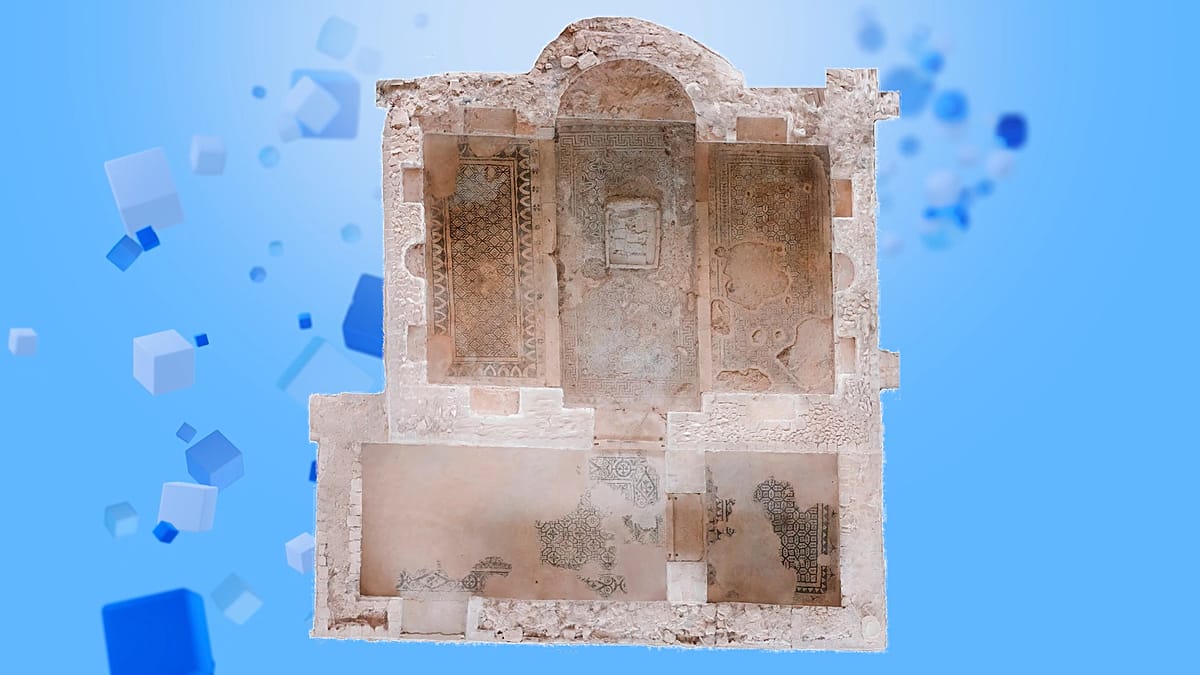
Archaeologists from the universities of Córdoba and Granada have identified what may be the oldest library ever found on the Iberian Peninsula, hidden within the Roman site of Fuente Álamo in the town of Puente Genil, province of Córdoba. The discovery, published in the Journal of Mediterranean Archaeology, reinterprets a room long thought to be a sanctuary to the god Mithras as a well-preserved proto-library dating to the 4th century AD.
Fuente Álamo began as a bath complex in the 1st century BC, was later abandoned, and then converted into a villa around the 3rd century. The room in question, designated Room 10, reached its peak use over the following two centuries before being transformed again in the 6th century. The researchers do not give an exact date for when the space was used as a library, but the architectural evidence points to the late Roman period.
Shape grammar unlocks the past
To resolve the room's function, the team applied a technique known as shape grammar, which analyses how architectural elements combine. In Room 10, the layout matches the typical structure of Roman libraries: an apse, rectangular niches that likely held wooden bookcases, semicircular niches, a podium, and adjoining rooms that could have served as workspaces or storage areas. This combination of features, the researchers argue, goes beyond mere hypothesis and provides strong evidence for a library.
“The architecture of Fuente Álamo preserves an unusually rich set of clues,” the authors note, allowing them to move from speculation to a more solid identification. The library would not only be the oldest in Iberia but also the westernmost known in the entire Roman Empire, and one of the best preserved.
The find adds a new chapter to the cultural history of Roman Spain, a region already known for its rich archaeological heritage, including recent discoveries about Iberian fauna and ancient human DNA on cave walls. It also underscores the importance of revisiting old excavations with new analytical methods.
While the site is not open to the public, the research team hopes further study will reveal more about the library's collection and its role in the intellectual life of late Roman Iberia. For now, the discovery offers a rare glimpse into the world of books and learning in a remote corner of the empire.