When a devastating earthquake struck Tashkent in 1966, it reshaped not only the city's skyline but also its architectural identity. In the decades that followed, a generation of public buildings emerged that fused the bold geometries of modernism with the region's own building traditions and climatic realities. Now, ten of these landmarks have been collectively added to the UNESCO World Heritage List, a recognition that cements their place in the broader narrative of 20th-century architecture.
The decision highlights a lesser-known chapter of modernism—one that developed far from the glass towers of Western Europe or the ideological showcases of Moscow. In Tashkent, architects arriving from across the Soviet Union found themselves adapting their ideas to a very different environment: intense summer heat, a strong seismic history, and a rich local craft heritage. The result was a distinctive style that UNESCO has now acknowledged as globally significant.
Architecture shaped by climate and culture
According to Saidaziz Ishankhodjaev, Deputy Chairman of the Art and Culture Development Foundation, the architects who came to Tashkent after the earthquake brought diverse approaches but were forced to rethink them in light of local conditions. Courtyards, decorative patterns, and construction techniques associated with traditional Uzbek buildings were incorporated into modernist projects, creating a hybrid that was both forward-looking and rooted in place.
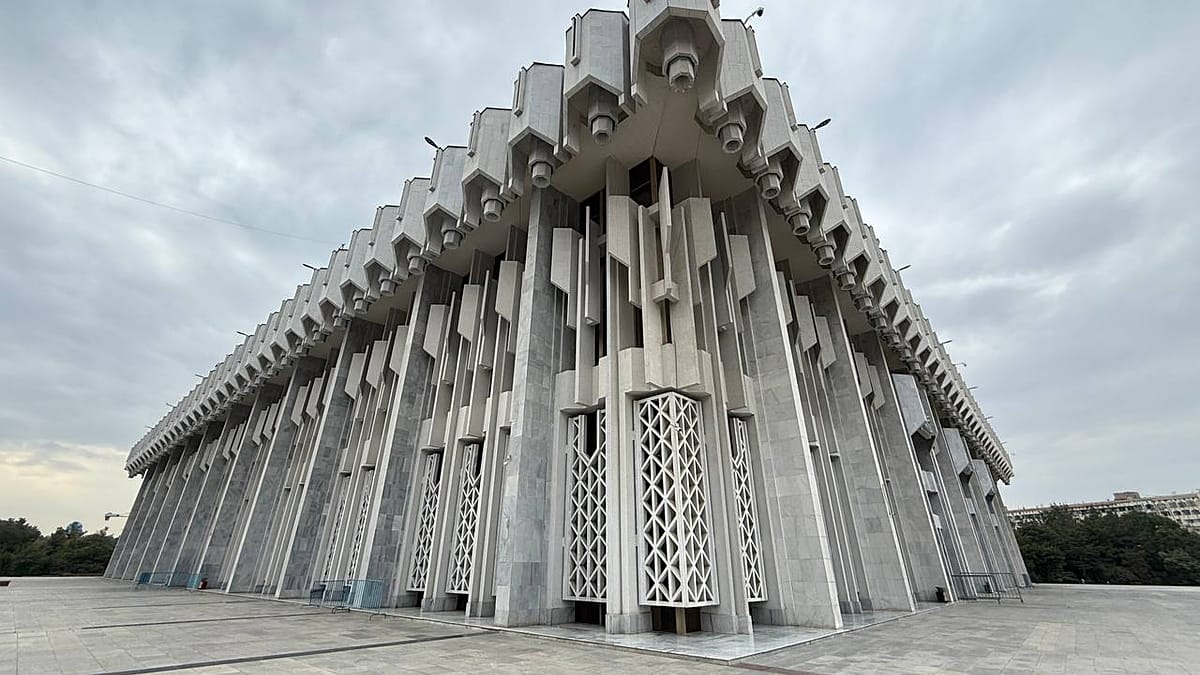
One of the most striking examples is the State Museum of History, designed in 1968 by architects Rozanov and Shestopalov. Its white marble facade and elevated position make it a landmark in central Tashkent. Director Jannat Ismailova notes that the building was conceived with the local climate in mind: decorative grilles shield the interior from the fierce summer sun, while the grand staircase and central entrance give it a commanding presence in the urban landscape.
The museum also reflects local craftsmanship. Carved wooden doors were produced by artisans from Kokand, and traditional carved plasterwork, known as ganch, adorns the interior. Completed in 1970 as the Lenin Museum, it became the home of the State Museum of History of Uzbekistan in 1992. Much of the original structure remains intact, making it a key example of Tashkent's modernist heritage.
Purpose-built for art and public life
The Uzbekistan State Museum of Arts offers another perspective on how architecture was tailored to function. Construction began in 1967 and finished in 1974, with the building designed specifically as a museum—unlike many institutions housed in converted palaces or mansions. Olga Udovenko, head of the Department of Uzbek Folk Applied Arts, recalls that the structure was considered highly unusual for Tashkent at the time. Its original exterior featured experimental panels intended to limit direct sunlight and protect artworks, though these were later replaced. Researchers are now exploring ways to restore the building's original appearance.
Inside, a central atrium is surrounded by exhibition levels, and much of the interior has remained unchanged. The building's preservation is part of a wider conversation about how modernist structures can meet contemporary technical standards while retaining their architectural character.
Modernism also shaped venues for collective experience. The People's Friendship Palace, with 3,816 seats, has hosted concerts, congresses, and major events for decades. Its design incorporates decorative elements inspired by local traditions, including patterns and ganch-like details. Director Isroil Gulomov explains that the building was conceived with local architectural references in mind, including features that help moderate Tashkent's temperature swings. The result is a public venue where ornament and function are closely intertwined.
The Uzbek State Circus, completed in 1976, is another distinctive landmark. Its circular form and dome reference the visual character of old Tashkent. The building is currently undergoing restoration, with authorities planning to preserve its architectural appearance and historic elements. Rustam Majidov, head of the circus, expects the work to improve conditions for performers while safeguarding the structure itself.
Modernism below ground
Tashkent's modernist legacy extends beneath the streets as well. The Kosmonavtlar metro station, with its space-exploration theme, reflects the era's fascination with science and the cosmos. Rustam Shafikov, head of the Electric Train Depot, notes that each station has its own artistic concept. The metro network has expanded significantly since its early days, now carrying more than a million passengers daily, yet stations like Kosmonavtlar retain their original artistic character.
The UNESCO listing has sharpened attention on how these buildings should be managed in the future. For Ishankhodjaev, preservation is not merely about maintaining facades; it involves ensuring that buildings remain safe, functional, and suitable for contemporary use. This is a challenge familiar to heritage professionals across Europe, where modernist structures often struggle to meet modern energy and safety standards while preserving their original design intent.
The recognition of Tashkent's modernism also resonates beyond Central Asia. It adds a new chapter to the global story of 20th-century architecture, one that complicates the usual narratives of East and West. As Uzbekistan's cultural diplomacy continues to gain momentum, the UNESCO listing offers a tangible example of how a city can embrace its layered past while looking forward.