The European People's Party (EPP), the largest political group in the European Parliament, is weighing disciplinary action against one of its own members after he appeared alongside lawmakers from far-right factions. The case underscores the persistent internal friction over how the centre-right should engage with parties that many mainstream politicians consider beyond the pale.
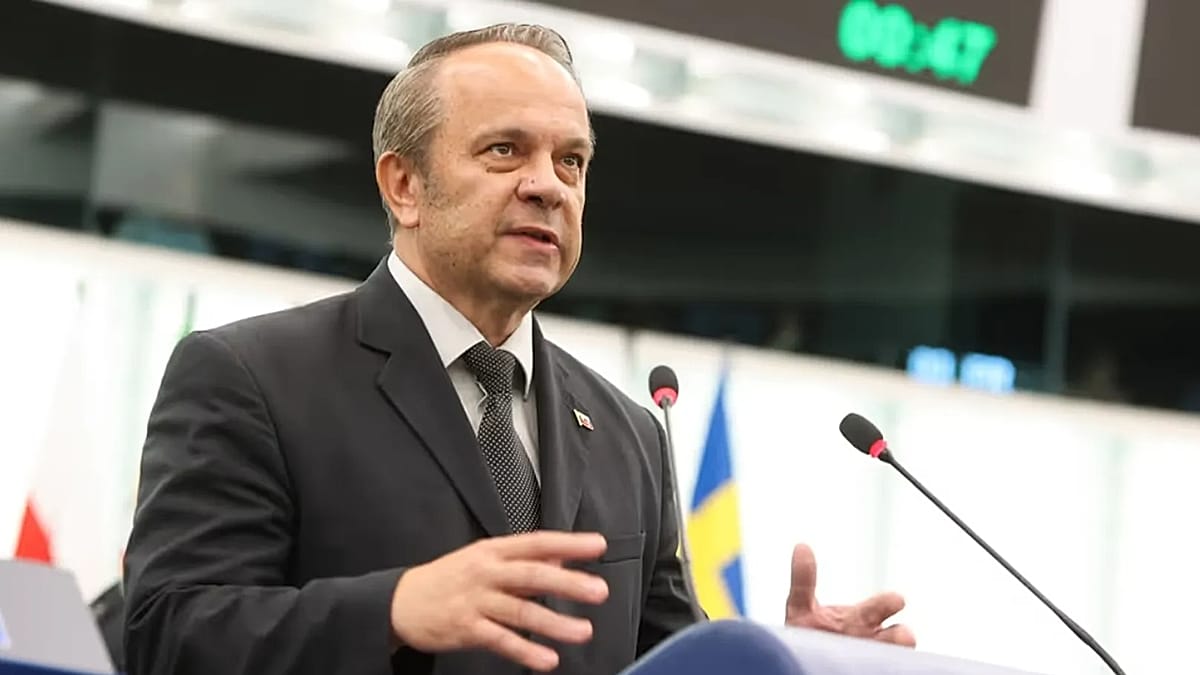
According to EPP officials, group leader Manfred Weber has asked the presidency to prepare a concrete sanctions proposal against Slovenian MEP Branko Grims. The measures under consideration range from limiting his speaking time during plenary sessions to outright expulsion from the group. A final decision is not expected until the next presidency meeting in mid-June.
Grims attended a conference last week titled “Towards a Right-Wing Majority in the European Parliament,” where he argued for closer cooperation between mainstream conservative and sovereignist parties. The event included members of the far-right Patriots for Europe (PfE) and Europe of Sovereign Nations (ESN) groups, as well as the right-wing European Conservatives and Reformists (ECR).
A Deliberate Provocation?
For the EPP leadership, Grims’s participation represents a direct challenge to the group’s official line. Weber has repeatedly stressed his preference for working with traditional allies—the Socialists and Democrats (S&D) and the liberal Renew Europe group—and has publicly defended the so-called cordon sanitaire, a political firewall designed to prevent cooperation with extremist parties. He has described the fight against far-right populism as the EPP’s “main battle” going forward.
Yet Grims has made no secret of his disagreement. “I personally reject the politics of exclusion,” he told Euronews. “Participating in politics when it comes to defending fundamental human and civilizational values is the most normal thing in politics.” He dismissed the term “far right” as “offensive and nonsensical” when applied to nationalist forces in the Parliament.
The Slovenian MEP pointed to the recent alignment between centre-right and far-right lawmakers on migration legislation as evidence that such cooperation is both natural and necessary. He specifically cited the “return regulation,” a controversial proposal aimed at accelerating migrant returns, which he described as “the basis for remigration.” When that law was endorsed by the Parliament in March, a backlash erupted over the secret WhatsApp chat used by EPP and far-right committee members to draft the bill.
The issue proved particularly sensitive in Germany, where the EPP’s member party CDU/CSU rejected any association with the far-right Alternative for Germany (AfD), which sits in the ESN group. Chancellor Friedrich Merz then called on Weber to “end any sort of collaboration.”
Despite the leadership’s public stance, the EPP’s voting record tells a different story. On migration-related files, the group has voted in near-total alignment with the ECR, PfE, and ESN, effectively forming an alternative majority that bypasses the traditional centrist coalition. This de facto cooperation has made the cordon sanitaire increasingly difficult to maintain in practice, even as it remains a rhetorical cornerstone.
An EPP source suggested that sanctioning Grims could backfire. “He has been begging for sanctions,” the source told Euronews. “We just fear this would help him with his voters, as he likes to be seen as a victim of censorship.”
Grims’s hardline rhetoric on migration and his praise for cooperation with extreme-right forces place him on the hard-right edge of the EPP. His case is likely to test the group’s internal discipline and its ability to project a unified front ahead of the next European elections. As the debate over migration policy continues to reshape political alliances across the continent, the EPP’s handling of this episode will be closely watched in Brussels, Strasbourg, and beyond.