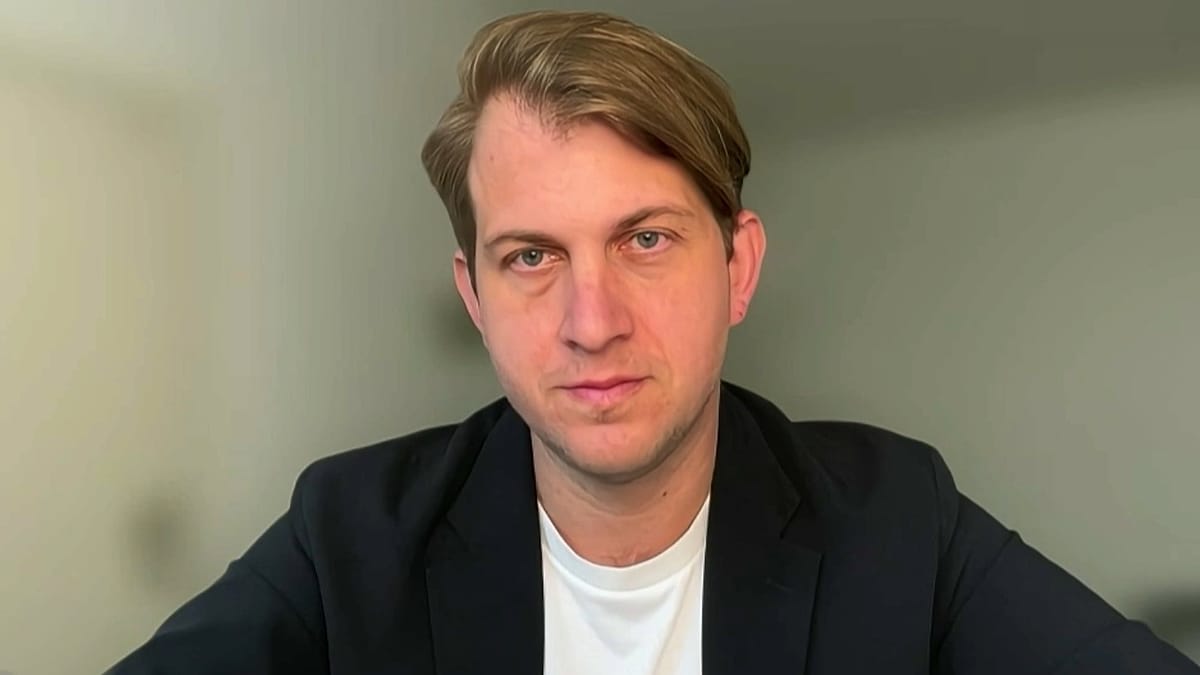
Michael Bloss, a German Green MEP representing the European Parliament, has warned that the European Union must present a unified front on the global stage or risk becoming irrelevant. Speaking to Euronews, Bloss argued that the bloc's fragmented approach to foreign policy leaves it vulnerable to decisions made by major powers like the United States and China.
His remarks come in the wake of US President Donald Trump's visit to Beijing, where he met with Chinese President Xi Jinping to discuss a range of issues—from trade tariffs to geopolitical tensions—that could have direct consequences for the twenty-seven member states. Bloss noted that such bilateral meetings often sideline European interests, underscoring the need for Brussels to coordinate more effectively.
A Fragmented Europe in a Bipolar World
Bloss, who sits on the Parliament's Committee on Industry, Research and Energy, pointed to the EU's inability to speak as a single entity in international forums as a structural weakness. “It’s difficult to survive if the EU does not speak with one voice,” he said, emphasising that individual member states—whether Germany, France, or Poland—cannot match the influence of Washington or Beijing alone.
The MEP’s comments reflect growing unease in European capitals about the bloc’s marginalisation in global affairs. While the EU has a common trade policy, its foreign and security policies remain largely intergovernmental, requiring unanimity among member states. This often leads to watered-down statements or delays, as seen during crises in Ukraine and the Middle East.
Bloss called for a more assertive and cohesive EU strategy, particularly in areas like climate diplomacy and digital regulation, where Europe has potential leverage. He argued that without unity, the bloc risks being reduced to a bystander in decisions that shape its economic and security landscape.
His warning aligns with broader debates in Brussels about treaty reform and qualified majority voting in foreign policy. Some diplomats have proposed moving away from unanimity to speed up decision-making, though such changes face resistance from countries like Hungary and Poland, which fear losing sovereignty.
The EU has recently taken steps to bolster its strategic autonomy, including launching a defence fund and strengthening supply chains for critical raw materials. However, Bloss stressed that these efforts must be matched by political will to act collectively. “We cannot afford to be divided when the world is moving fast,” he added.
As the bloc prepares for the 2024 European elections, the question of unity is likely to feature prominently in campaign debates. Voters across the continent—from Berlin to Madrid—are increasingly concerned about the EU’s ability to protect their interests in a volatile global order.
For now, Bloss’s message is clear: the EU must find its voice, or risk being drowned out by the giants of the twenty-first century.