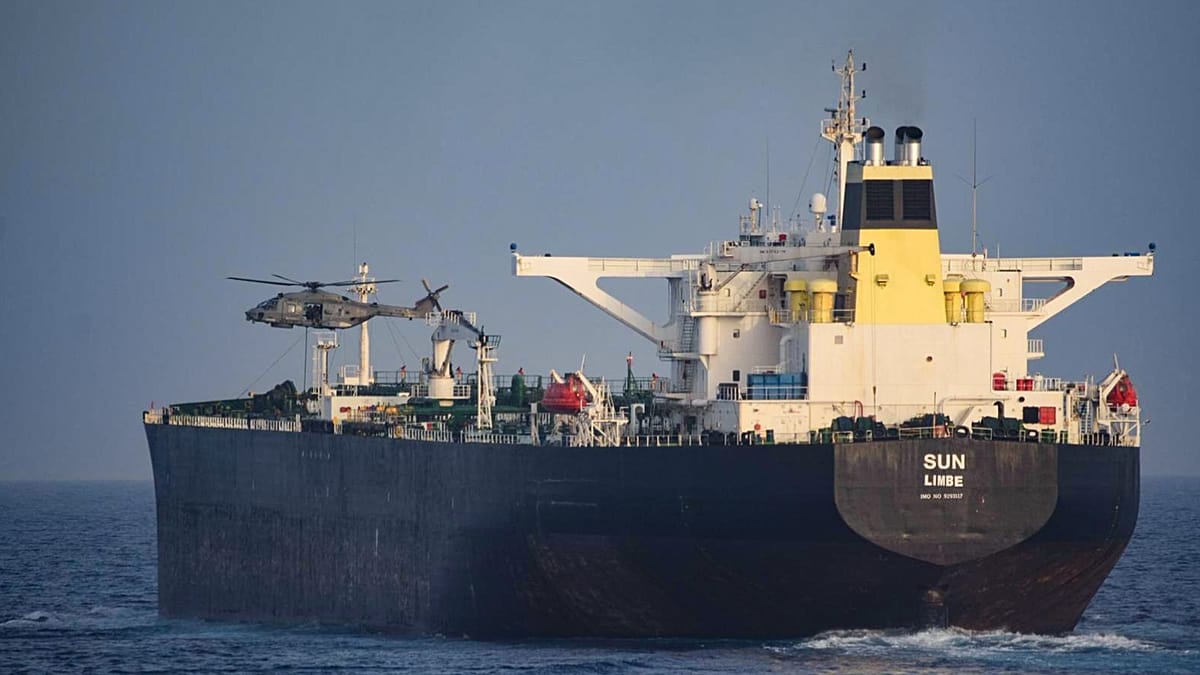
European Union naval forces have intercepted and boarded a suspected Russian shadow fleet oil tanker in the Mediterranean, the bloc's top diplomat said on Sunday. The operation, carried out under the EU's Operation Irini, targeted the MV Sun after intelligence suggested the vessel was sailing under a false flag, in breach of international maritime law.
In a post on X, Kaja Kallas, the EU's High Representative for Foreign Affairs and Security Policy, confirmed the boarding and underscored the strategic importance of such actions. "Illegal oil sales from shadow fleet ships are a critical lifeline for Russia's war in Ukraine, and we'll continue to cut them off," she wrote. She added that this was the sixth suspected shadow fleet vessel boarded by EU operations in recent months.
The Italian navy's Thaon di Revel intercepted the tanker west of the island of Pantelleria, according to the Italian Defence Ministry. The vessel was en route from Cotonou in Benin to Istanbul. The boarding was conducted for "flag verification," a procedure used to confirm a ship's registry and compliance with international rules.
Growing EU crackdown on shadow fleet
Operation Irini, launched in March 2020 to enforce the UN arms embargo on Libya, has increasingly turned its attention to Russia's shadow fleet. In early August, Irini forces boarded the sanctioned MV Toa Payoh for similar flag verification. French President Emmanuel Macron announced in June that French forces had intercepted the Russian tanker Deliver off the coast of Sicily, also citing violations of maritime law.
The UK has also been active in these efforts. Earlier this summer, Royal Marine Commandos and officers from the National Crime Agency boarded the Russian vessel Smyrtos in the English Channel, an operation that lasted six hours. Ukraine's foreign minister thanked the UK for its "leadership and decisive action."
Russia's shadow fleet is a network of aging tankers that operate outside Western sanctions, using complex ownership structures, flags of convenience, and other tactics to conceal the origin of their cargo. This allows Moscow to continue selling oil and generating revenue that funds its war effort, despite restrictions that prohibit Western companies from chartering or insuring such vessels.
Kallas confirmed that measures targeting the shadow fleet will be on the agenda at the EU defence ministers' meeting in Ireland on Tuesday. The bloc is exploring additional legal and operational tools to disrupt these illicit trade routes, which have become a critical financial lifeline for the Kremlin.
The latest interception comes amid broader European efforts to tighten the screws on Russia's economy. As debate revives over using frozen Russian assets to support Ukraine, naval operations like Irini are seen as a complementary front in the EU's strategy to degrade Russia's military capabilities.
While the shadow fleet operates globally, the Mediterranean has become a focal point due to its proximity to European waters and the high volume of tanker traffic. The EU's ability to board and inspect vessels in international waters, however, remains legally sensitive. Flag verification is a limited but effective tool, allowing forces to check a ship's documentation and, if necessary, take further action.
Analysts note that the shadow fleet's resilience depends on the complicity of multiple jurisdictions. Many of these tankers are registered in countries with lax oversight, and their ownership is often obscured through shell companies. The EU has been pressuring third countries to tighten their regulations, but progress has been slow.
For Ukraine, every disrupted oil shipment is a tangible blow to Russia's war chest. The ongoing Russian drone strikes on Ukrainian cities underscore the urgency of cutting off these funds. As Kallas put it, the EU will "continue to cut them off," signalling that more interceptions are likely in the coming months.
The operation also highlights the expanding role of EU naval missions beyond their original mandates. Operation Irini, initially focused on Libya, has evolved into a key instrument for enforcing sanctions on Russia. This dual purpose reflects the EU's broader strategic shift towards a more assertive maritime posture in the Mediterranean and beyond.
With defence ministers set to discuss further measures, the bloc is expected to enhance intelligence-sharing and operational coordination among member states. The goal is not only to intercept individual vessels but to dismantle the entire shadow fleet ecosystem, which has become a major enabler of Russia's aggression.