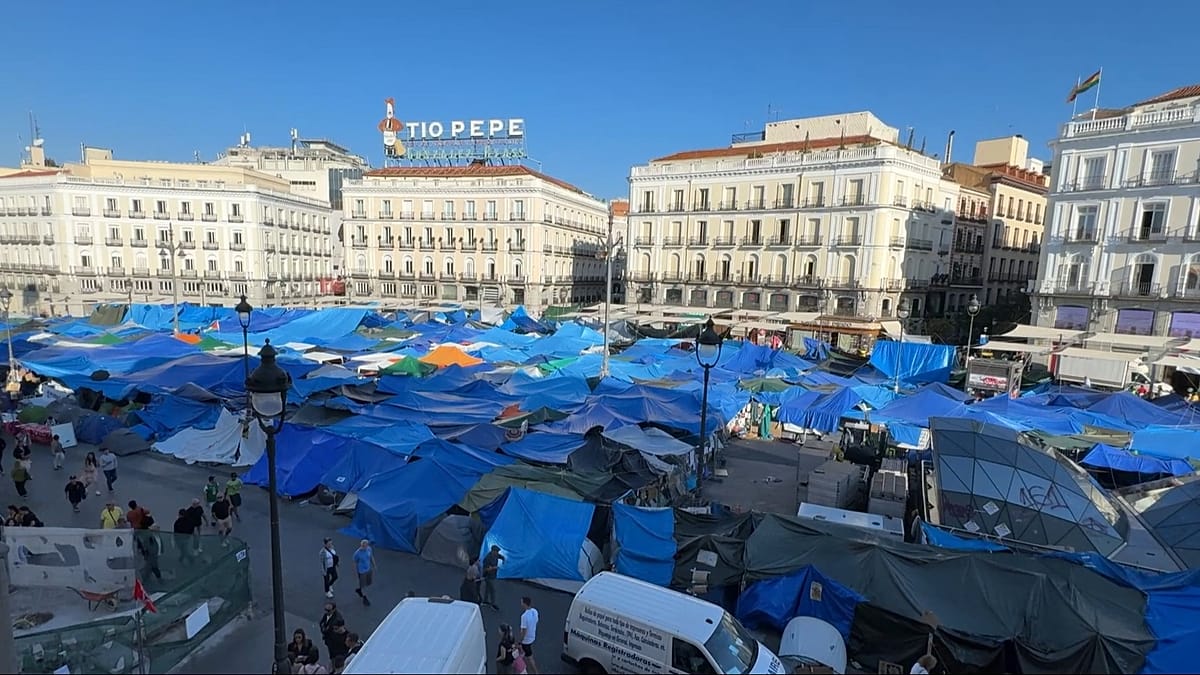
Two weeks after the housing rights protest camp took over Madrid's Puerta del Sol, the initial burst of energy has given way to a quieter, more determined endurance. Sleepless nights, limited sanitation and the sheer strain of living outdoors are taking a visible toll on the demonstrators. Yet the camp has also evolved into a tightly knit community, sustained by donations and a shared conviction that affordable housing is a right, not a privilege.
Tourists pause to ask what is happening; passers-by stop to photograph the rows of tents and tarpaulins that now define the square. Behind those tarpaulins, a small society has formed. Volunteers distribute food, tend to a makeshift medical area, offer legal advice and even run a small library. The atmosphere, as one protester described it, is less like a protest and more like a family.
Exhaustion and organization
Nacho, a volunteer who has been at the camp for nearly three weeks, spends much of his time preparing meals and sorting donated supplies. "We are at our most tired, but also more organised and more hopeful," he told European Pulse from the central tent. The fatigue has forced him to return home to sleep on some nights, but he insists the camp's structure has improved. "We don't accept money. So everything we have comes from what people bring us," he added, pointing to the steady stream of citizens donating food, water and hygiene products.
Another demonstrator, who preferred to remain anonymous, highlighted the support of volunteer doctors and lawyers. For him, the experience has shown the importance of setting aside differences and helping one another. The camp, he said, has become a refuge for those who feel the housing market has left them behind.
Challenges of communal living
Life in the camp is not without friction. Protesters lack their own toilets, and some report issues with waste collection and nighttime thefts. Nacho acknowledges these difficulties but points to a cleaning committee that works to keep the camp tidy. Pedro, another participant, rejects criticism over hygiene and defends the volunteers, who include students and professionals from various sectors.
Pedro also responds to allegations from Isabel Díaz Ayuso, president of the Community of Madrid, about the presence of terrorists at the camp. He denies the claims outright, explaining that Palestinian symbols on display reflect solidarity with the people of Gaza, not support for terrorism. The regional government continues to push for eviction. Its spokesperson, Miguel Ángel García Martín, said this week they would exhaust "all legal avenues" to remove the camp, without ruling out an appeal to the Supreme Court after the High Court of Justice of Madrid rejected the eviction request on 5 October.
The protest may also disrupt the Transhumance Festival. Madrid City Council is considering rerouting the event and moving part of the celebrations to Plaza Mayor to avoid the occupied area.
A fight for the right to housing
The core demand is simple: decent housing at affordable prices. Pedro notes that having a job no longer guarantees being able to rent a flat in Madrid. High prices, hefty deposits and financial requirements imposed by some estate agencies make it difficult even for those with stable incomes. He also criticises the conversion of flats into rooms for individual rental, a practice he believes drives prices even higher. The camp, he says, is a way to pressure authorities into concrete action. One protester said they would remain until an agreement is reached or progress is made, always through peaceful means.
The housing crisis is not unique to Madrid. Across Europe, rents have surged, with Romania and Croatia leading EU rent inflation as housing increasingly becomes a financial asset. In Portugal, housing protests have spread from Lisbon to Porto, echoing the frustrations seen in Spain. The Madrid camp is part of a broader continental movement demanding that housing be treated as a human need, not a speculative tool.
For now, protesters have not set a date to leave the square. Nacho explains that the future of the protest will be decided at an assembly, depending on the goals they agree on. "Depending on the political objectives we set ourselves, that will determine how long we stay or whether we stay at all," he said. As the days stretch on, the camp in Puerta del Sol remains a symbol of resistance, a place where tears and hugs are as common as political slogans, and where the fight for a roof over one's head continues.