The European Union's migration policy is increasingly leaning on the idea of "return hubs" – facilities in third countries where irregular migrants with no legal right to stay in Europe would be transferred, even if they have no connection to the host nation. The concept, embedded in the recently adopted Return Regulation, has gained political momentum, but its practical viability remains deeply uncertain.
Italian Prime Minister Giorgia Meloni and her Danish counterpart Mette Frederiksen have been vocal advocates. In a joint statement earlier this month, they declared: "We need to set up repatriation centres in third countries, as well as other innovative solutions outside Europe. We are working hard on this." Their enthusiasm is shared by nineteen EU member states, which in a June letter to EU leaders called for the centres to become a reality quickly.
The next European Council summit is set to feature a crucial debate on migration, with return hubs as a central topic. Yet fundamental questions remain unanswered: How would these hubs function? Where would they be located? And what problems have already emerged? A closer look at the details suggests the political narrative may be running ahead of reality.
What exactly are return hubs?
Return hubs are facilities in a non-EU country, established through an agreement between that country and either the EU or one or more member states. They are designed to hold individuals who have received a return decision – meaning they have no legal right to remain in Europe – while arrangements are made for their deportation to their country of origin. In some cases, the hubs serve as transit points; in others, they may become longer-term holding sites with no guarantee of onward return.
The Return Regulation does not use the term "return hubs" explicitly, but it sets out the conditions for such centres. Each hub requires an "agreement or arrangement" with a third country, and the law stipulates that international human rights standards, including the principle of non-refoulement, must be respected.
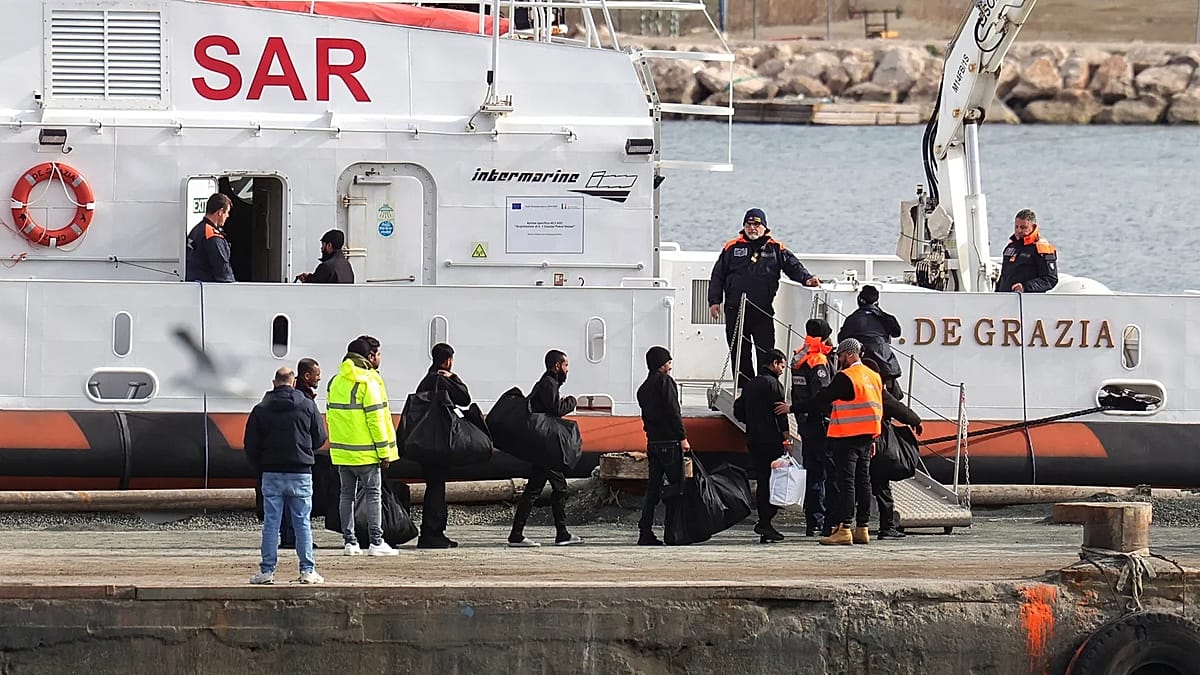
Italy has positioned itself as the pioneer, with its centres in Albania, which opened in October 2024. Initially designed to host asylum seekers and externalise the asylum procedure, the Albanian facilities faced legal challenges. In March 2025, the Meloni government converted them into deportation hubs for migrants who had already received return decisions. This shift made Albania an early model for the EU, though it is not a true return hub – Italian authorities still manage the centres and are responsible for final repatriations.
The European model could go further, potentially outsourcing the entire management and responsibility for asylum and deportation processes to a non-EU country. Notably, Albania is the second-closest candidate for EU accession after Montenegro, which would require a rethink of the Italian facilities once the country joins the bloc.
Which countries are in the running?
The Return Regulation has been politically agreed but not yet formally adopted – it still needs to be published in the EU's Official Journal. According to an EU official, the legal review is ongoing, with final adoption expected in the autumn.
Meanwhile, Germany, Austria, Denmark, Greece, and the Netherlands have confirmed they are negotiating the establishment of return hubs, either bilaterally or as a group. Their goal is to have the first partnership agreed by the end of the year, with a signing in early 2027, a diplomat told Euronews. The European Commission is informed but not directly involved.
According to Greek daily Kathimerini, the five countries are in advanced talks with Uganda, aiming to make a facility operational by next year. The governments involved have declined to confirm this, citing the risk that media disclosures could harm negotiations. Rwanda is another African country under discussion, according to Germany's Der Spiegel. Rwanda was previously at the centre of the UK's controversial and now-abandoned scheme to relocate asylum seekers.
Immigration ministers from the five countries are due to meet in Copenhagen on 4 September to assess progress. In April, Austria announced a migration and readmission agreement with Uzbekistan, though it does not include a return hub. Media reports have named Uzbekistan as a potential location, but the country's foreign ministry denied any such negotiations in a statement to Euronews.
Legal and practical obstacles
The Council of Europe's Commissioner for Human Rights, Michael O'Flaherty, has urged the five countries to conduct comprehensive human rights risk assessments before proceeding. In a letter published last month, he stressed that any initiative should be preceded by an evaluation of potential direct or indirect human rights risks.
The Return Regulation does not explicitly require such an assessment, but it does mandate that agreements respect international human rights standards. The EU Ombudsman criticised the Commission in 2024 for signing a similar agreement without adequate safeguards.
Practical challenges are also mounting. Italy's experience in Albania has been fraught with legal setbacks, and the numbers of migrants processed have been far lower than anticipated. Critics argue that the hubs may not deliver the deterrent effect politicians hope for, while the costs and legal complexities could outweigh the benefits.
As the EU pushes forward with this policy, the gap between political ambition and operational reality remains stark. The upcoming summit will test whether member states can translate their enthusiasm into a workable framework – or whether the return hub mantra will remain more hype than substance.